Shut Up and Playtest - Monster Kitchen
02 May 2026Recently, I went to a game design workshop. There, I got some great advice. Chief among them was “Shut up and playtest.”
So I figured I’d dust off my light card strategy game and shut up and playtest.
Introducing Monster Kitchen!
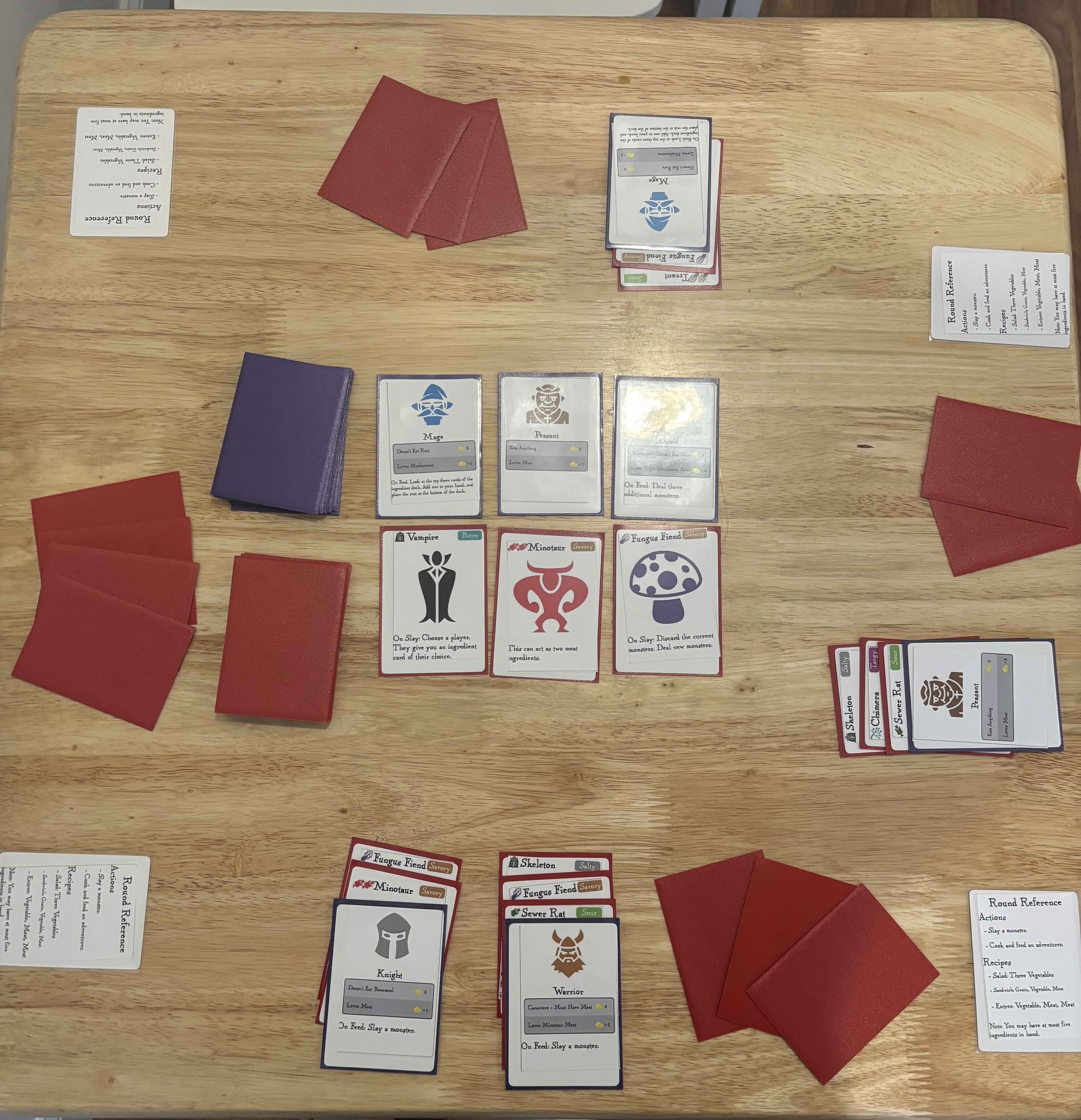
The Game
Monster Kitchen is a two to four player card game where you’ll slay monsters and turn them into nutritious meals for adventurers. Games take about 10 to 20 minutes.
You’re slaying monsters from the dungeon to cook into recipes and feed to adventurers. Your goal is to be the first to get XX gold from adventurers.
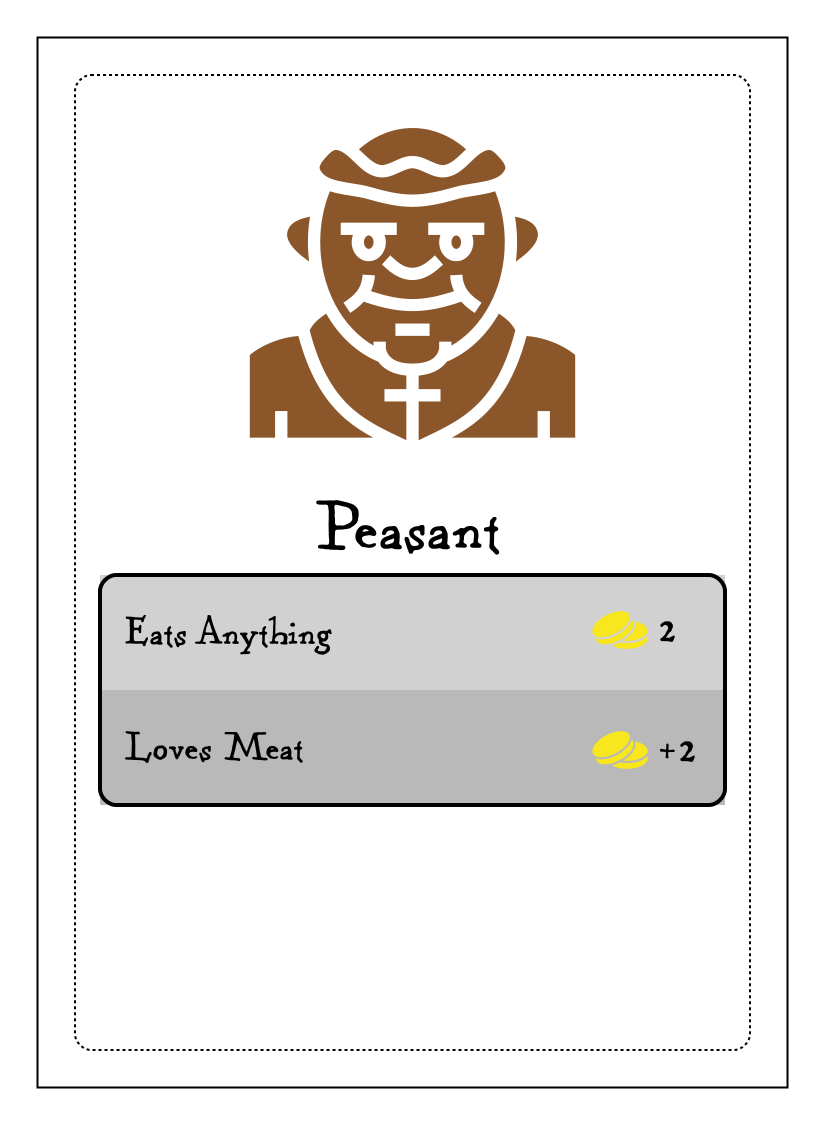
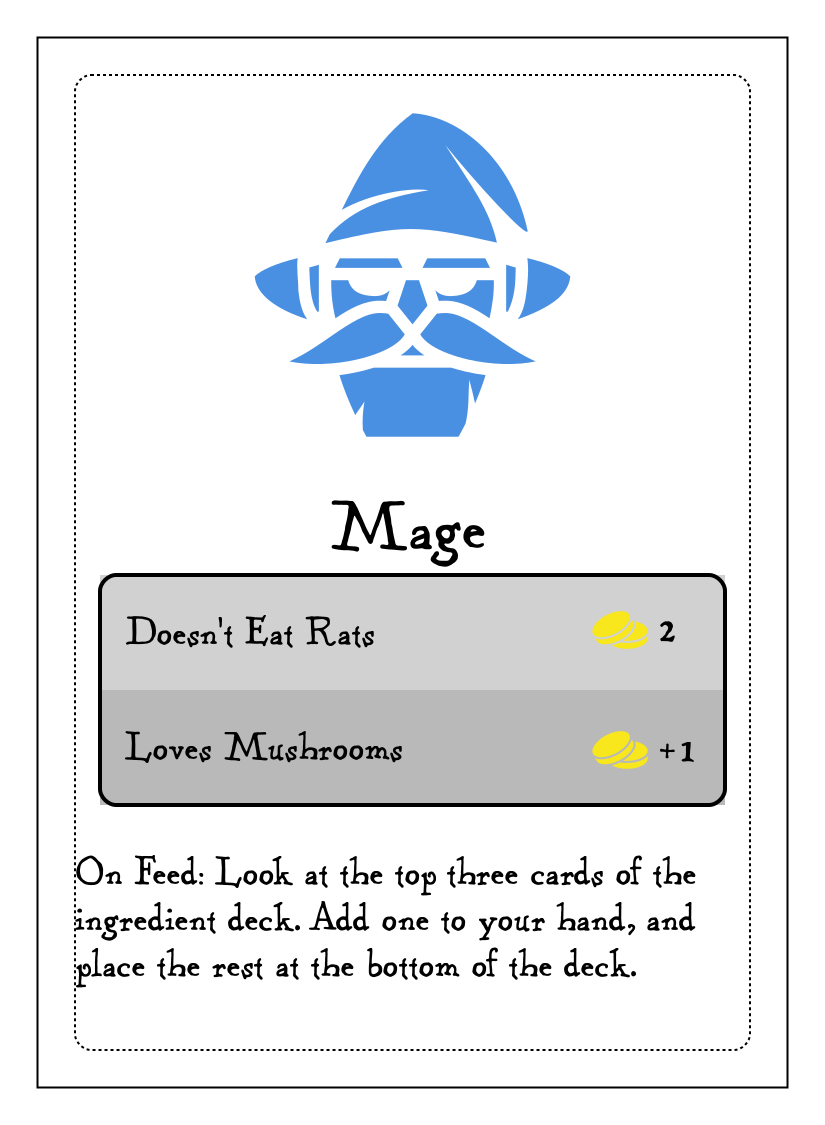
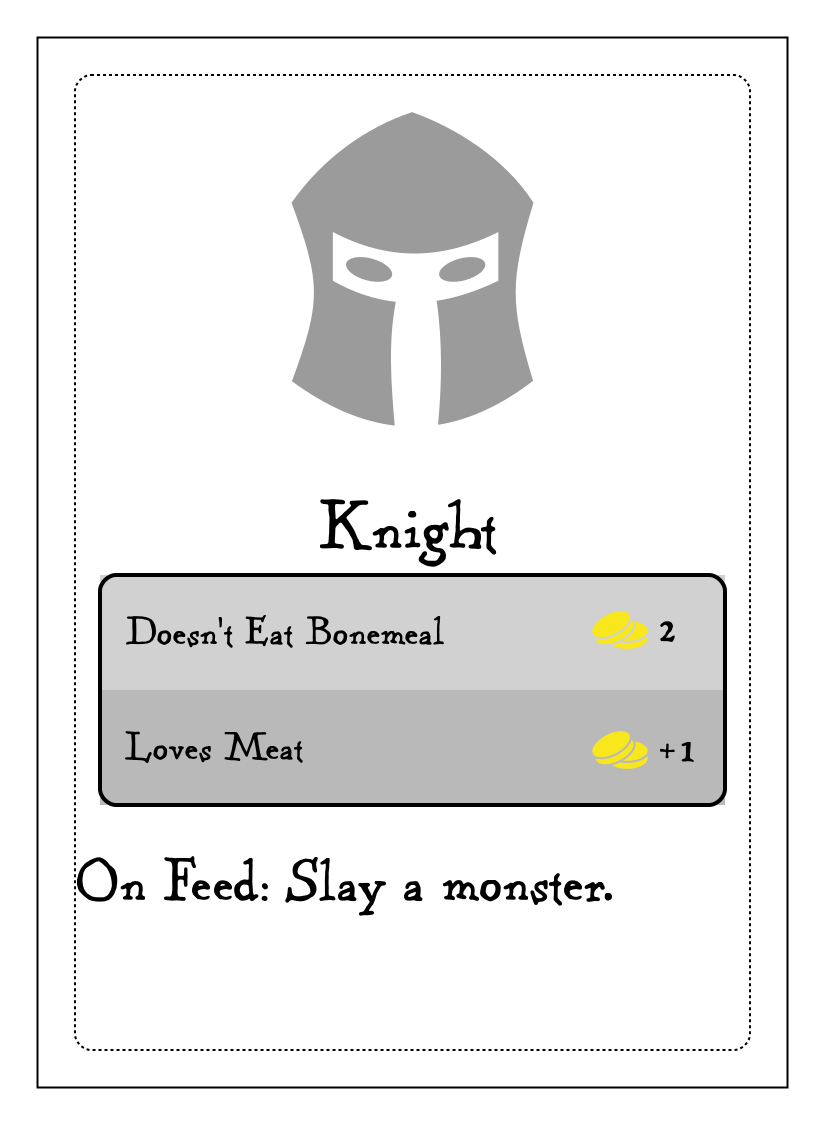
You get gold by feeding adventurers. Each adventurer has a requirement for what they eat, and a base amount of gold they will pay. They’ll pay additional gold if you feed them food that matches their preferences. Some adventurers will do an action for you if you feed them. For example, the Knight will slay a monster for you if you feed him.
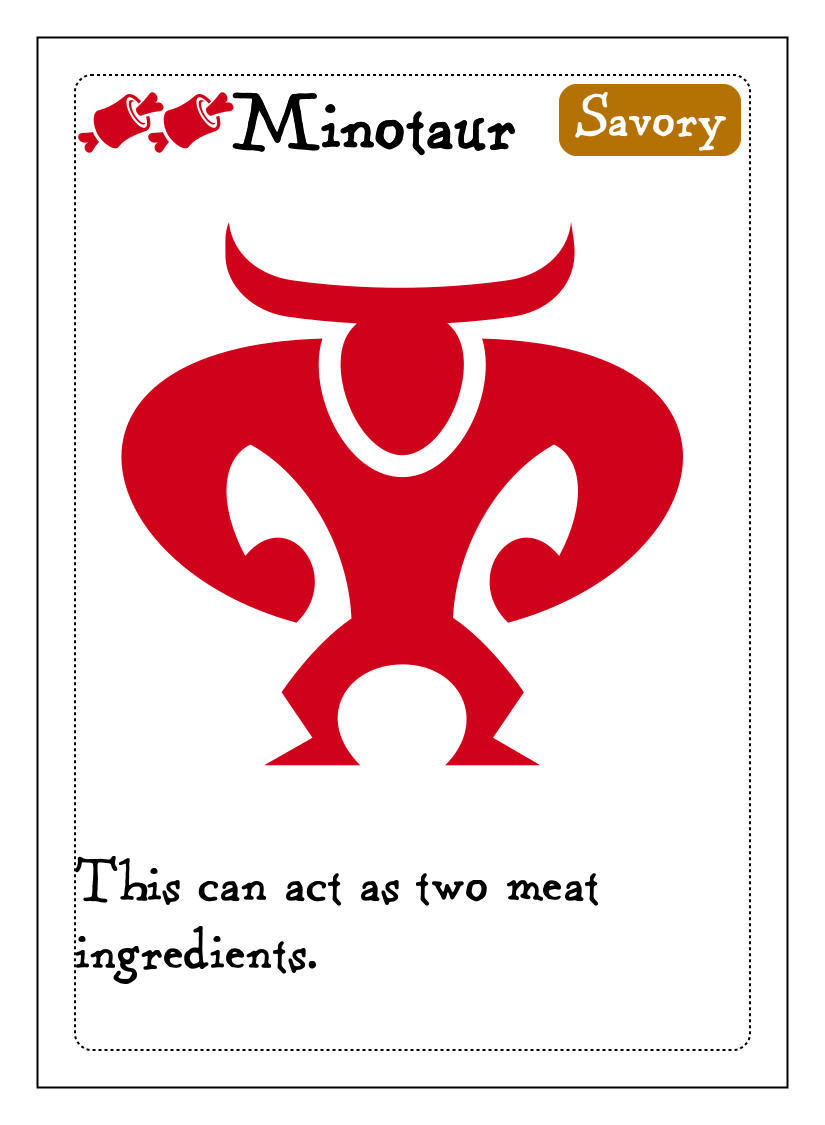
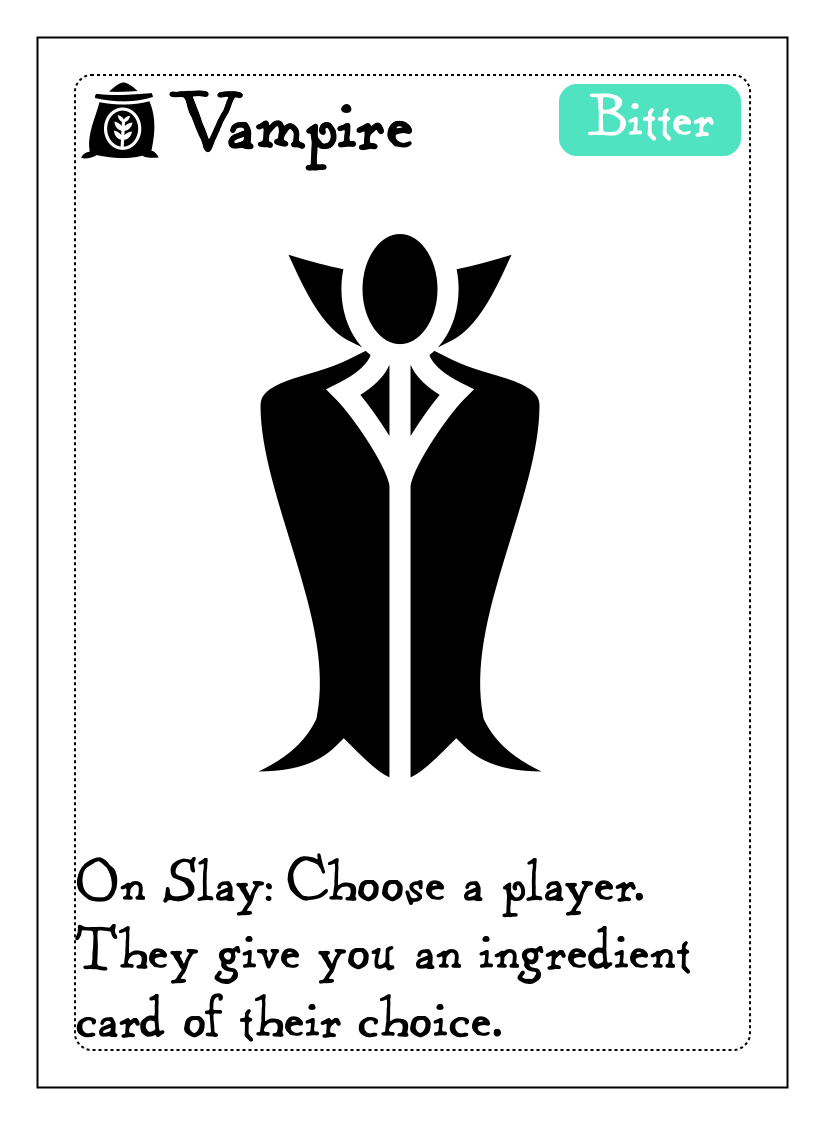
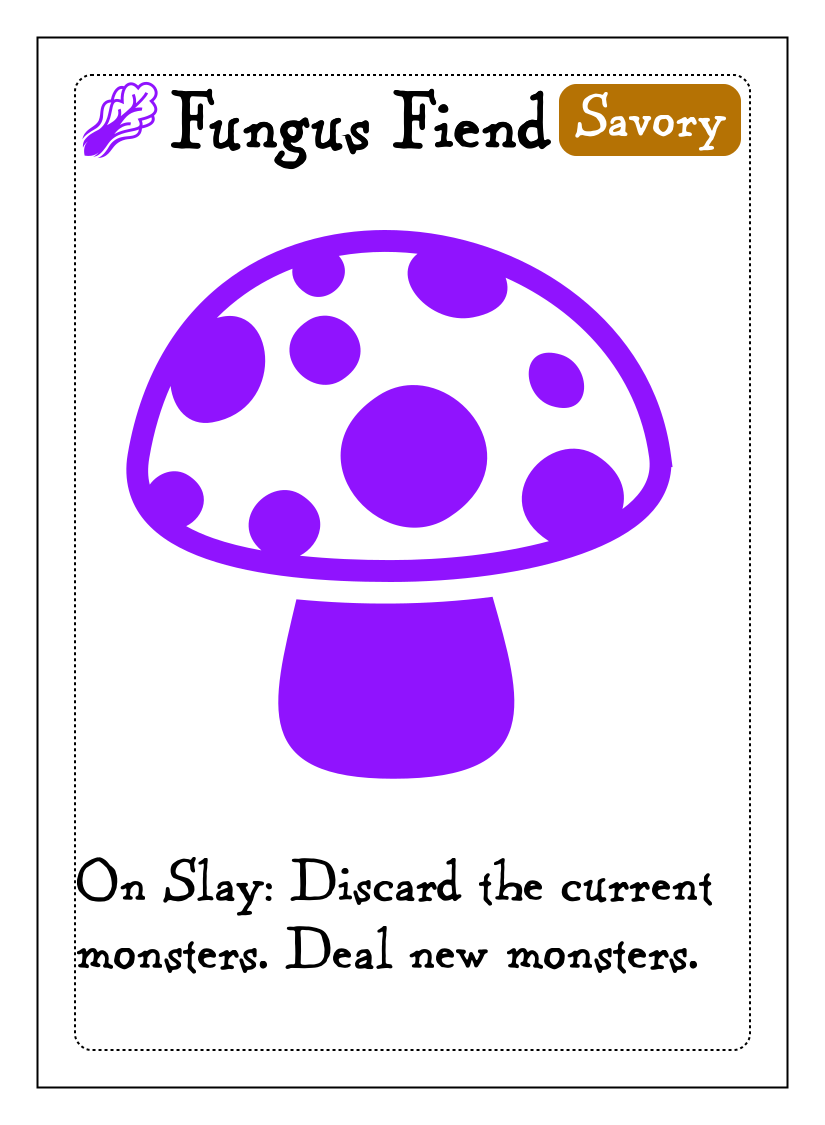
You get ingredients by slaying monsters. Every time you slay a monster, an event occurs. For example, if you slay a rat for ingredients, all your diners will flee, and you’ll deal new diners. Slaying a vampire will allow you to select an opponent to give you one of their resources.
And that’s it! On your turn, you’ll either slay a monster, or feed an adventurer. Slay monsters, cook meals, and get enough coins to win the game.
What I Liked
The theme hits hard. Feeding adventurers monster parts is fun.
There was a nice variety of diners and monsters. I didn’t feel like any card was too similar, or that there weren’t enough types of cards.
Combining ingredients was fun. When I served a monster sandwich, my mind thought about what a rat meat and skeleton bonemeal sandwich would be like.
Slaying the rat triggers an event where all the current diners go to the bottom of the deck and you deal three new diners. I think it’s really flavorful that a rat in a restaurant causes the diners to flee, but for a different reason.
Placing used ingredients behind the fed diner meant that they were out of circulation, and adjusted the pool of monsters. Not something I thought about, but a fun way to change the pool and keep the game fresh.
What I Noticed I want to change
The ingredient icon should be inline with the title. Right now, it’s under, and that takes up too much room.
There’s a pretty clear imbalanced strategy which is to use grain ingredients. Both grain monsters give extra resources when you slay them, and the recipe with grain is cheaper than others. Think we’ll have to at least add an ingredient to the grain recipe.
There’s a king diner who is a high payoff card, but just takes too many ingredients. Plus, with the Rat card, you can’t really plan for using the king.
The minotaur triggering to have everyone discard a card slowed the game down, since you’re making every player make a painful decision. Maybe it can be limited to target player discards a card.
Not sure that placing cards at bottom of the deck is elegant – it feels somewhat unwieldy to pick up the whole deck. I think we can add a discard pile, and start it off by milling one from the deck to start the game, we can have a better solution. And if the main deck runs out of cards, you can shuffle the discard pile back and make a new main deck.
In previous versions, different ingredients had different flavors. This version doesn’t have that, but I think it would be a nice touch to add back in. It can be surface area for diner preferences, and I think it provides a piece for players to imagine the monsters as ingredients with flavors.
Changes for the next Playtest
Probably the biggest change for this playtest is the on feed triggers for diners. The gameplay last time felt too linear, so I introduced a choice – do you feed someone the simplest recipe so they can do something for you when you feed them, or do you collect the best recipe for them to get the most points? Interested to see how this will play out.
I’ve updated the layout so that the ingredient is inline with the title. I also added a flavor up top. There’s no mechanical or gameplay reason for it now, but I hope it makes the experience richer. When you look at who you fed, you can also see what ingredients and what flavors you served in your dish. I hope this leads to fun moments where you realize what kind of meal you cooked up!
To balance out the grain strategy, I made it so that the sandwich recipe takes a grain, a meat, and a vegetable. What that means is that the sandwich takes three ingredients like all the other recipes. Grain is only used in the sandwich, so it went from being the best group to possibly the hardest ingredient to use. This is counterbalanced with grain’s ability to generate other ingredients.
No change for the king at the moment. Let’s see what happens! Plus it creates a fun moment when players realize that there’s a high risk, high reward diner.
I changed the Minotaur and Treant monster cards. Instead of having on slay ability triggers, now they are simply able to provide two ingredients in one recipe. This comes up in the entree and salad recipes.
I changed the bottom of the deck to a discard pile. Simple enough, and this should solve the problem of having to pick up the deck so many times.
Opening Up Design Space for Ingredient Preparation
Part of me wants to have the ingredient shortcut be on the bottom and upside down. The idea is that you slay the monster, but then to culinarily prepare it, you have to take a turn to rotate it 180 degrees, representing chopping or cooking, or some way of preparing it.
I think it could be a cool step since by turning the card upside down, you make it so that it’s less recognizable as a monster.
The downside is that turns now have an extra decision to make, and the game slows down. If you want to make a recipe that takes three ingredients, you now have 7 actions to take (three slays, three prepares, one serve) instead of 4 actions (three slays, one serve).
It’s something that can be explored in a future iteration. I think I might have to, since my mind is so split on it.
Preparing ingredients opens up a ton of space (do you chop them? cook them? do different ingredients have different preparation? can you prepare an ingredient incorrectly?), but also presents a lot of challenges. More player choices and individual card state are not trivial to solve. And I worry that solutions would be to either make cards more complicated, or introduce more game pieces. Ideally, this game would be completely playable with just a deck of cards. I would want to avoid tokens or dice if at all possible.
That being said, I’ve had versions in the past where you rolled dice to see if you cooked a recipe correctly, and there is a moment of suspense that rolling the dice creates. There’s also a component of using prepared ingredients having a high success rate, and improperly prepared or raw ingredients having a low chance.
Shutting up and playtesting
If you want to make games, “shut up and playtest” is the best advice to listen to. What this means is that you need to grab all the ideas floating around in your head, plop them down onto paper, and put them in front of someone else.
You’ll see if your ideas panned out, and you’ll also notice what doesn’t work. This is one hundred times more valuable to you and your game than any new idea you can have. A new idea for your game is place you can prospect for gold; an idea in a game that’s been playtested is gold.
I have my next iteration of my game printed and ready to play. I already know one or two things that I’ll be looking out for.
Can’t wait to share more about Monster Kitchen with you soon.