<?xml version="1.0" encoding="utf-8"?><feed xmlns="http://www.w3.org/2005/Atom" ><generator uri="https://jekyllrb.com/" version="3.10.0">Jekyll</generator><link href="https://bricksandcantrips.com/feed.xml" rel="self" type="application/atom+xml" /><link href="https://bricksandcantrips.com/" rel="alternate" type="text/html" /><updated>2026-04-19T15:56:23+00:00</updated><id>https://bricksandcantrips.com/feed.xml</id><title type="html">Bricks and Cantrips</title><subtitle>Bricks and Cantrips - A deep dive into card game design</subtitle><author><name>Chase Stevens</name><email>chasestevenspersonal+bricksandcantrips@gmail.com</email></author><entry><title type="html">Sorcery: Contested Realm, or How To Make A Better Magic</title><link href="https://bricksandcantrips.com/2026/04/18/sorcery-contested-realms/" rel="alternate" type="text/html" title="Sorcery: Contested Realm, or How To Make A Better Magic" /><published>2026-04-18T00:00:00+00:00</published><updated>2026-04-18T00:00:00+00:00</updated><id>https://bricksandcantrips.com/2026/04/18/sorcery-contested-realms</id><content type="html" xml:base="https://bricksandcantrips.com/2026/04/18/sorcery-contested-realms/"><![CDATA[<p>A lot of designers look at Magic: The Gathering and say “Hey, I could make a better version of that!”</p>

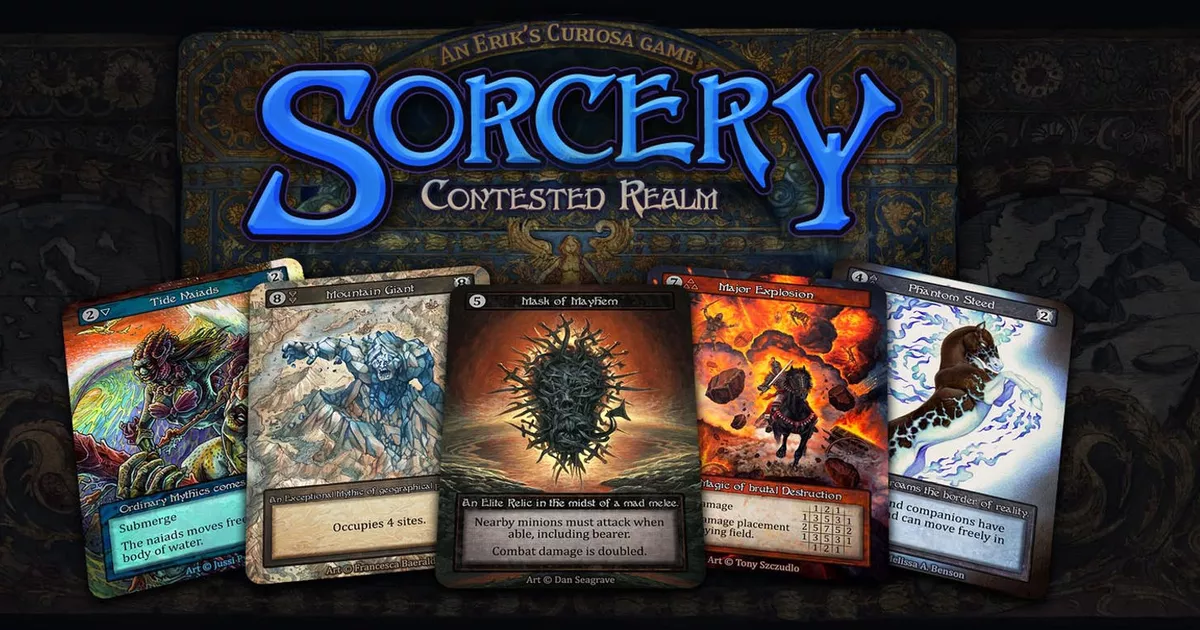
<p>One game studio, Erik’s Curiosa Limited, did just that and launched the trading card game Sorcery: Contested Realm with a Kickstarter campaign raising over $4 million.</p>

<p>Let’s take a look at the best example of a Magic: The Gathering inspired game designed for a contemporary audience.</p>

<p><img src="/assets/images/2026-04-11-sorcery-contested-realms/pic6766750.webp" alt="Sorcery: Contested Realm" /></p>

<!--more-->

<h3 id="the-art">The Art</h3>
<div class="triple-double-wrapper">
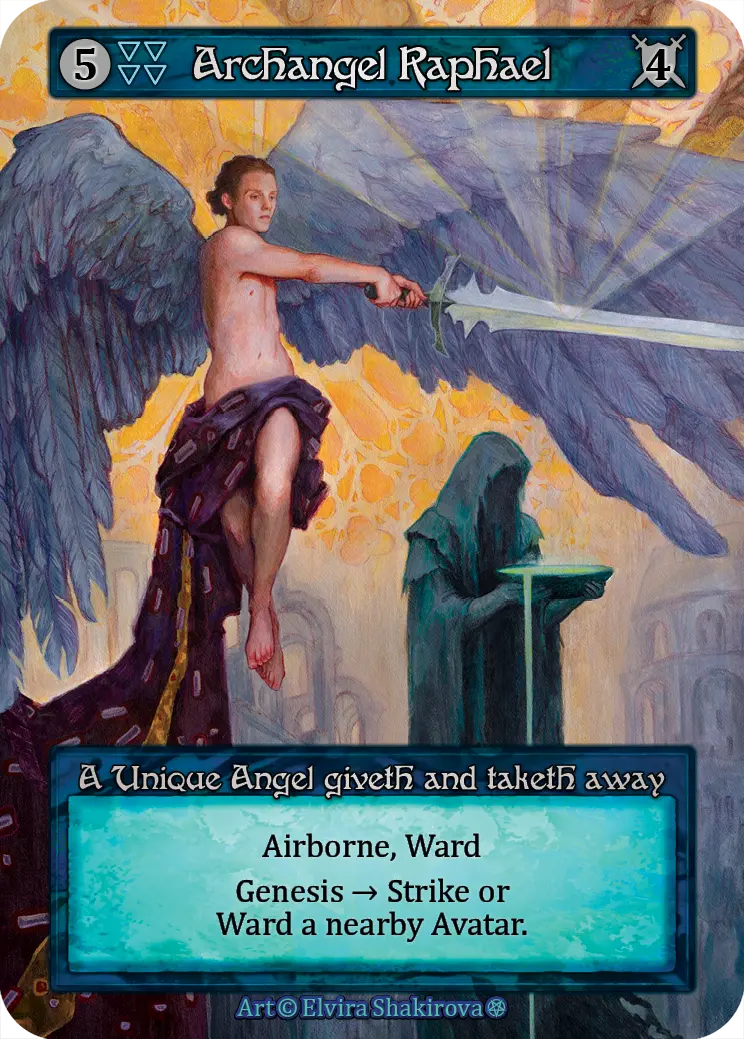
  <img class="my-class" src="/assets/images/2026-04-11-sorcery-contested-realms/got-archangel_raphael-b-s.webp" alt="Archangel Raphael, a Sorcery: Contested Realm card" />
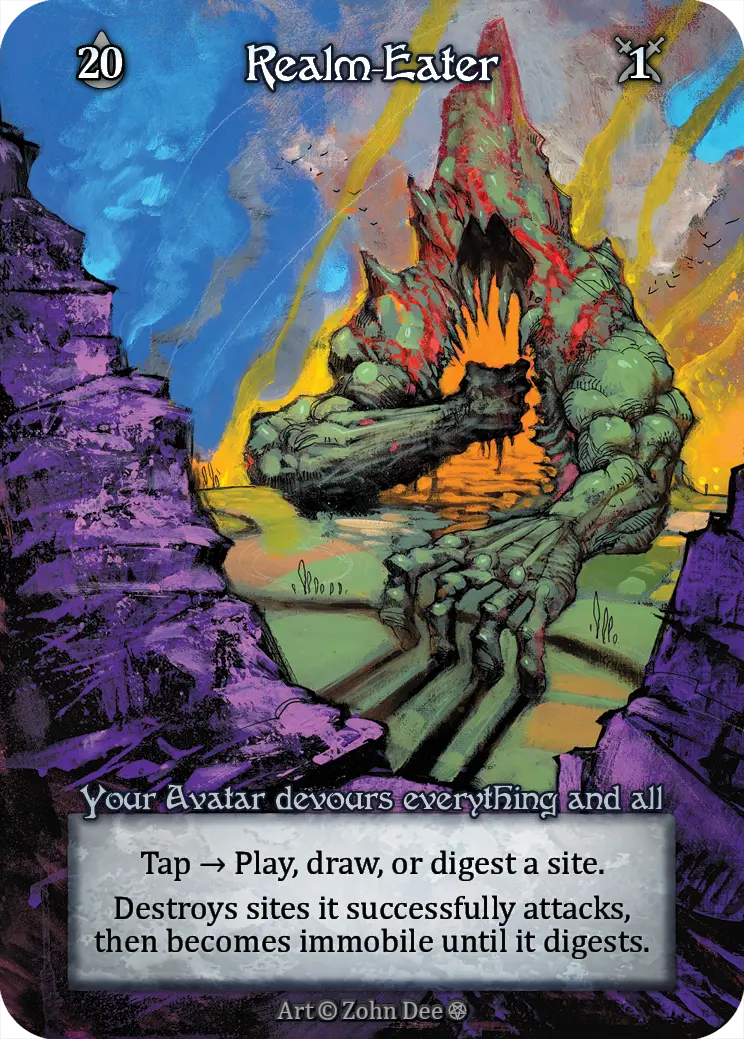
  <img class="my-class" src="/assets/images/2026-04-11-sorcery-contested-realms/got-realm_eater-b-s.webp" alt="Realm Eater, a Sorcery: Contested Realm card" />
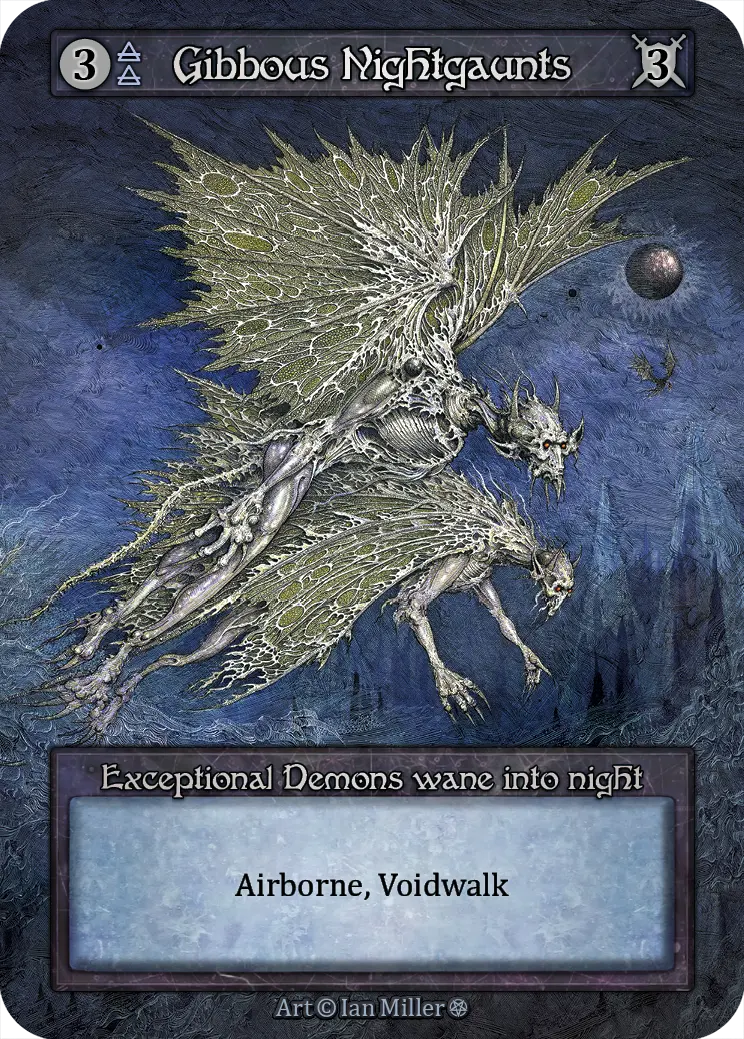
  <img class="my-class" src="/assets/images/2026-04-11-sorcery-contested-realms/got-gibbous_nightgaunts-b-s.webp" alt="Gibbous Nightgaunts, a Sorcery: Contested Realm card" />
</div>

<p>Sorcery: Contested Realm works with a lot of amazing artists. They do all their art traditionally – no digital art. The result makes each card feel like a magical spell.</p>

<p>Each card is full art and jumps off the page. The artists showcase their talents and make dazzling pieces that make for great cards to play.</p>

<h3 id="the-templating">The Templating</h3>
<div class="triple-double-wrapper">
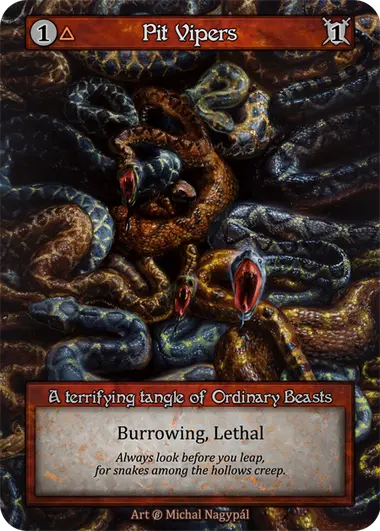
  <img class="my-class" src="/assets/images/2026-04-11-sorcery-contested-realms/bet-pit_vipers-b-s.webp" alt="Pit Vipers, a Sorcery: Contested Realm card" />
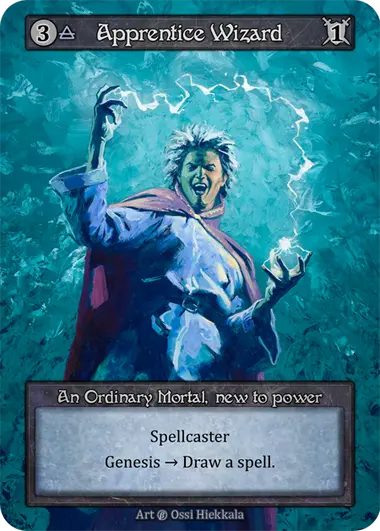
  <img class="my-class" src="/assets/images/2026-04-11-sorcery-contested-realms/bet-apprentice_wizard-b-s.webp" alt="Apprentice Wizard, a Sorcery: Contested Realm card" />
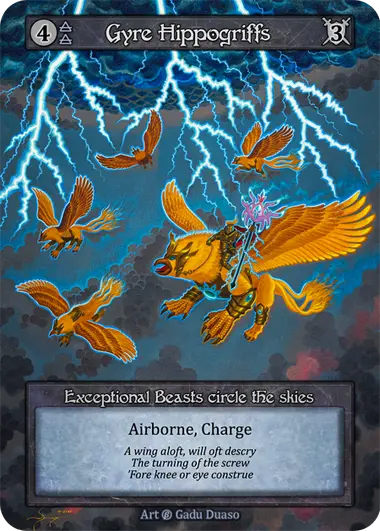
  <img class="my-class" src="/assets/images/2026-04-11-sorcery-contested-realms/bet-gyre_hippogriffs-b-s.webp" alt="Gyre Hippogriffs, a Sorcery: Contested Realm card" />
</div>

<p>The good news is that Sorcery: Contested Realm cards are easy to read. The bad news is that Sorcery: Contested Realm cards can often lead to ambiguity when interacting with each other. Sorcery uses keywords a great deal and you’ll want your rulebook nearby as you play your first game.</p>

<p>Erik’s Curiosa, the company that makes Sorcery, has a good online resource at curiosa.io where you can lookup cards that have references to their rulestext.</p>

<p>I will admit that the game does have a learning curve when it comes to learning all the keywords. But once you do, the brevity and clarity of each card makes playing a joy. Plus, it leaves more room for the art.</p>

<h3 id="they-finally-fixed-lands">They Finally Fixed Lands</h3>
<div class="triple-double-wrapper">
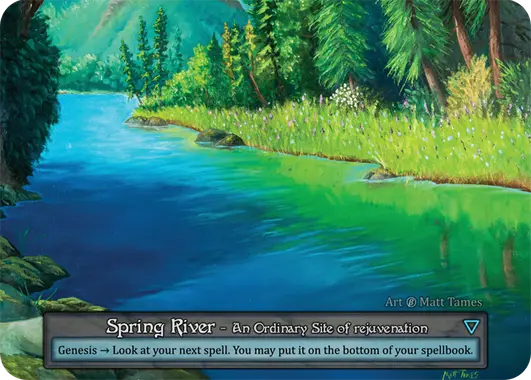
  <img class="my-class" src="/assets/images/2026-04-11-sorcery-contested-realms/bet-spring_river-b-s.webp" alt="Spring River, a Sorcery: Contested Realm card" />
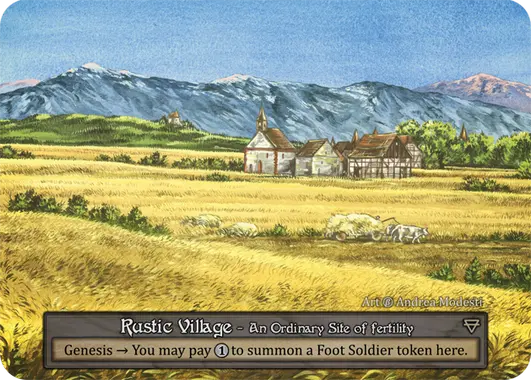
  <img class="my-class" src="/assets/images/2026-04-11-sorcery-contested-realms/bet-rustic_village-b-s.webp" alt="Rustic Village, a Sorcery: Contested Realm card" />
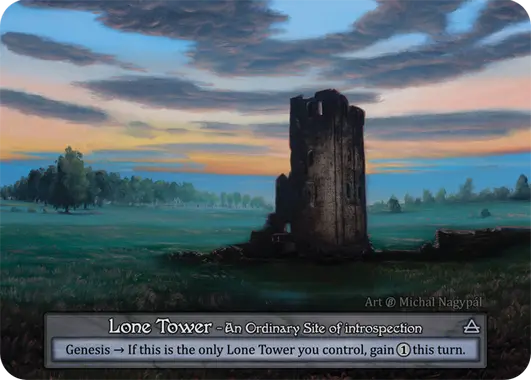
  <img class="my-class" src="/assets/images/2026-04-11-sorcery-contested-realms/bet-lone_tower-b-s.webp" alt="Lone Tower, a Sorcery: Contested Realm card" />
</div>

<p>One of the biggest pain points of playing Magic: The Gathering is that due to the land system, you can not get the right cards to play the game.</p>

<p>Sorcery: Contested Realm has fixed this issue by separating lands and spells into separate decks. At the start of your turn, you can choose to draw a card from your spell deck, or your site deck.</p>

<p>Additionally, there are restrictions by types of lands, but luckily, it’s easier to meet the land requirements. Instead of tapping lands to generate colored mana, each land gives you one mana during your turn. Your lands do have an element, which works like a color. But you don’t need to tap for a color of mana – as long as you have enough lands with the same “threshold” of your card, you can play that card.</p>

<p>Sites often have cool abilities. They can silence minions, block passage, or ping minions for damage.</p>

<p>Playing your lands on a four by five grid also influences the flow of the game. Do you play a site forward to get closer to your enemy, or play on your backrow to try and bide time?</p>

<p>Sorcery takes one of the weakest parts of Magic and turns it into a new space for gameplay.</p>

<h3 id="your-avatar-puts-you-into-the-game">Your Avatar Puts You Into The Game</h3>
<div class="triple-double-wrapper">
  <img class="my-class" src="/assets/images/2026-04-11-sorcery-contested-realms/alp-avatar_of_fire-pd-s.webp" alt="Avatar of Fire, a Sorcery: Contested Realm card" />
  <img class="my-class" src="/assets/images/2026-04-11-sorcery-contested-realms/bet-geomancer-b-s.webp" alt="Geomancer, a Sorcery: Contested Realm card" />
  <img class="my-class" src="/assets/images/2026-04-11-sorcery-contested-realms/got-necromancer-pd-s.webp" alt="Necromancer, a Sorcery: Contested Realm card" />
</div>

<p>In Magic, you play as a Planeswalker (a fancy wizard) with 20 life who has a library of spells and lands that you use to battle your opponent.</p>

<p>In Sorcery, you play as an Avatar (a fancy wizard) with 20 life who has a spellbook and an atlas that you use to battle your opponent. However, instead of you being the wizard yourself, you have an avatar card that represents you on the battlefield.</p>

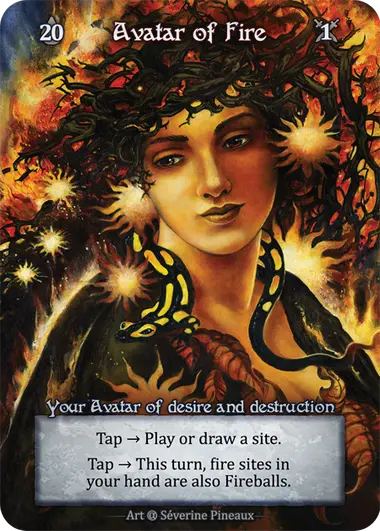
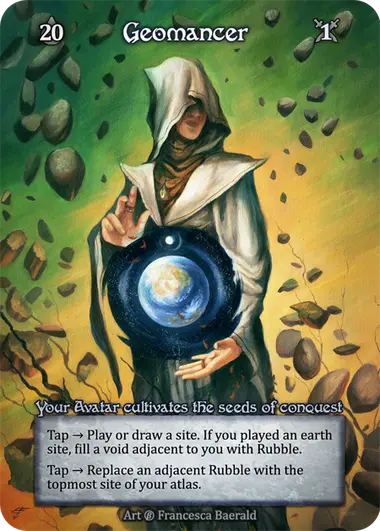
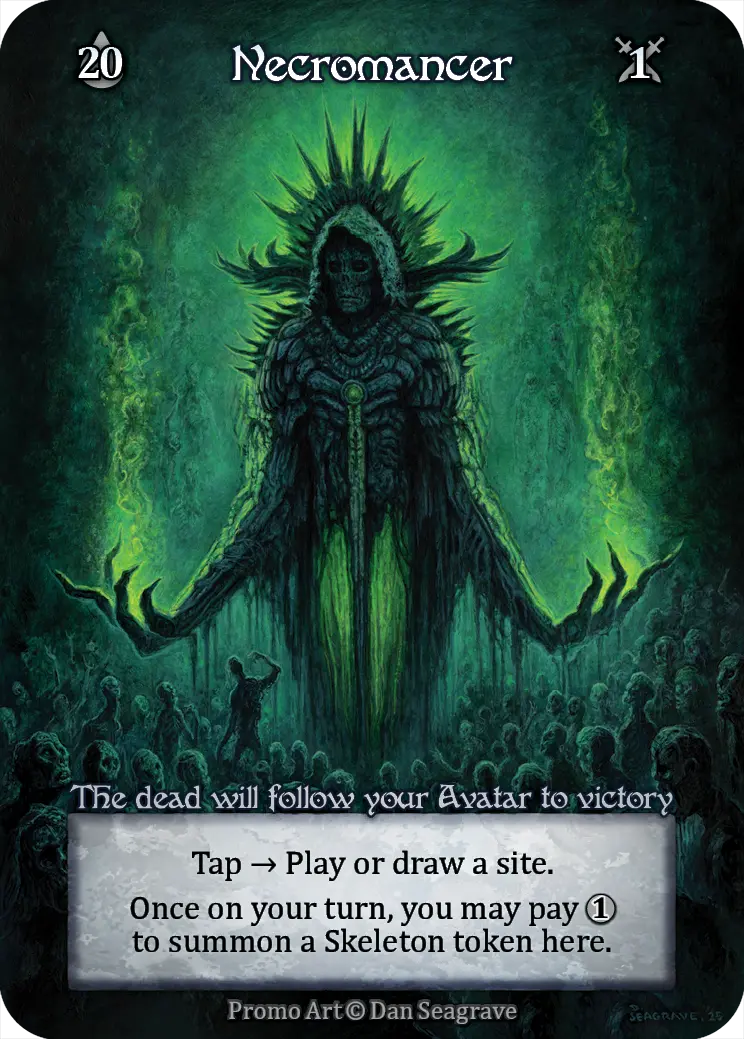
<p>All avatars have 20 life, some power, a tap ability to play or draw a site, and then one unique ability. The Avatar of Fire can turn fire sites into fireballs. The Geomancer can play and draw sites onto rubble that he produces. The Necromancer can make a skeleton buddy every turn.</p>

<p>Choosing an avatar gives you a chance to put yourself in the game. It’s no coincidence that one of Magic’s most popular formats is Commander, where you choose a legendary creature to captain your deck. Sorcery takes this design space to provide players a chance to tell everyone who they are with their avatar.</p>

<h3 id="you-dont-get-combod-out-or-counterspelled">You Don’t Get Combo’d Out or Counterspelled</h3>
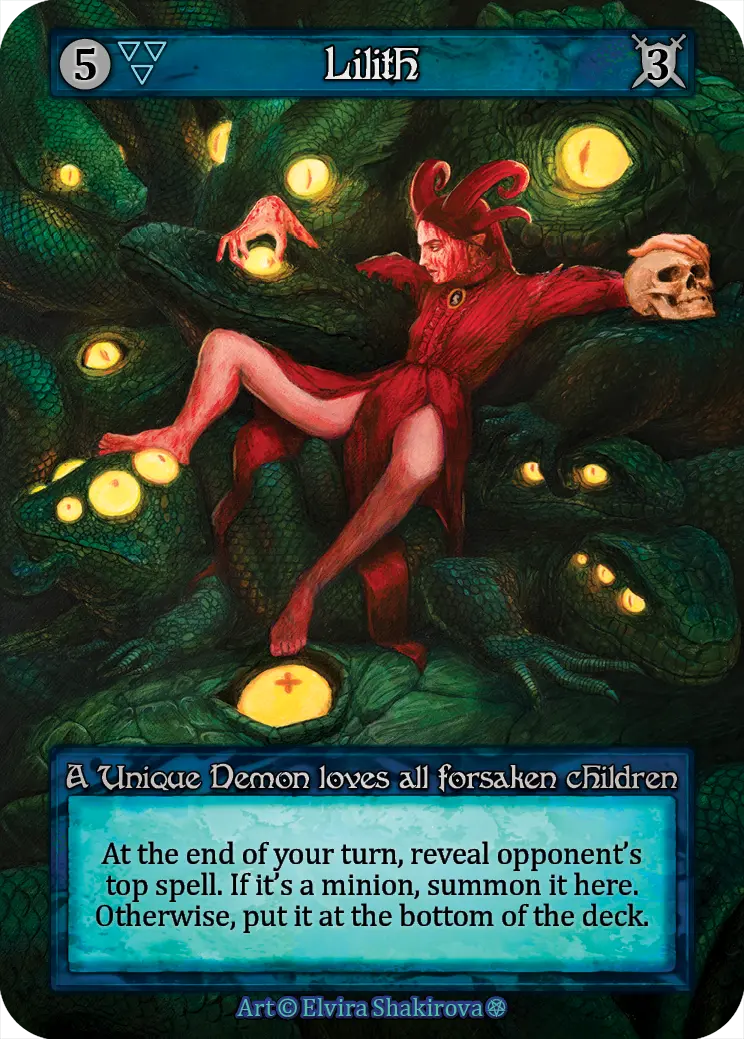
<p>Sorcery limits mechanics from Magic that make the game feel one sided or not fun. Graveyard recursion does exist in some form but is not the end all be all of mechanics.  There are no game winning combos that close the game out immediately. You don’t worry about losing out of nowhere. And you’ll never get a counter spell to stop you from playing your cool card.</p>

<div class="triple-double-wrapper">
  <img class="my-class" src="/assets/images/2026-04-11-sorcery-contested-realms/got-lilith-b-s.webp" alt="Lilith, a Sorcery: Contested Realm card" />
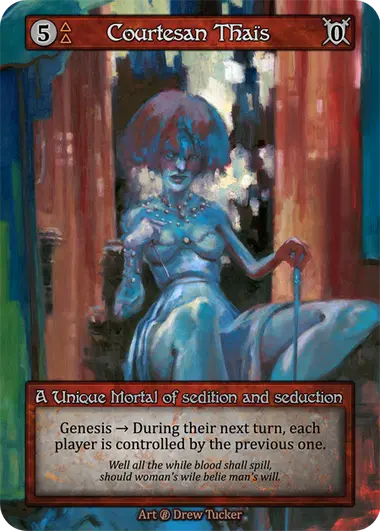
  <img class="my-class" src="/assets/images/2026-04-11-sorcery-contested-realms/bet-courtesan_thais-b-s.webp" alt="Courtesan Thais, a Sorcery: Contested Realm card" />
</div>

<p>Don’t get me wrong. There are some cards that do crazy things. Lilith can summon minions from your opponent’s decks, and Courtesan Thais can control your opponent’s next turn. Those cards are unique, though, and are meant to be awesome effects that you see once in a blue moon. Compare this to a reanimator deck in Magic that aims to get huge monsters from their deck into their graveyard, then reanimating them onto the battlefield to cheat them out.</p>

<h3 id="rarer-cards-are-more-limited">Rarer Cards are more Limited</h3>
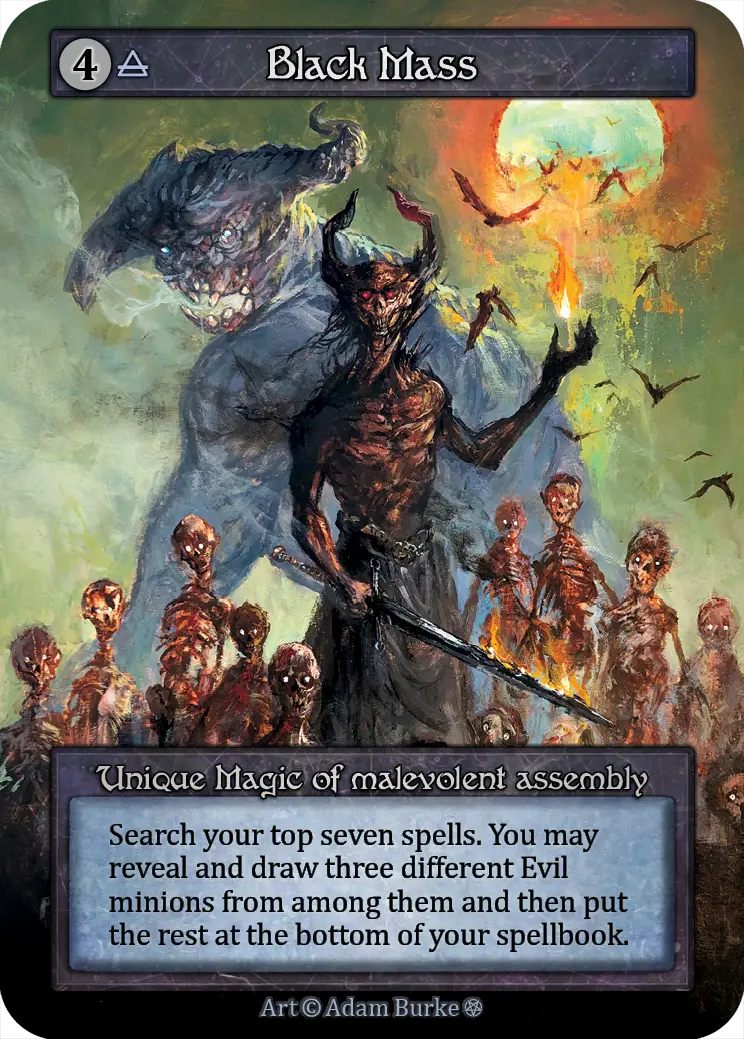
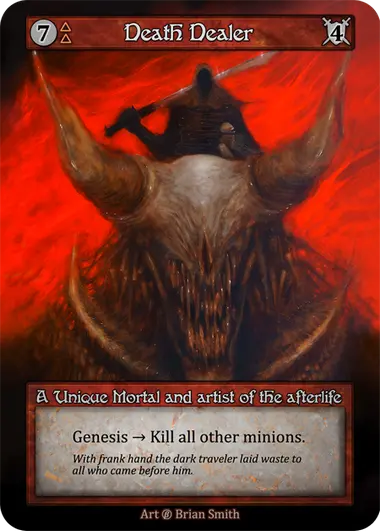
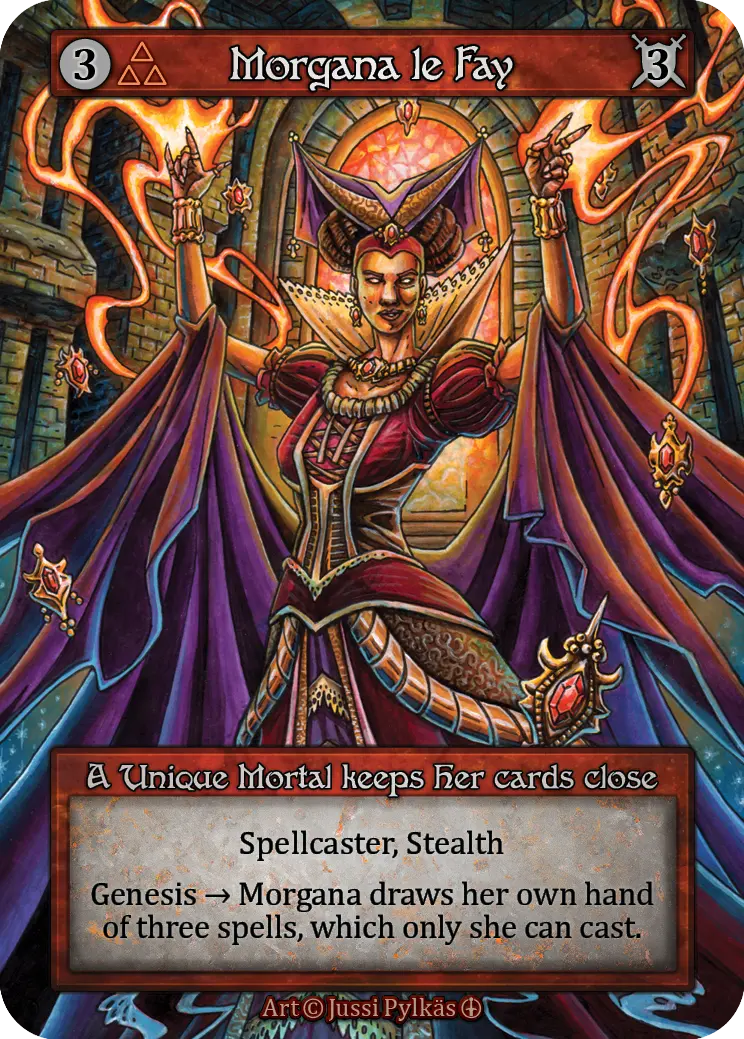
<p>Sorcery: Contested Realm has a rarity system for its card. A card can be Ordinary, Exceptional, Elite, or Unique. However, this also limits how many copies of each card you can put into your deck. You can put four copies of an Ordinary card into your deck, three copies of an Exceptional, two copies of an Elite, or one copy of a Unique.</p>

<div class="triple-double-wrapper">
  <img class="my-class" src="/assets/images/2026-04-11-sorcery-contested-realms/got-black_mass-b-s.webp" alt="Black Mass, a Sorcery: Contested Realm card" />
  <img class="my-class" src="/assets/images/2026-04-11-sorcery-contested-realms/bet-death_dealer-b-s.webp" alt="Death Dealer, a Sorcery: Contested Realm card" />
  <img class="my-class" src="/assets/images/2026-04-11-sorcery-contested-realms/art-morgana_le_fay-b-s.webp" alt="Morgana le Fay, a Sorcery: Contested Realm card" />
</div>

<p>This change in the rarity system both allows for collectors to chase after their Unique cards without those powerful cards warping the game around them. Sure, you can add a powerful Unique card to your deck, but it’s one card out of sixty.</p>

<h3 id="it-feels-magical">It Feels Magical</h3>
<p>The art, avatar, templating, and rare cards all come together to make a game of Sorcery feel like you are having a magical battle against your opponent. That might seem obvious, but we live in a world where the last set of Magic the Gathering was Teenage Mutant Ninja Turtles, and the next one is a Marvel superheroes set.</p>

<p>I play games for many reasons. Getting an opportunity to escape from our current reality into a fantasy where I get to lead a magical army into battle is one of them. Sorcery takes this experience from classic Magic the Gathering and reshapes it using all the game design lessons we’ve collectively learned in the last thirty years to make an exciting card game that I’ll be happy to play for years to come.</p>]]></content><author><name>Chase Stevens</name><email>chasestevenspersonal+bricksandcantrips@gmail.com</email></author><summary type="html"><![CDATA[A lot of designers look at Magic: The Gathering and say “Hey, I could make a better version of that!” One game studio, Erik’s Curiosa Limited, did just that and launched the trading card game Sorcery: Contested Realm with a Kickstarter campaign raising over $4 million. Let’s take a look at the best example of a Magic: The Gathering inspired game designed for a contemporary audience.]]></summary></entry><entry><title type="html">Rapid Card Prototyping with Squib</title><link href="https://bricksandcantrips.com/2026/04/04/card-design-squib/" rel="alternate" type="text/html" title="Rapid Card Prototyping with Squib" /><published>2026-04-04T00:00:00+00:00</published><updated>2026-04-04T00:00:00+00:00</updated><id>https://bricksandcantrips.com/2026/04/04/card-design-squib</id><content type="html" xml:base="https://bricksandcantrips.com/2026/04/04/card-design-squib/"><![CDATA[<p>In previous posts, we’ve looked at existing cards in card games like Magic the Gathering and Hearthstone. But what if we wanted to look at making our own card game?</p>

<p>It doesn’t have to be a trading card game. It could be a limited card game like Arkham Horror, or a tabletop game that uses cards, like King of Tokyo.</p>

<p>Today, I want to share how I designed and printed cards for a game design I made called Monster Kitchen.</p>

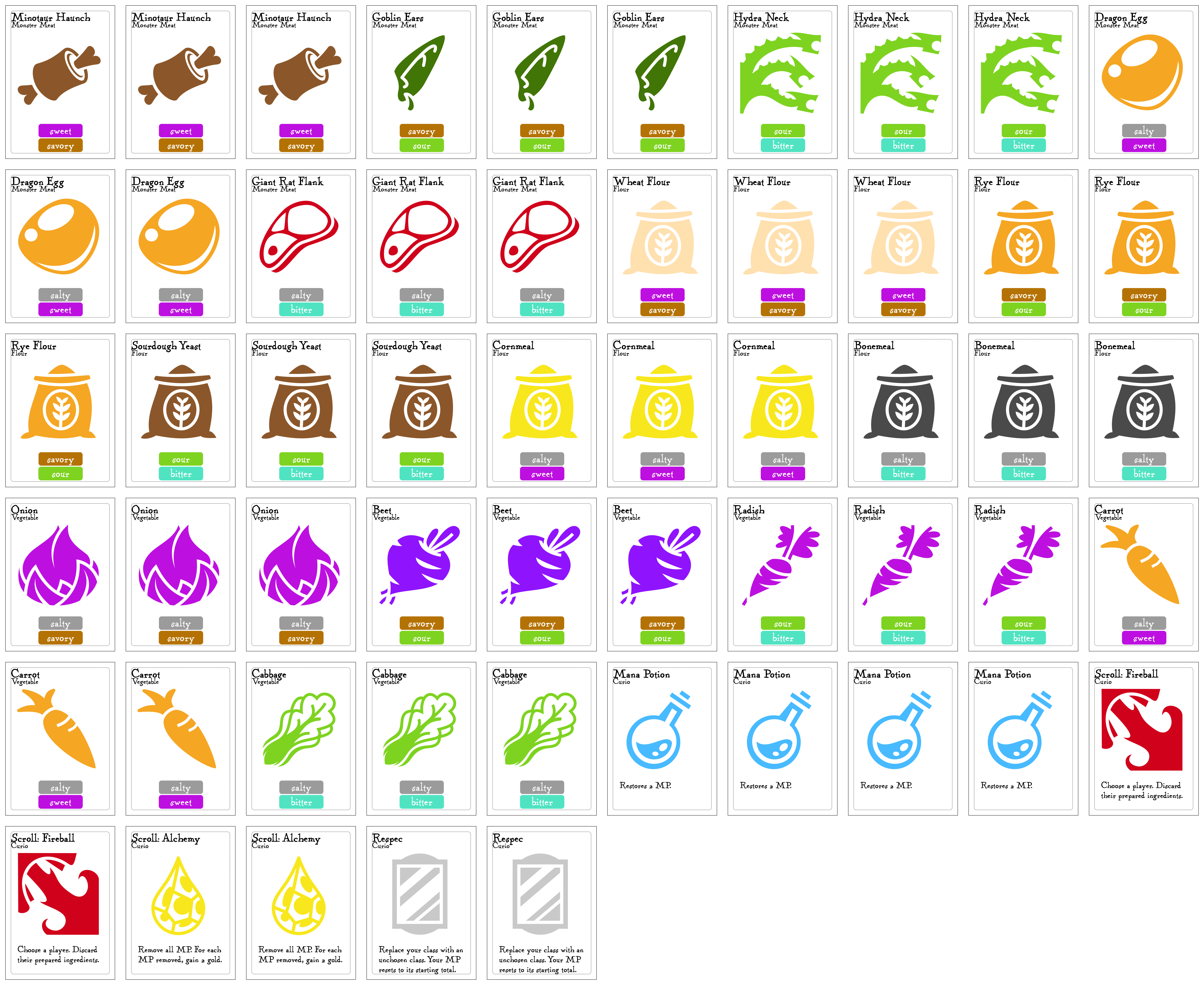
<p><img src="/assets/images/2026-04-04-card-design-squib/ingredients_00.png" alt="A collage of ingredient cards from Monster Kitchen" /></p>

<!--more-->

<p>Monster Kitchen is a 3-6 player game where players complete to collect ingredients and recipes to make dishes. And some of the ingredients are monster parts.</p>

<p>The game has gone through a few iterations. Any game design will over the course of its life. In some versions, players competed to feed dishes to diners. In others, the players had characters that they played as and that had special abilities. In versions where no mechanics were added or cut, different cards would be tested and tweaked.</p>

<p>If you want to make a game, it is critical that you are able to rapidly iterate. You need to be able to incorporate feedback and make adjustments to fix things that are broken with your game. And yes, no matter how good of a designer you are, the first version of your game will probably be broken in one way or another.</p>

<h2 id="technology">Technology</h2>
<p>There’s no right or wrong answer for technology. I’ve heard of designers using layout tools like Adobe InDesign to lay out cards. As a software engineer by trade, I’ve elected to use a different tool.</p>

<p>For card layout and design, I use an open source software library called <a href="https://github.com/andymeneely/squib">Squib</a>. It’s built with the Ruby programming language to enable users to define their cards with data and generate prototype cards with layout and code.</p>

<p>Using Squib does mean writing code, at least a little bit. However, you don’t need to know much about programming to use Squib.</p>

<p>There are three main concepts to understand when using Squib – the cards (data), the layout (design configuration), and the deck (code).</p>

<h3 id="cards">Cards</h3>
<p>In Squib, cards are defined using CSV (comma separated values) files. Think of these files as simple spreadsheets. Your first row defines what each column represents, then all the other rows are records with values for those columns.</p>

<p>Below, I have the CSV file for my cards shown above.</p>

<pre><code class="language-csv">title,type,qty,flavor_1,flavor_2,description,illustration
Minotaur Haunch,Monster Meat,3,sweet,savory,,art/counter/meat.svg
Goblin Ears,Monster Meat,3,savory,sour,,art/counter/elf-ear.svg
Hydra Neck,Monster Meat,3,sour,bitter,,art/counter/hydra.svg
Dragon Egg,Monster Meat,3,salty,sweet,,art/counter/dinosaur-egg.svg
Giant Rat Flank,Monster Meat,3,salty,bitter,,art/counter/steak.svg
Wheat Flour,Flour,3,sweet,savory,,art/counter/wheat-flour.svg
Rye Flour,Flour,3,savory,sour,,art/counter/rye-flour.svg
Sourdough Yeast,Flour,3,sour,bitter,,art/counter/sourdough-yeast.svg
Cornmeal,Flour,3,salty,sweet,,art/counter/cornmeal.svg
Bonemeal,Flour,3,salty,bitter,,art/counter/bonemeal.svg
Onion,Vegetable,3,salty,savory,,art/counter/bulb.svg
Beet,Vegetable,3,savory,sour,,art/counter/beet.svg
Radish,Vegetable,3,sour,bitter,,art/counter/raddish.svg
Carrot,Vegetable,3,salty,sweet,,art/carrot-color.svg
Cabbage,Vegetable,3,salty,bitter,,art/counter/bok-choy.svg
Mana Potion,Curio,4,placeholder,placeholder,Restores 2 MP.,art/five_flavors/round-potion.svg
Scroll: Fireball,Curio,2,placeholder,placeholder,Choose a player. Discard their prepared ingredients.,art/five_flavors/fire-breath.svg
Scroll: Alchemy,Curio,2,placeholder,placeholder,Remove all MP. For each MP removed&gt; gain 2 gold.,art/five_flavors/crystalize.svg
Respec,Curio,2,placeholder,placeholder,Replace your class with an unchosen class. Your MP resets to its starting total.,art/five_flavors/mirror-mirror.svg
</code></pre>

<p>The first row has the columns that define what the data is. The <code class="language-plaintext highlighter-rouge">title</code> is the name and header of the card, and the <code class="language-plaintext highlighter-rouge">type</code> is the subheader that tells us what category of ingredient this is. The <code class="language-plaintext highlighter-rouge">qty</code> column tells Squib how many times to render the card.</p>

<p>I also want to highlight <code class="language-plaintext highlighter-rouge">illustration</code>, which has a path to an SVG file. Here, I’ve added a file to my project, then pointed to the path of the file in the SVG. This lets Squib be able to reference that image and render it in the finished card.</p>

<h3 id="layout">Layout</h3>
<p>Layouts are groups of design configurations that are able to be applied to elements.</p>

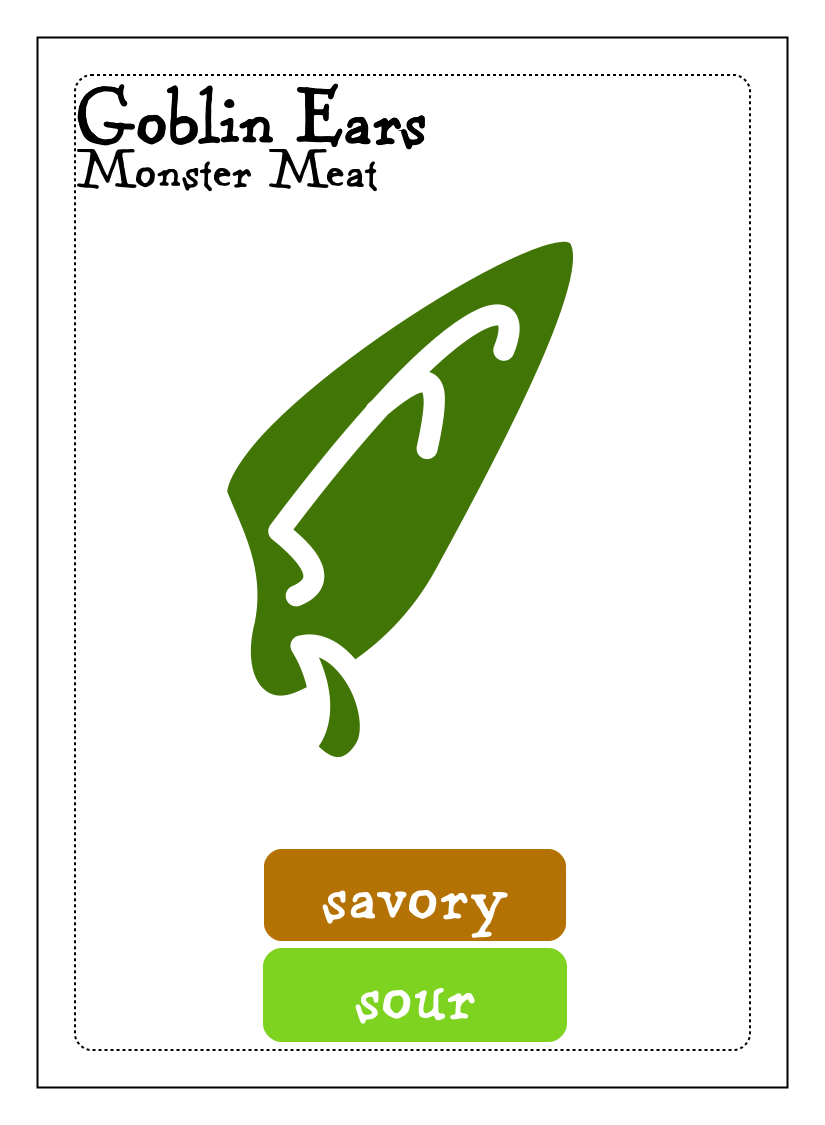
<p><img src="/assets/images/2026-04-04-card-design-squib/goblin_ears_ingredient.png" alt="Goblin Ears Ingredient Card" class="my-class" /></p>

<p>For example, the image on the card is an SVG file. We want to give it a position and a size. We can define the position using an X and Y coordinates and width and height using a layout rule called <code class="language-plaintext highlighter-rouge">illustration</code>.</p>

<div class="language-yml highlighter-rouge"><div class="highlight"><pre class="highlight"><code><span class="na">illustration</span><span class="pi">:</span>
  <span class="na">x</span><span class="pi">:</span> <span class="m">100</span>
  <span class="na">y</span><span class="pi">:</span> <span class="m">200</span>
  <span class="na">width</span><span class="pi">:</span> <span class="m">600</span>
  <span class="na">height</span><span class="pi">:</span> <span class="m">600</span>
</code></pre></div></div>

<p>For each element on the card, we want to give it all its styling rules with one grouping. Our illustration has a position (x, y) and a size (width/height).</p>

<p>Our text element have a position and size as well. However, this position and sizing is for determining the size of the text box, not the actual text the appears on the page. For that, we want to make sure that we align our text accordingly. The <code class="language-plaintext highlighter-rouge">align</code> styling here shifts the text to align with the left, center, or right of the textbox, and <code class="language-plaintext highlighter-rouge">valign</code> (vertical align – not used here but good to be aware of) can be used to align the text with the top, middle, or bottom of the textbox.</p>

<div class="language-yml highlighter-rouge"><div class="highlight"><pre class="highlight"><code><span class="na">illustration</span><span class="pi">:</span>
  <span class="na">x</span><span class="pi">:</span> <span class="m">100</span>
  <span class="na">y</span><span class="pi">:</span> <span class="m">200</span>
  <span class="na">width</span><span class="pi">:</span> <span class="m">600</span>
  <span class="na">height</span><span class="pi">:</span> <span class="m">600</span>

<span class="na">title</span><span class="pi">:</span>
  <span class="na">x</span><span class="pi">:</span> <span class="m">75</span>
  <span class="na">y</span><span class="pi">:</span> <span class="m">75</span>
  <span class="na">width</span><span class="pi">:</span> <span class="m">600</span>
  <span class="na">height</span><span class="pi">:</span> <span class="m">50</span>
  <span class="na">align</span><span class="pi">:</span> <span class="s">left</span>
  <span class="na">font_size</span><span class="pi">:</span> <span class="m">16</span>
  <span class="na">stroke_width</span><span class="pi">:</span> <span class="m">1.5</span>
  <span class="na">font</span><span class="pi">:</span> <span class="s2">"</span><span class="s">Kentucky</span><span class="nv"> </span><span class="s">Fireplace"</span>

<span class="na">type</span><span class="pi">:</span>
  <span class="na">x</span><span class="pi">:</span> <span class="m">75</span>
  <span class="na">y</span><span class="pi">:</span> <span class="m">140</span>
  <span class="na">width</span><span class="pi">:</span> <span class="m">600</span>
  <span class="na">height</span><span class="pi">:</span> <span class="m">50</span>
  <span class="na">align</span><span class="pi">:</span> <span class="s">left</span>
  <span class="na">font_size</span><span class="pi">:</span> <span class="m">11</span>
  <span class="na">font</span><span class="pi">:</span> <span class="s2">"</span><span class="s">Kentucky</span><span class="nv"> </span><span class="s">Fireplace"</span>

<span class="na">preparation_icon</span><span class="pi">:</span>
  <span class="na">x</span><span class="pi">:</span> <span class="m">500</span>
  <span class="na">y</span><span class="pi">:</span> <span class="m">920</span>
  <span class="na">width</span><span class="pi">:</span> <span class="m">130</span>
  <span class="na">height</span><span class="pi">:</span> <span class="m">130</span>

<span class="na">time_text</span><span class="pi">:</span>
  <span class="na">x</span><span class="pi">:</span> <span class="m">650</span>
  <span class="na">y</span><span class="pi">:</span> <span class="m">810</span>
  <span class="na">width</span><span class="pi">:</span> <span class="m">200</span>
  <span class="na">height</span><span class="pi">:</span> <span class="m">200</span>
  <span class="na">font_size</span><span class="pi">:</span> <span class="m">48</span>
  <span class="na">stroke_width</span><span class="pi">:</span> <span class="m">1.5</span>
  <span class="na">font</span><span class="pi">:</span> <span class="s2">"</span><span class="s">Trattatello"</span>

<span class="na">flavor_1</span><span class="pi">:</span>
  <span class="na">x</span><span class="pi">:</span> <span class="m">265</span>
  <span class="na">y</span><span class="pi">:</span> <span class="m">850</span>
  <span class="na">width</span><span class="pi">:</span> <span class="m">300</span>
  <span class="na">height</span><span class="pi">:</span> <span class="m">90</span>
  <span class="na">align</span><span class="pi">:</span> <span class="s">center</span>
  <span class="na">font_size</span><span class="pi">:</span> <span class="m">16</span>
  <span class="na">font</span><span class="pi">:</span> <span class="s2">"</span><span class="s">Kentucky</span><span class="nv"> </span><span class="s">Fireplace"</span>

<span class="na">flavor_1_box</span><span class="pi">:</span>
  <span class="na">extends</span><span class="pi">:</span> <span class="s">flavor_1</span>
  <span class="na">radius</span><span class="pi">:</span> <span class="m">16</span>
  <span class="na">stroke_width</span><span class="pi">:</span> <span class="m">2</span>

<span class="na">flavor_2</span><span class="pi">:</span>
  <span class="na">x</span><span class="pi">:</span> <span class="m">265</span>
  <span class="na">y</span><span class="pi">:</span> <span class="m">950</span>
  <span class="na">width</span><span class="pi">:</span> <span class="m">300</span>
  <span class="na">height</span><span class="pi">:</span> <span class="m">90</span>
  <span class="na">align</span><span class="pi">:</span> <span class="s">center</span>
  <span class="na">font_size</span><span class="pi">:</span> <span class="m">16</span>
  <span class="na">font</span><span class="pi">:</span> <span class="s2">"</span><span class="s">Kentucky</span><span class="nv"> </span><span class="s">Fireplace"</span>

<span class="na">flavor_2_box</span><span class="pi">:</span>
  <span class="na">extends</span><span class="pi">:</span> <span class="s">flavor_2</span>
  <span class="na">radius</span><span class="pi">:</span> <span class="m">16</span>
  <span class="na">stroke_width</span><span class="pi">:</span> <span class="m">4</span>

<span class="na">description</span><span class="pi">:</span>
  <span class="na">x</span><span class="pi">:</span> <span class="m">120</span>
  <span class="na">y</span><span class="pi">:</span> <span class="m">850</span>
  <span class="na">width</span><span class="pi">:</span> <span class="m">600</span>
  <span class="na">height</span><span class="pi">:</span> <span class="m">300</span>
  <span class="na">align</span><span class="pi">:</span> <span class="s">left</span>
  <span class="na">font_size</span><span class="pi">:</span> <span class="m">12</span>
  <span class="na">font</span><span class="pi">:</span> <span class="s2">"</span><span class="s">Kentucky</span><span class="nv"> </span><span class="s">Fireplace"</span>
</code></pre></div></div>

<h3 id="decks">Decks</h3>
<p>Decks are applications of layout rules to card elements to output image files that will be your cards. Here, we load in the cards from the CSV and the stylings from the layout, and tell Squib how to combine them into cards.</p>

<p>Below, we have the code to tell Squib how to make the cards. I’ve annotated the code with comments that start with the hash symbol <code class="language-plaintext highlighter-rouge">#</code> to help explain the code.</p>

<div class="language-ruby highlighter-rouge"><div class="highlight"><pre class="highlight"><code><span class="nb">require</span> <span class="s1">'squib'</span>

<span class="c1"># Here, we load in the card data</span>
<span class="n">data</span> <span class="o">=</span> <span class="no">Squib</span><span class="p">.</span><span class="nf">csv</span> <span class="ss">file: </span><span class="s1">'cards/five_flavors/ingredients.csv'</span>
<span class="n">cards</span> <span class="o">=</span> <span class="n">data</span><span class="p">[</span><span class="s1">'title'</span><span class="p">].</span><span class="nf">size</span>

<span class="c1"># Now, we grab the layout files to get the style rules.</span>
<span class="n">layouts</span> <span class="o">=</span> <span class="p">[</span><span class="s1">'economy.yml'</span><span class="p">,</span> <span class="s1">'layouts/five_flavors/ingredients.yml'</span><span class="p">]</span>

<span class="c1"># We create a new deck, loading in the cards and the layouts</span>
<span class="no">Squib</span><span class="o">::</span><span class="no">Deck</span><span class="p">.</span><span class="nf">new</span> <span class="ss">cards: </span><span class="n">cards</span><span class="p">,</span> <span class="ss">layout: </span><span class="n">layouts</span> <span class="k">do</span>
  <span class="c1"># We start off by making a background and some cut marks</span>
  <span class="n">background</span> <span class="ss">color: </span><span class="s1">'white'</span>
  <span class="n">rect</span> <span class="ss">layout: </span><span class="s1">'cut'</span>
  <span class="n">rect</span> <span class="ss">layout: </span><span class="s1">'safe'</span>

  <span class="c1"># Setting the title onto the card</span>
  <span class="n">text</span> <span class="ss">str: </span><span class="n">data</span><span class="p">[</span><span class="s1">'title'</span><span class="p">],</span> <span class="ss">layout: </span><span class="s1">'title'</span>
  <span class="n">text</span> <span class="ss">str: </span><span class="n">data</span><span class="p">[</span><span class="s1">'type'</span><span class="p">],</span> <span class="ss">layout: </span><span class="s1">'type'</span>

  <span class="c1"># Placing the image onto the card</span>
  <span class="n">svg</span> <span class="ss">file: </span><span class="n">data</span><span class="p">[</span><span class="s1">'illustration'</span><span class="p">],</span> <span class="ss">layout: </span><span class="s1">'illustration'</span>

  <span class="c1"># This lays out the flavors onto the card. </span>
  <span class="c1"># Note that I've done special configuration to map flavors to color</span>
  <span class="n">rect</span> <span class="ss">layout: </span><span class="s1">'flavor_1_box'</span><span class="p">,</span> <span class="ss">stroke_color: </span><span class="n">data</span><span class="p">[</span><span class="s1">'flavor_1'</span><span class="p">],</span> <span class="ss">fill_color: </span><span class="n">data</span><span class="p">[</span><span class="s1">'flavor_1'</span><span class="p">]</span>
  <span class="n">text</span> <span class="ss">str: </span><span class="n">data</span><span class="p">[</span><span class="s1">'flavor_1'</span><span class="p">],</span> <span class="ss">layout: </span><span class="s1">'flavor_1'</span><span class="p">,</span> <span class="ss">color: </span><span class="s2">"white"</span>
  <span class="n">rect</span> <span class="ss">layout: </span><span class="s1">'flavor_2_box'</span><span class="p">,</span> <span class="ss">stroke_color: </span><span class="n">data</span><span class="p">[</span><span class="s1">'flavor_2'</span><span class="p">],</span> <span class="ss">fill_color: </span><span class="n">data</span><span class="p">[</span><span class="s1">'flavor_2'</span><span class="p">]</span>
  <span class="n">text</span> <span class="ss">str: </span><span class="n">data</span><span class="p">[</span><span class="s1">'flavor_2'</span><span class="p">],</span> <span class="ss">layout: </span><span class="s1">'flavor_2'</span><span class="p">,</span> <span class="ss">color: </span><span class="s2">"white"</span>

  <span class="c1"># Placing the description on the card</span>
  <span class="n">text</span> <span class="ss">str: </span><span class="n">data</span><span class="p">[</span><span class="s1">'description'</span><span class="p">],</span> <span class="ss">layout: </span><span class="s1">'description'</span>

  <span class="c1"># We save the cards to individual files...</span>
  <span class="n">save_png</span> <span class="ss">prefix: </span><span class="s1">'ingredients_'</span><span class="p">,</span> <span class="ss">dir: </span><span class="s1">'_output/cards'</span>
  <span class="c1"># ...as well as to sheets of cards</span>
  <span class="n">save_sheet</span> <span class="ss">columns: </span><span class="mi">10</span><span class="p">,</span> <span class="ss">rows: </span><span class="mi">6</span><span class="p">,</span> <span class="ss">prefix: </span><span class="s1">'ingredients_'</span><span class="p">,</span> <span class="ss">dir: </span><span class="s1">'_output/sheets'</span>
<span class="k">end</span>
</code></pre></div></div>

<h3 id="output">Output</h3>
<p>After you put together your cards, layouts, and decks, you can now make your cards.</p>

<p>I like to make individual card files to see how each card looks. I also like to make sheets of cards, either for printing and cutting, or for importing into Tabletop Simulator, a digital way to play board games.</p>

<p>Here is the code where we tell Squib to save our cards as PNG files, as well as in sheets. These sheets are for Tabletop Simulator and not meant to be printed out physically, hence why we have 60 cards in a sheet.</p>

<div class="language-ruby highlighter-rouge"><div class="highlight"><pre class="highlight"><code>  <span class="c1"># We save the cards to individual files...</span>
  <span class="n">save_png</span> <span class="ss">prefix: </span><span class="s1">'ingredients_'</span><span class="p">,</span> <span class="ss">dir: </span><span class="s1">'_output/cards'</span>
  <span class="c1"># ...as well as to sheets of cards</span>
  <span class="n">save_sheet</span> <span class="ss">columns: </span><span class="mi">10</span><span class="p">,</span> <span class="ss">rows: </span><span class="mi">6</span><span class="p">,</span> <span class="ss">prefix: </span><span class="s1">'ingredients_'</span><span class="p">,</span> <span class="ss">dir: </span><span class="s1">'_output/sheets'</span>
</code></pre></div></div>

<p>I have the sheet command here from another project where I print the cards out on paper and cut them out. The cards are approximately 2.5inches x 3.5inches, and I find I can reliably fit eight cards per page (hence two columns and four rows).</p>

<div class="language-ruby highlighter-rouge"><div class="highlight"><pre class="highlight"><code>  <span class="n">save_sheet</span> <span class="ss">columns: </span><span class="mi">2</span><span class="p">,</span> <span class="ss">rows: </span><span class="mi">4</span><span class="p">,</span> <span class="ss">rotate: </span><span class="kp">true</span><span class="p">,</span> <span class="ss">prefix: </span><span class="s2">"</span><span class="si">#{</span><span class="n">filename</span><span class="si">}</span><span class="s2">_"</span><span class="p">,</span> <span class="ss">dir: </span><span class="s2">"_output/</span><span class="si">#{</span><span class="n">version</span><span class="si">}</span><span class="s2">/sheets"</span>
</code></pre></div></div>

<p>With that, we have a data driven way of designing and printing out cards. I can easily add a new monster ingredient.</p>

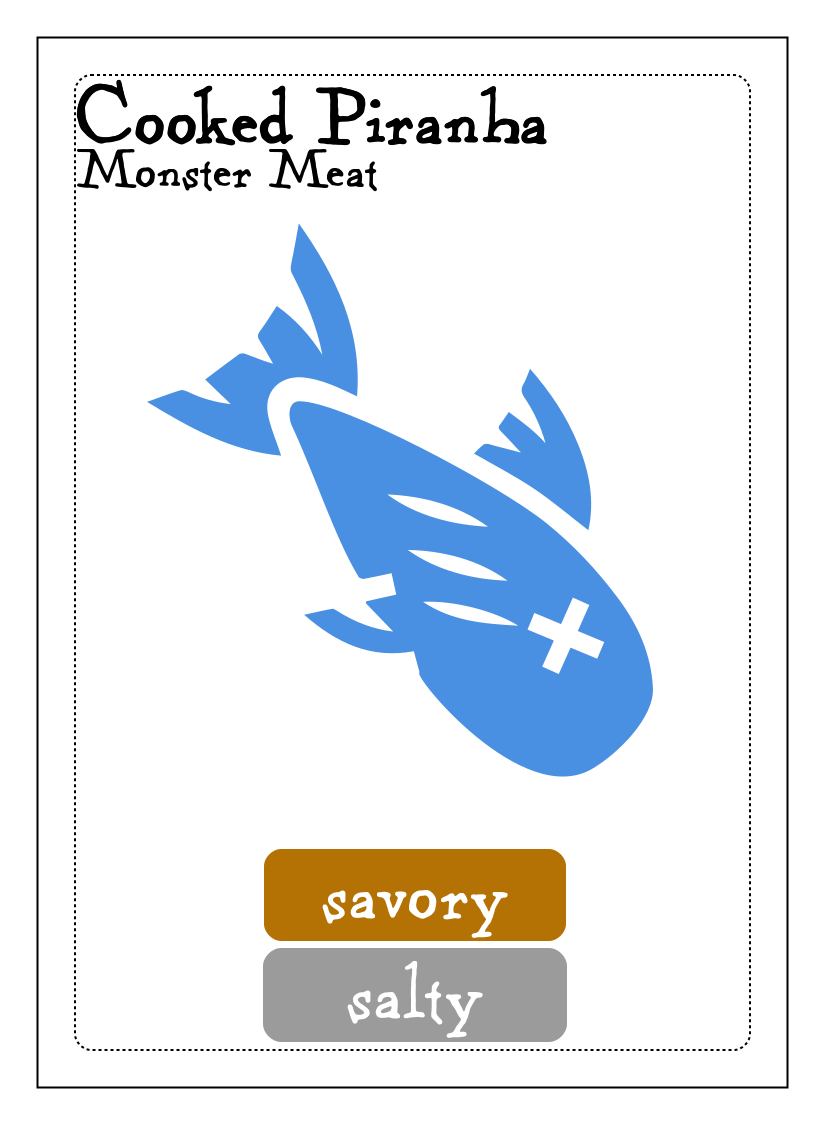
<p>As a fun exercise, let’s give it a try! I’ll add a piranha ingredient.</p>

<p>First, I’ll get a new icon for the fish. For prototyping icons (not used commercially), I like to use <a href="https://game-icons.net">https://game-icons.net</a></p>

<p>Here’s a fun piranha icon from <a href="https://game-icons.net/1x1/darkzaitzev/fried-fish.html">https://game-icons.net/1x1/darkzaitzev/fried-fish.html</a>.</p>

<p><img src="/assets/images/2026-04-04-card-design-squib/fried-fish.svg" alt="A cooked fish" class="my-class" /></p>

<p>Now that I have my art, I’ll add a row to my CSV here for the game data.</p>

<pre><code class="language-csv">title,type,qty,flavor_1,flavor_2,description,illustration
Cooked Piranha,Monster Meat,3,savory,salty,,art/counter/fried-fish.svg
</code></pre>

<p>And from here? Well, I already have my layout and deck files. All I have to do is run the command to generate the cards with <code class="language-plaintext highlighter-rouge">rake deck</code> in the command line, and now we have a new card to play with!</p>

<p><img src="/assets/images/2026-04-04-card-design-squib/ingredients_00 copy.png" alt="Cooked Piranha Card" class="my-class" /></p>

<p>If you’re interested and want to try out using Squib to make cards for yourself, I highly recommend reading the <a href="https://squib.readthedocs.io/en/latest/learning.html">official documentation</a>. They do a great job of getting you set up and going with your own cards.</p>

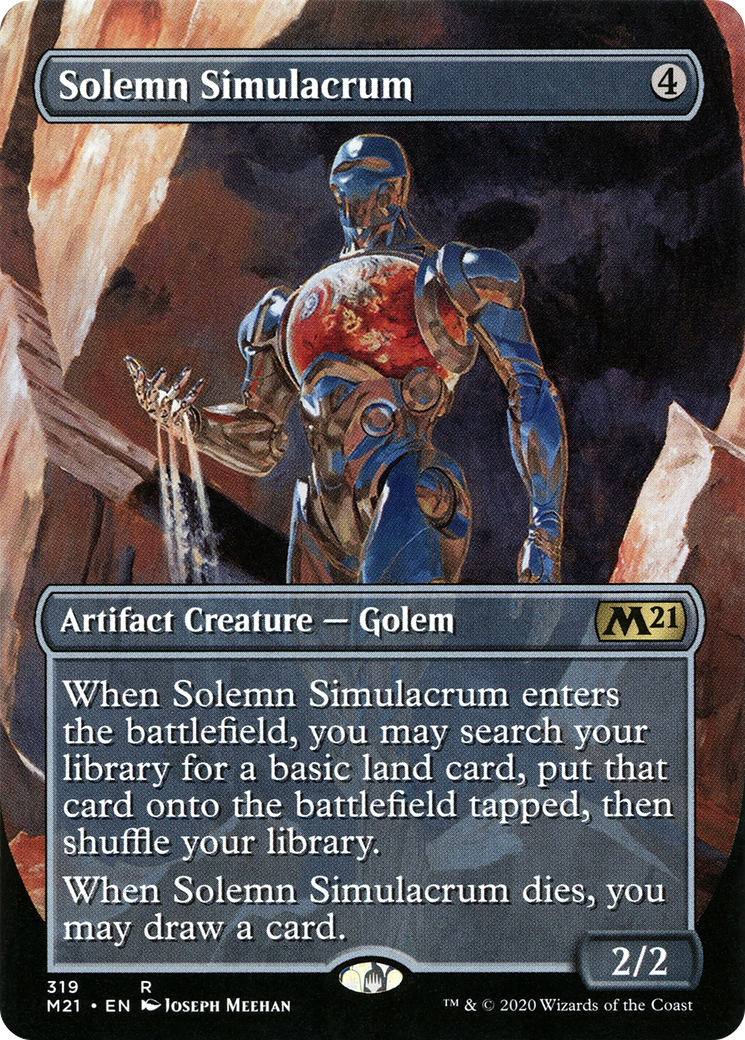
<p>If you have any questions about how I use Squib in my projects, feel free to reach out at chasestevenspersonal+bricks@gmail.com. Happy prototyping!</p>]]></content><author><name>Chase Stevens</name><email>chasestevenspersonal+bricksandcantrips@gmail.com</email></author><summary type="html"><![CDATA[In previous posts, we’ve looked at existing cards in card games like Magic the Gathering and Hearthstone. But what if we wanted to look at making our own card game? It doesn’t have to be a trading card game. It could be a limited card game like Arkham Horror, or a tabletop game that uses cards, like King of Tokyo. Today, I want to share how I designed and printed cards for a game design I made called Monster Kitchen.]]></summary></entry><entry><title type="html">A Look at Legends - Solemn Simulacrum</title><link href="https://bricksandcantrips.com/2026/03/28/a-look-at-legends-solemn-simulacrum/" rel="alternate" type="text/html" title="A Look at Legends - Solemn Simulacrum" /><published>2026-03-28T00:00:00+00:00</published><updated>2026-03-28T00:00:00+00:00</updated><id>https://bricksandcantrips.com/2026/03/28/a-look-at-legends-solemn-simulacrum</id><content type="html" xml:base="https://bricksandcantrips.com/2026/03/28/a-look-at-legends-solemn-simulacrum/"><![CDATA[<p>Today, I want to take a look at Solemn Simulacrum, a card in Magic the Gathering with a great story, and one that has stood the test of time. Why does it stir our hearts? Why does it work as a card?</p>

<p><img src="/assets/images/2026-03-28-a-look-at-legends-solemn-simulacrum/m21-319-solemn-simulacrum.png" alt="Solemn Simulacrum, a Magic the Gathering card" class="my-class" /></p>

<!--more-->

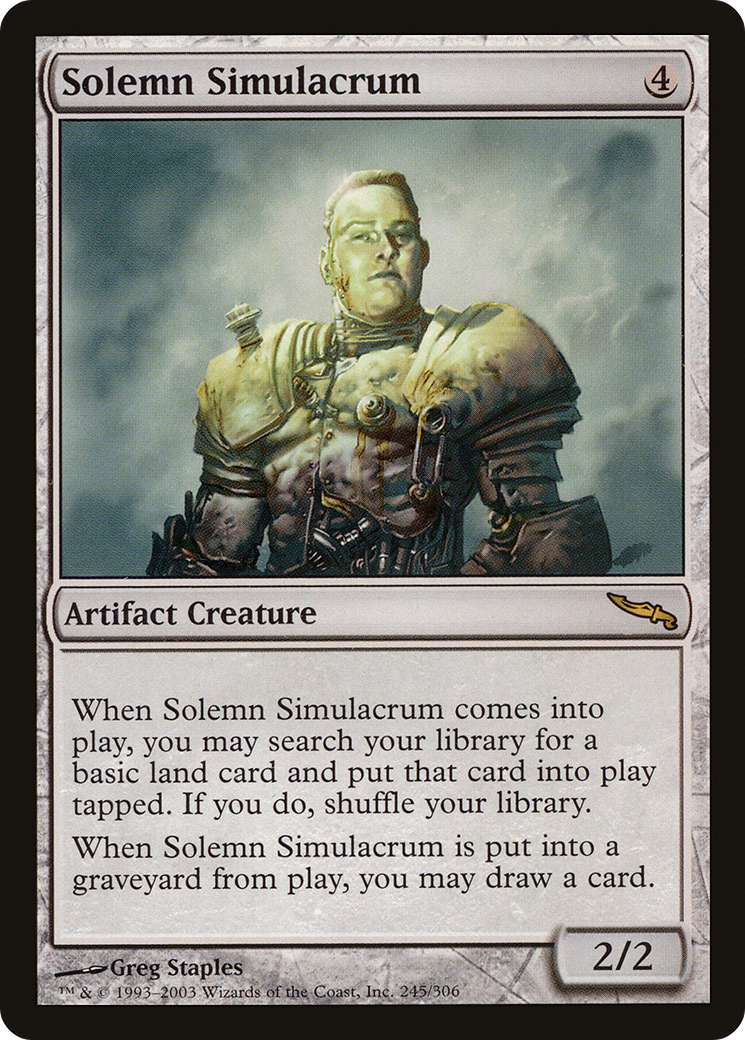
<p>Solemn Simulacrum is a 4 mana artifact creature with a power/toughness of 2/2. When you play Solemn Simulacrum, you can look through your deck for a basic land and play it tapped onto the battlefield. When Solemn Simulacrum dies, you can draw a card.</p>

<p>For four mana of any color, you can get more mana of a specific color, a body on the field, and a card draw when it dies. Solemn Simulacrum is flexible, adds value, and protects its player, leading to it being considered for any deck trying to gain value and power through to the mid or end game. Plus, it looks cool.</p>

<p><img src="/assets/images/2026-03-28-a-look-at-legends-solemn-simulacrum/mrd-245-solemn-simulacrum.png" alt="Solemn Simulacrum, a Magic the Gathering card" class="my-class" /></p>

<h2 id="backstory">Backstory</h2>

<p>Solemn Simulacrum’s origin is just as interesting as the card itself. Gavin Verhey, principal game designer of Magic the Gathering, tells the story of how Solemn Simulacrum came to be in his <a href="https://www.youtube.com/watch?v=xHpNVDipNps">Good Morning Magic video</a>.</p>

<p>The card design is submitted by Jens Thorén, a magic player who won a Magic event called The Magic Invitational back in 2002.</p>

<p>The winner got their own card design made as a real Magic the Gathering card.</p>

<p>Jens submitted their card design as follows.</p>
<div class="language-plaintext highlighter-rouge"><div class="highlight"><pre class="highlight"><code>Forestfolk
2{G}{U}
Creature - Elf Wizard
2/2
When Forestfolk comes into play, you may search your library for a basic land card and put that card into play tapped. Then shuffle your library.
When Forestfolk leaves play, draw a card.
</code></pre></div></div>

<p>The submitted design is remarkably close to the version that was printed. The only changes were making the mana generic, instead of requiring one green and one blue mana, making the creature an artifact, and changing the <code class="language-plaintext highlighter-rouge">leaves play</code> trigger to a trigger that happens on death.</p>

<p>Ever since then, Solemn Simulacrum has been a welcome addition to standard decks, limited pools, and commander brews.</p>

<h2 id="easy-to-add-value-piece">Easy to Add Value Piece</h2>

<p>When looking at cards with abilities that happen when the card is played, I like to think of them as a creature and a spell stapled together. Cards with abilities that happen when they die are similar, except the ability takes longer to happen, and the other player can take steps to prevent that creature from dying, and that ability from happening. When you have both abilities on a creature, you staple two spells to it.</p>

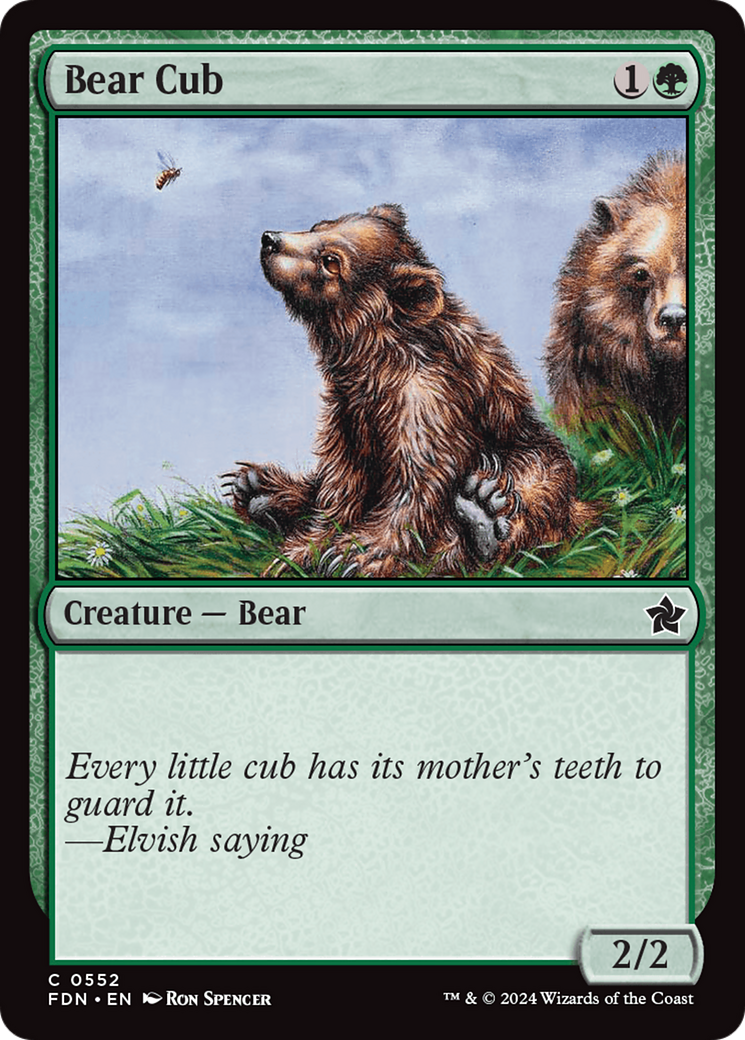
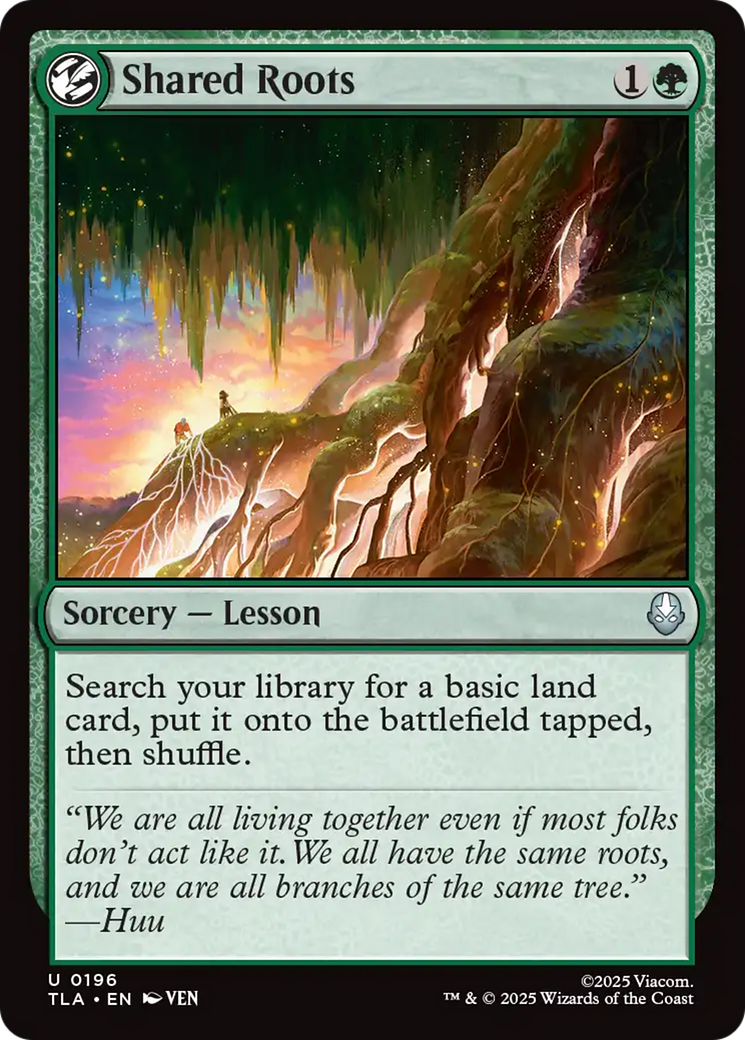
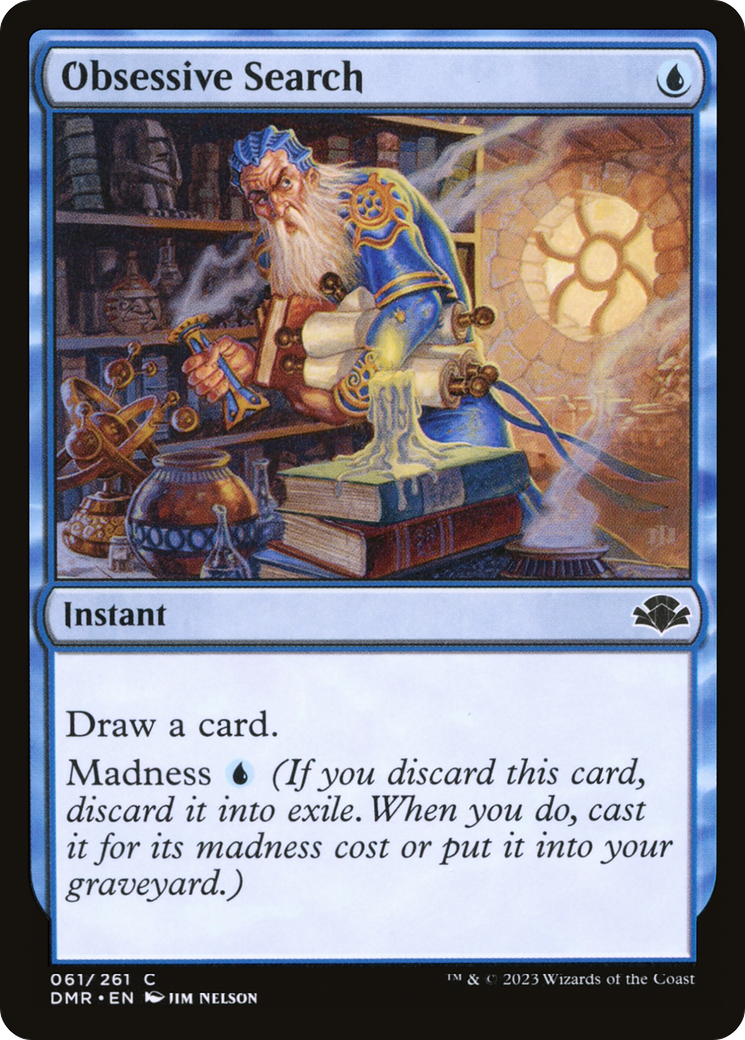
<p>From that perspective, we can think of Solemn Simulacrum as a Bear Cub with a Shared Roots and Obsessive Search stapled onto it – all with no color restriction.</p>

<div class="triple-double-wrapper">
  <img class="my-class" src="/assets/images/2026-03-28-a-look-at-legends-solemn-simulacrum/fdn-552-bear-cub.png" alt="Bear Cub, a Magic the Gathering card" />
  <img class="my-class" src="/assets/images/2026-03-28-a-look-at-legends-solemn-simulacrum/tla-196-shared-roots.png" alt="Shared Roots, a Magic the Gathering card" />
  <img class="my-class" src="/assets/images/2026-03-28-a-look-at-legends-solemn-simulacrum/dmr-61-obsessive-search.png" alt="Obsessive Search, a Magic the Gathering card" />
</div>

<p>This is one of the reasons for Solemn Simulacrum’s popularity. You get three cards in one that can go into any deck.</p>

<h2 id="asymmetrical-enters-and-death-abilities">Asymmetrical Enters and Death Abilities</h2>

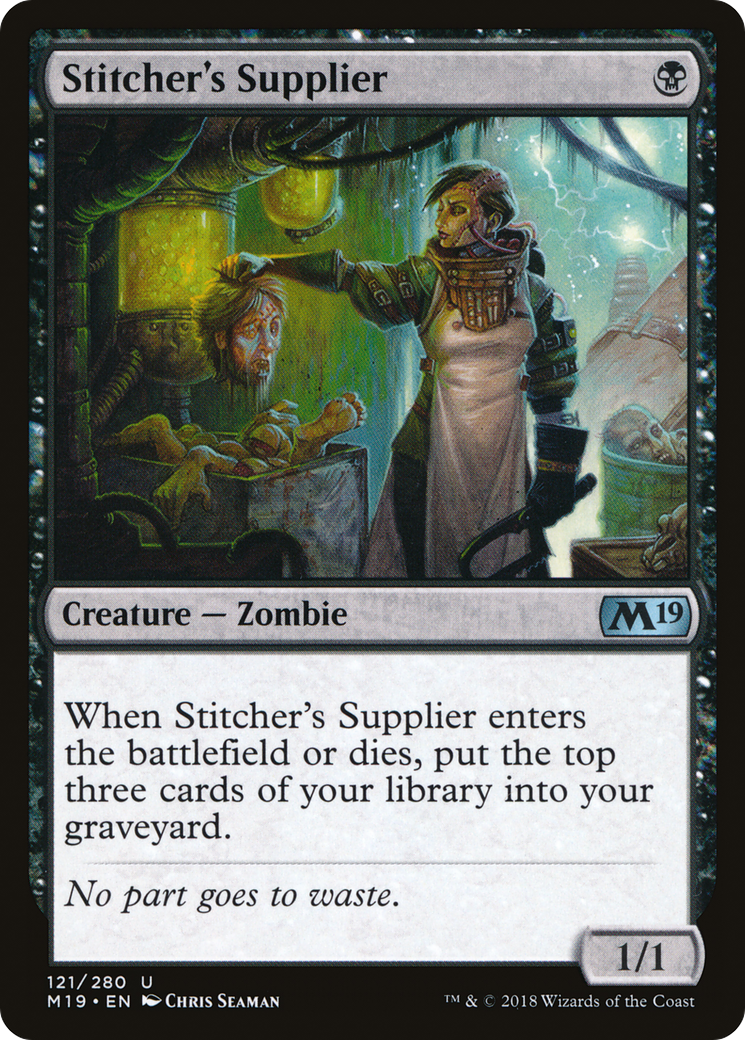
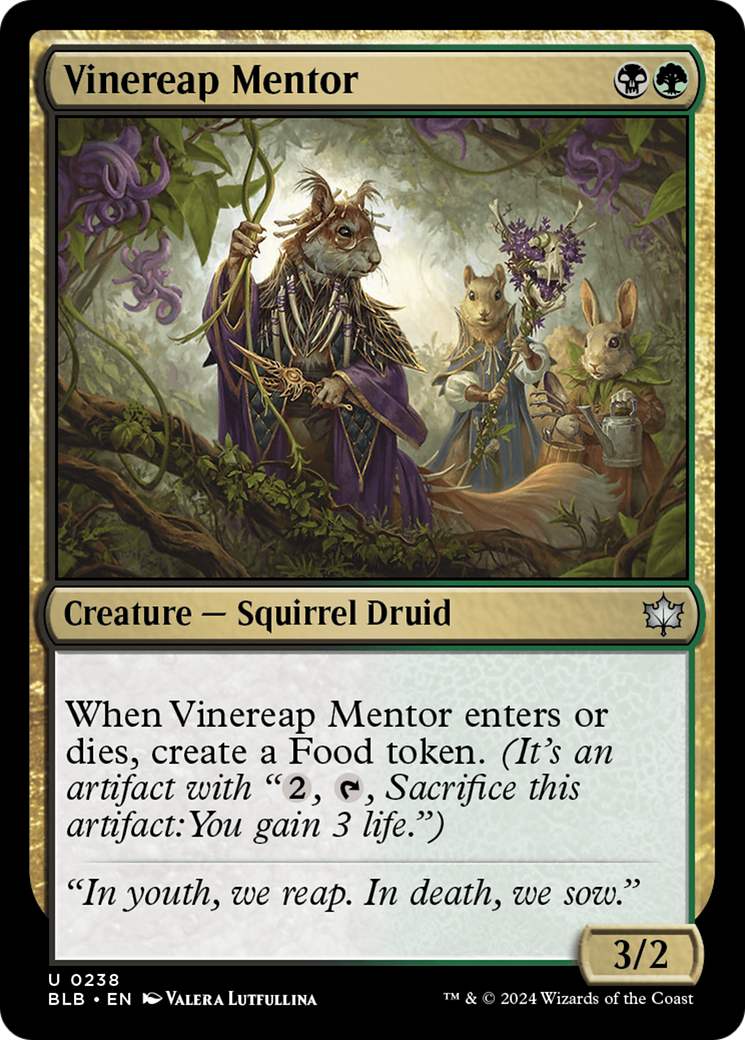
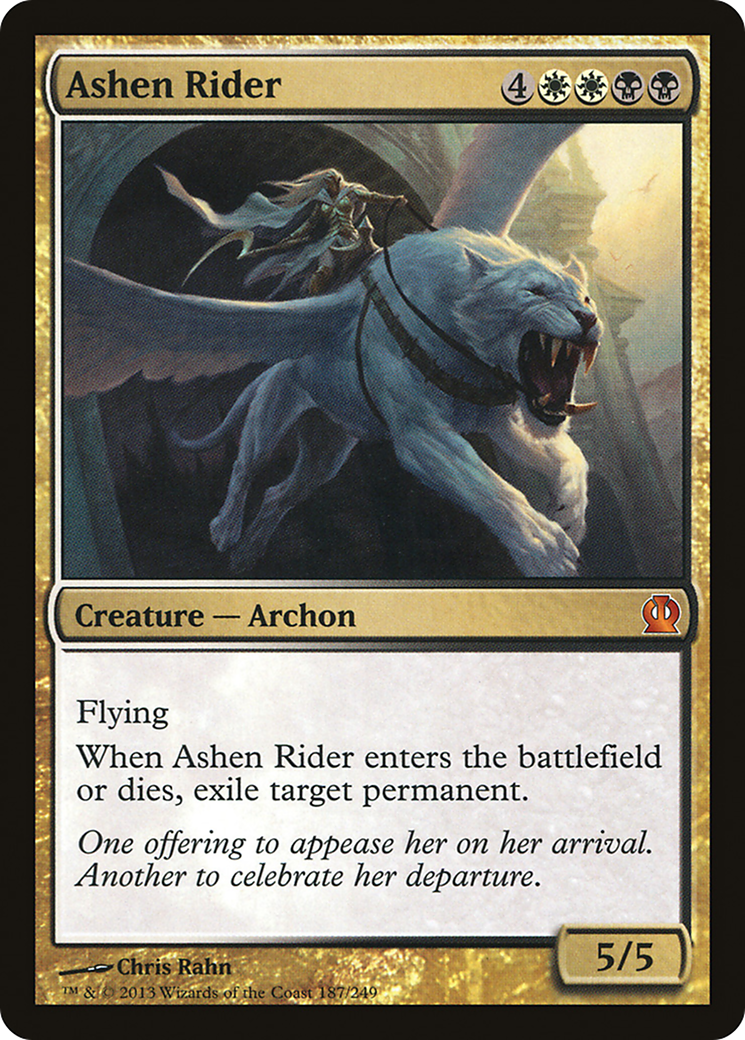
<p>An interesting detail of Solemn Simulacrum is that its enter ability and death ability do different things. We can contrast that with creatures that have the same ability that is triggered on entering the battlefield and dying.</p>

<div class="triple-double-wrapper">
  <img class="my-class" src="/assets/images/2026-03-28-a-look-at-legends-solemn-simulacrum/m19-121-stitcher-s-supplier.png" alt="Stitcher's Supplier, a Magic the Gathering card" />
  <img class="my-class" src="/assets/images/2026-03-28-a-look-at-legends-solemn-simulacrum/blb-238-vinereap-mentor.png" alt="Vinereap Mentor, a Magic the Gathering card" />
  <img class="my-class" src="/assets/images/2026-03-28-a-look-at-legends-solemn-simulacrum/ths-187-ashen-rider.png" alt="Ashen Rider, a Magic the Gathering card" />
</div>

<p>These cards with two ways of triggering their effects are easier to understand and have shorter text boxes. For cards that generate resources or help with payoffs in your deck, two triggers can be great.</p>

<p>However, these cards can be somewhat simple and flat compared to cards with two abilities. Not that simplicity isn’t valued – I enjoy simple design, and I think that complexity is a cost. If you add complexity to your design, you should be using it to make something interesting or fun.</p>

<p>With Solemn Simulacrum and asymmetrical enter and death abilities, we add a little complexity, and get a lot of design space back in return.</p>

<p>Asymmetrical entering abilities and death abilities help to tell a story about a card’s journey. You can tell a before and after story, much like <a href="/2026/02/28/common-gold-ecstatic-awakener">transformation cards like Ecstatic Awakener</a>. With entering triggers and death triggers, you can achieve this same setup and payoff with only one side of a card.</p>

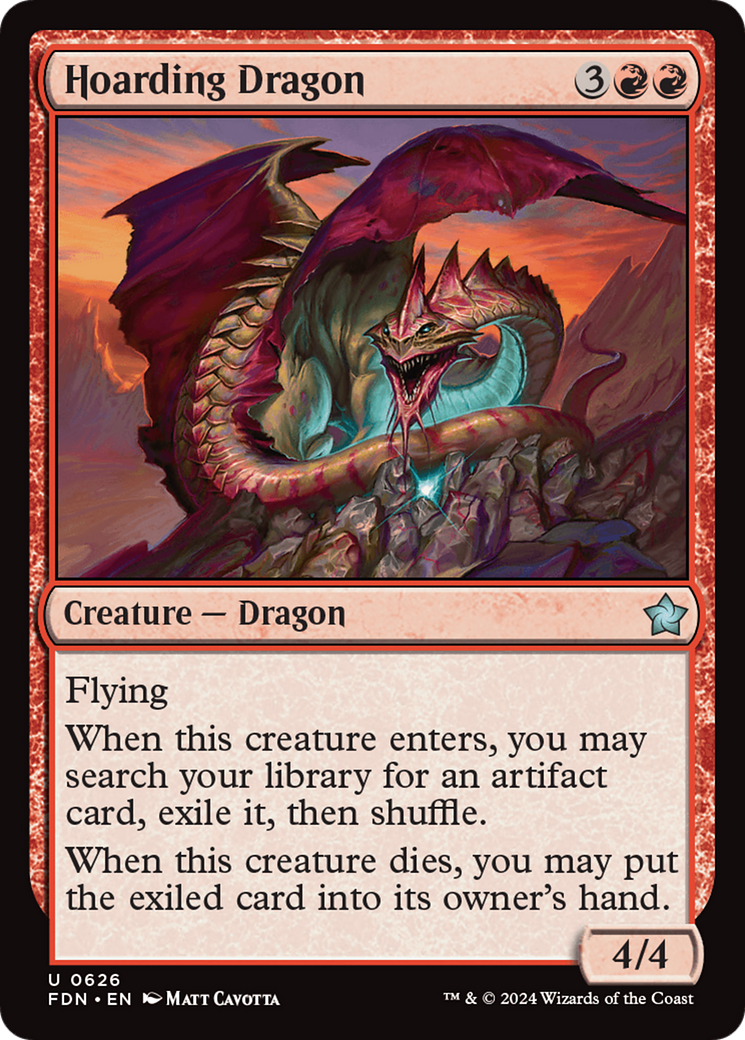
<p><img src="/assets/images/2026-03-28-a-look-at-legends-solemn-simulacrum/fdn-626-hoarding-dragon.png" alt="Hoarding Dragon, a Magic the Gathering card" class="my-class" /></p>

<p>Hoarding Dragon above shows how the asymmetrical entering and death triggers can tell a story. Here we have a dragon who searches and snatches away a valuable artifact, as dragons often do. When the dragon is slain, the artifact is returned. You could even have a Hoarding Dragon snatch a Solemn Simulacrum!</p>

<p>Does Solemn Simulacrum’s abilities help tell a story? Does Solemn Simulacrum enter the battlefield looking for something, and brings in a land to represent its journey? Does it know that its owner will benefit from its death?</p>

<p>Solemn Simulacrum received its first flavor text 21 years after its initial printing. It reads</p>

<blockquote>
  <p>It has outlasted its creator, their kingdom, and even the castle walls, but still it stands watch.</p>
</blockquote>

<p>Perhaps its sojourn is a search for meaning after being abandoned for so long, and its death brings sweet release.</p>

<h2 id="conclusion">Conclusion</h2>

<p>When Jens Thorén submitted their design for Forestfolk, they probably had no idea that the end product would become as popular as Solemn Simulacrum. A flexible card that adds mana ramping and card draw, has a great origin story, and evokes a tragic tale has captured the hearts and minds of Magic players over decades.</p>]]></content><author><name>Chase Stevens</name><email>chasestevenspersonal+bricksandcantrips@gmail.com</email></author><summary type="html"><![CDATA[Today, I want to take a look at Solemn Simulacrum, a card in Magic the Gathering with a great story, and one that has stood the test of time. Why does it stir our hearts? Why does it work as a card?]]></summary><media:thumbnail xmlns:media="http://search.yahoo.com/mrss/" url="https://bricksandcantrips.com/assets/images/2026-03-28-a-look-at-legends-solemn-simulacrum/m21-319-solemn-simulacrum.png" /><media:content medium="image" url="https://bricksandcantrips.com/assets/images/2026-03-28-a-look-at-legends-solemn-simulacrum/m21-319-solemn-simulacrum.png" xmlns:media="http://search.yahoo.com/mrss/" /></entry><entry><title type="html">Designing Dinosaur Cards</title><link href="https://bricksandcantrips.com/2026/03/21/designing-dinosaur-cards/" rel="alternate" type="text/html" title="Designing Dinosaur Cards" /><published>2026-03-21T00:00:00+00:00</published><updated>2026-03-21T00:00:00+00:00</updated><id>https://bricksandcantrips.com/2026/03/21/designing-dinosaur-cards</id><content type="html" xml:base="https://bricksandcantrips.com/2026/03/21/designing-dinosaur-cards/"><![CDATA[<p>Dinosaurs are awesome! Let’s take a look at the design of some dinosaur cards, and see if we can’t come up with some new ones of our own.</p>

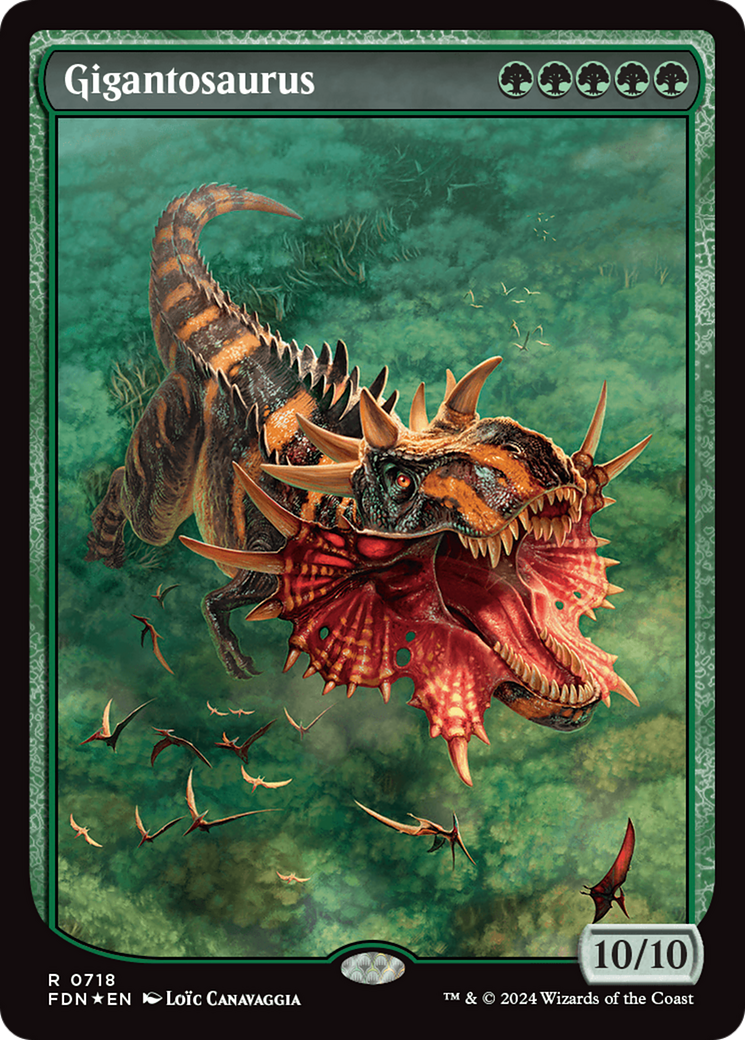
<p><img src="/assets/images/2026-03-15-dinosaurs-in-magic/fdn-718-gigantosaurus.png" alt="Gigantosaurus Full Art" class="my-class" />
<!--more--></p>

<p>Dinosaurs have a unique quality among other elements in our fantasy media in that they were real. Of course, no one has ever seen a living dinosaur, but fossils show that these terrible tyrant lizards walked and stomped on the same ground that we walk today.</p>

<p>Scientists have studied dinosaur fossils and records for hundreds of years. We have real world knowledge of dinosaurs we can take inspiration from. Let’s try and define some qualities of dinosaurs in games, and see what designs we can come up with.</p>

<h2 id="primal-dinosaurs">Primal Dinosaurs</h2>
<p>Dinosaurs existed in a prehistoric time. They inhabited the same world that we live in today, separated from us by millions of years.</p>

<p>They represent primal nature at its height, unmarred by human action or artifice. They operated on instinct, looking only to eat, procreate, and not die.</p>

<p>In terms of gameplay, dinosaurs in games tend to fall on the lower end of complexity. You won’t find a dinosaur counterspell or a dinosaur artifact with multiple effects. Dinosaurs are known for many things, but subtlety is not one of them.</p>

<h2 id="big-dinosaurs">Big Dinosaurs</h2>
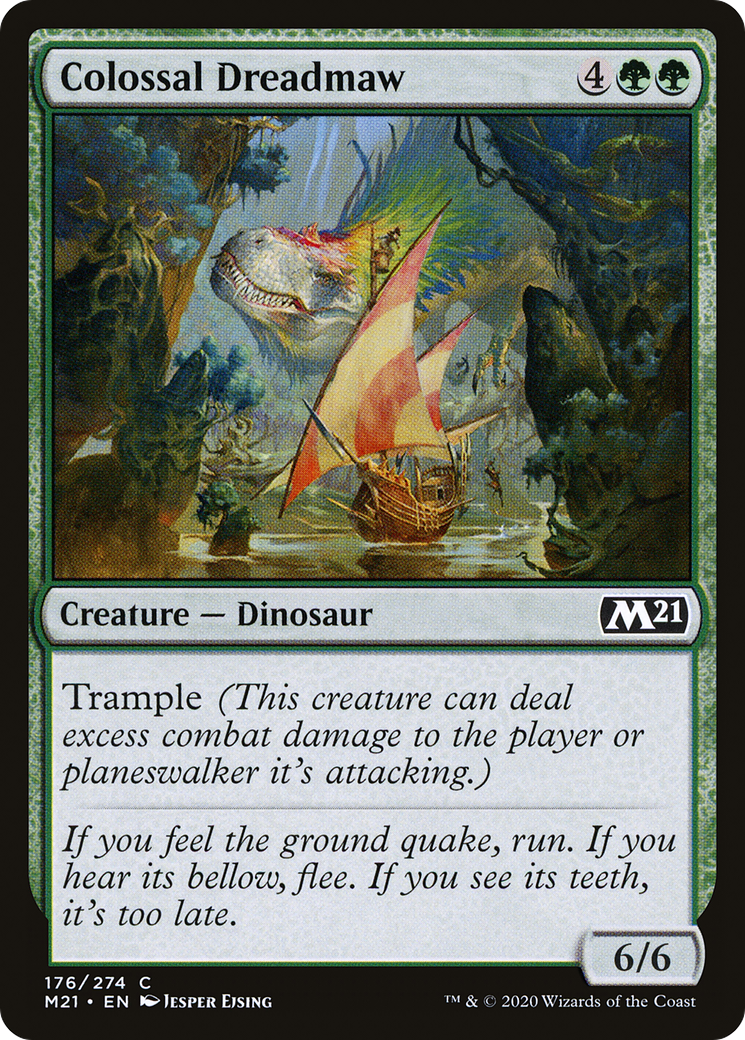
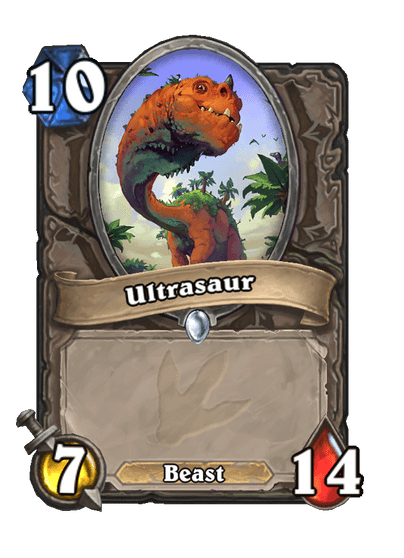
<p>Dinosaurs are, famously, big. They are the largest animals to ever walk the earth.</p>

<div class="triple-double-wrapper">
  <img class="my-class" src="/assets/images/2026-03-15-dinosaurs-in-magic/m21-176-colossal-dreadmaw.png" alt="Colossal Dreadmaw" />
  <img class="my-class" src="/assets/images/2026-03-15-dinosaurs-in-magic/hearthstone-ungoro-ultrasaur.png" alt="Ultrasaur" />
</div>

<p>Dinosaurs as such are usually put onto big cards, both mechanically and by flavor.</p>

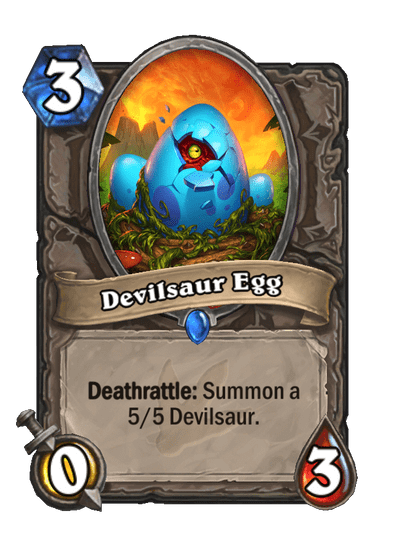
<h2 id="dinosaur-eggs">Dinosaur Eggs</h2>
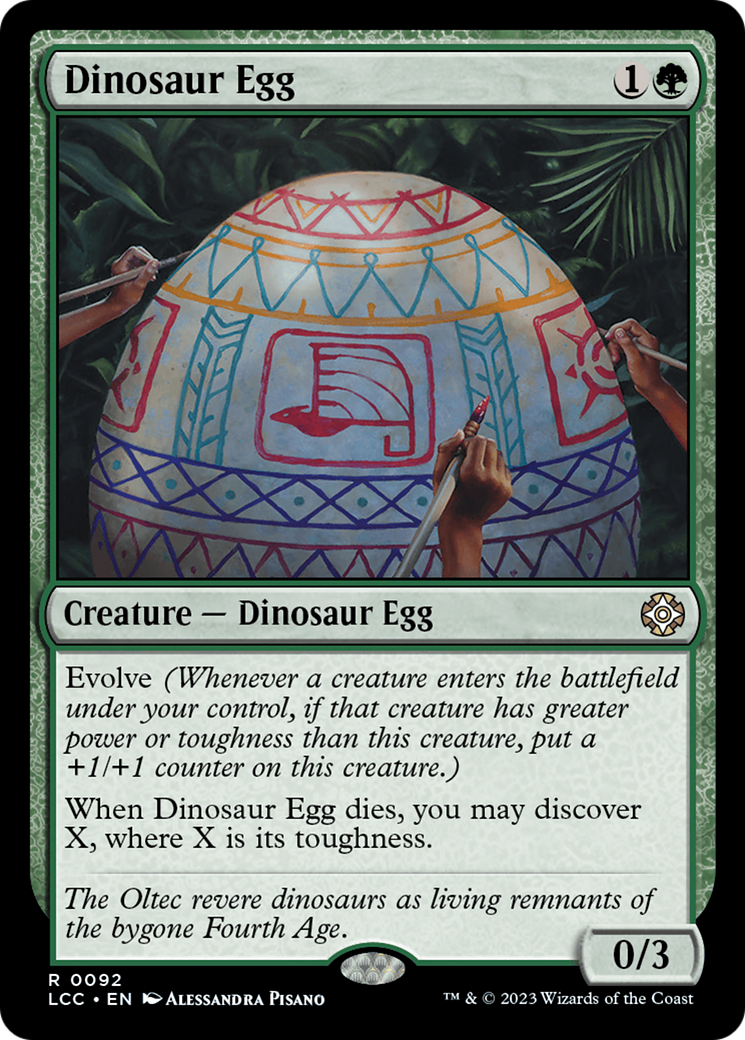
<p>Dinosaurs laid eggs to procreate.</p>

<div class="triple-double-wrapper">
  <img class="my-class" src="/assets/images/2026-03-15-dinosaurs-in-magic/lcc-92-dinosaur-egg.png" alt="Dinosaur Egg" />
  <img class="my-class" src="/assets/images/2026-03-15-dinosaurs-in-magic/hearthstone-ungoro-devilsaur-egg.png" alt="Devilsaur Egg" />
</div>

<p>Eggs themselves have a few intrinsic properties. Eggs lie still and do nothing, but they carry the promise of future life. Eggs can also contain mystery – if you don’t know the parent, you may be surprised when the egg hatches.</p>

<h2 id="dinosaur-eggnappers">Dinosaur Eggnappers</h2>
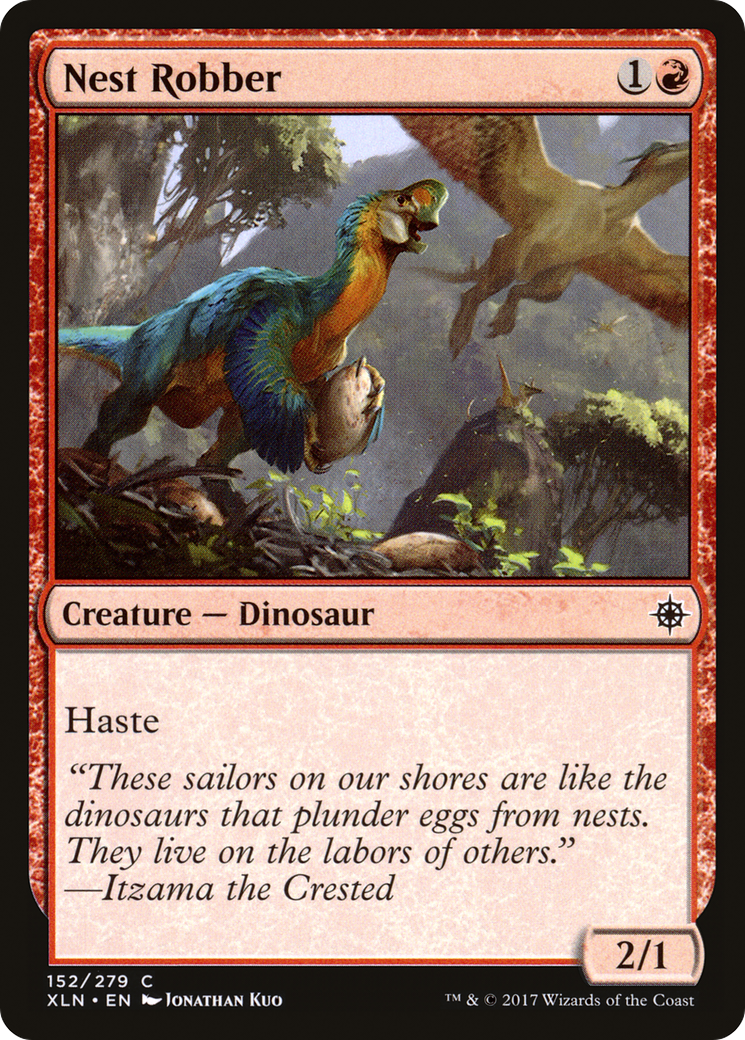
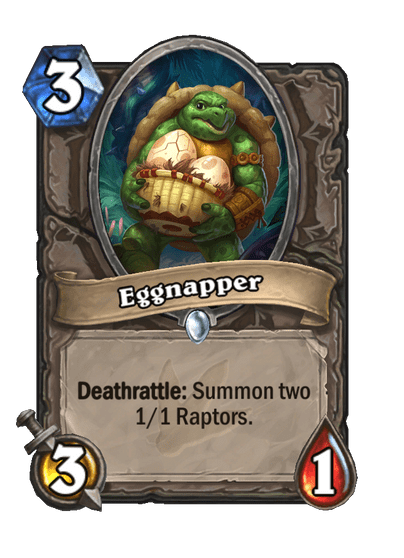
<p>Dinosaurs are big, and so were their eggs. This created an opportunity for animals to take dinosaur eggs as a source of food.</p>

<div class="triple-double-wrapper">
  <img class="my-class" src="/assets/images/2026-03-15-dinosaurs-in-magic/xln-152-nest-robber.png" alt="Nest Robber" />
  <img class="my-class" src="/assets/images/2026-03-15-dinosaurs-in-magic/hearthstone-ungoro-eggnapper.png" alt="Eggnapper" />
</div>

<p>We see depictions of eggnappers in card games, but their mechanics are usually bare and only tangentially related to the act of robbing a nest. Nest Robber has haste, to imply that it is quick and nimble. Eggnapper appears to be quite unsuccessful in its egg napping, summoning raptors when it falls.</p>

<p>Many dinosaur species suffered from the issue of having their eggs robbed, and it seems that in reality, eggnappers were quite successful. Personally, I think there’s some design space to depict a successful eggnapper (we’ll get to that in a bit.)</p>

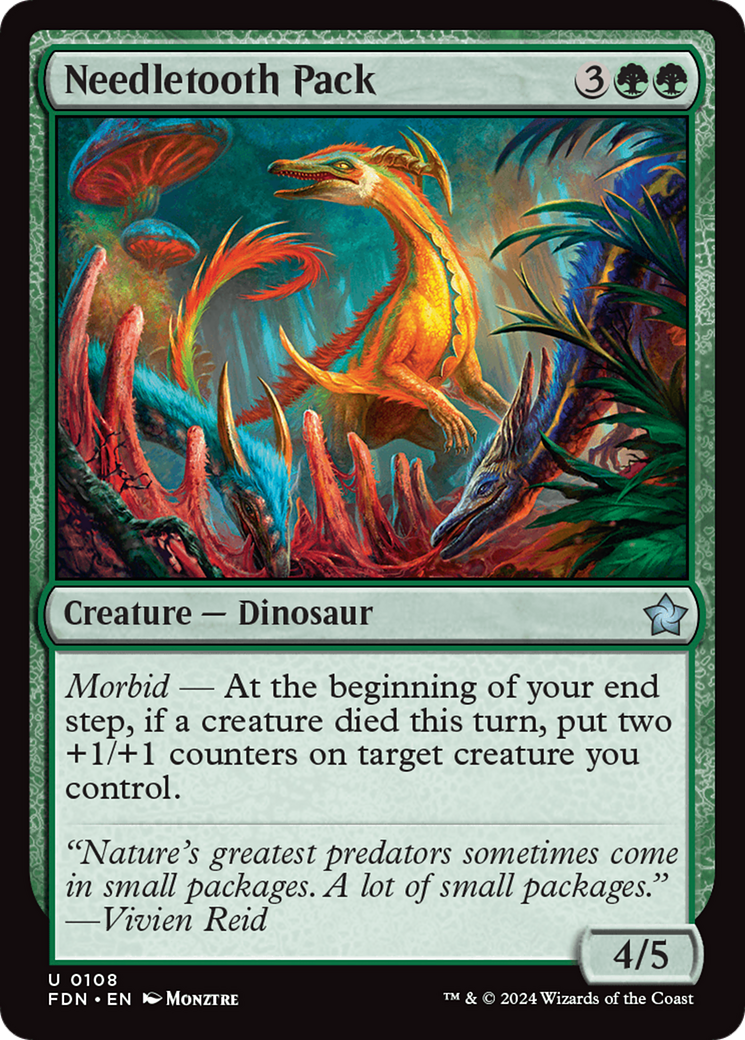
<h2 id="scavenger-dinosaurs">Scavenger Dinosaurs</h2>
<p>Dinosaurs had many strategies for finding sources of food. Some were herbivores, eating different types of plants. Some were carnivores, hunting down prey. Other carnivores were scavengers, meaning that they ate dead animals that they found.</p>

<p><img src="/assets/images/2026-03-15-dinosaurs-in-magic/fdn-108-needletooth-pack.png" alt="Needletooth Pack" class="my-class-small" /></p>

<p>Contrary to popular belief, there were quite a few scavengers among our dinosaur friends. Tyrannosaurus Rex, king of dinosaurs, was an apex predator, but also scavenged and ate what it could when the opportunity arose.</p>

<h2 id="dinosaur-herds">Dinosaur Herds</h2>
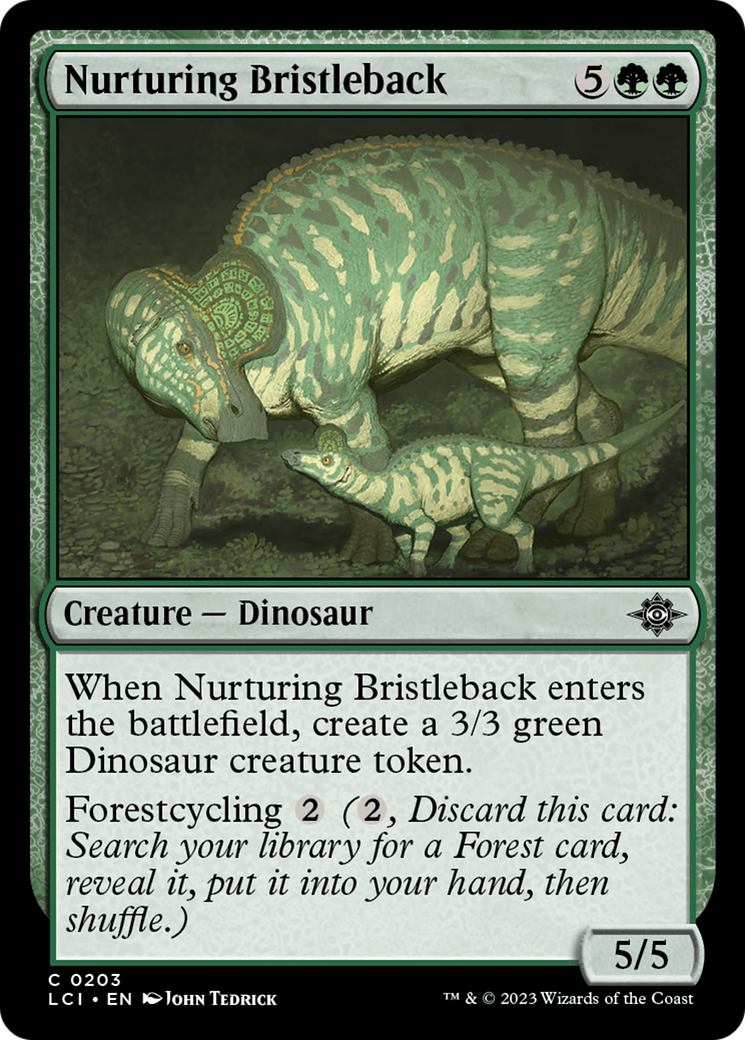
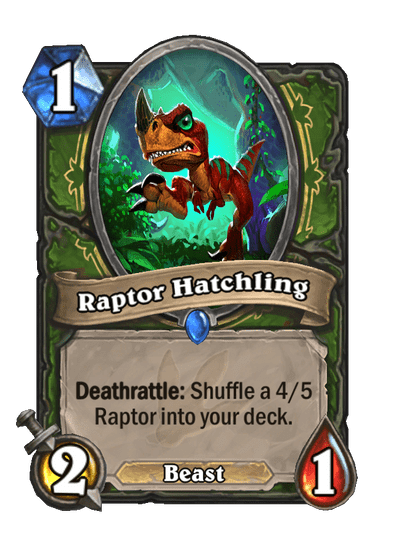
<p>Some dinosaurs traveled in herds together. Herbivores would live together in groups for protection, and predators would hunt together in packs to bring down prey larger than they were.</p>

<div class="triple-double-wrapper">
  <img class="my-class" src="/assets/images/2026-03-15-dinosaurs-in-magic/lci-203-nurturing-bristleback.png" alt="Nurturing Bristleback" />
  <img class="my-class" src="/assets/images/2026-03-15-dinosaurs-in-magic/hearthstone-ungoro-raptor-hatching.png" alt="Raptor Hatchling." />
</div>

<h2 id="fighting-dinosaurs">Fighting Dinosaurs</h2>
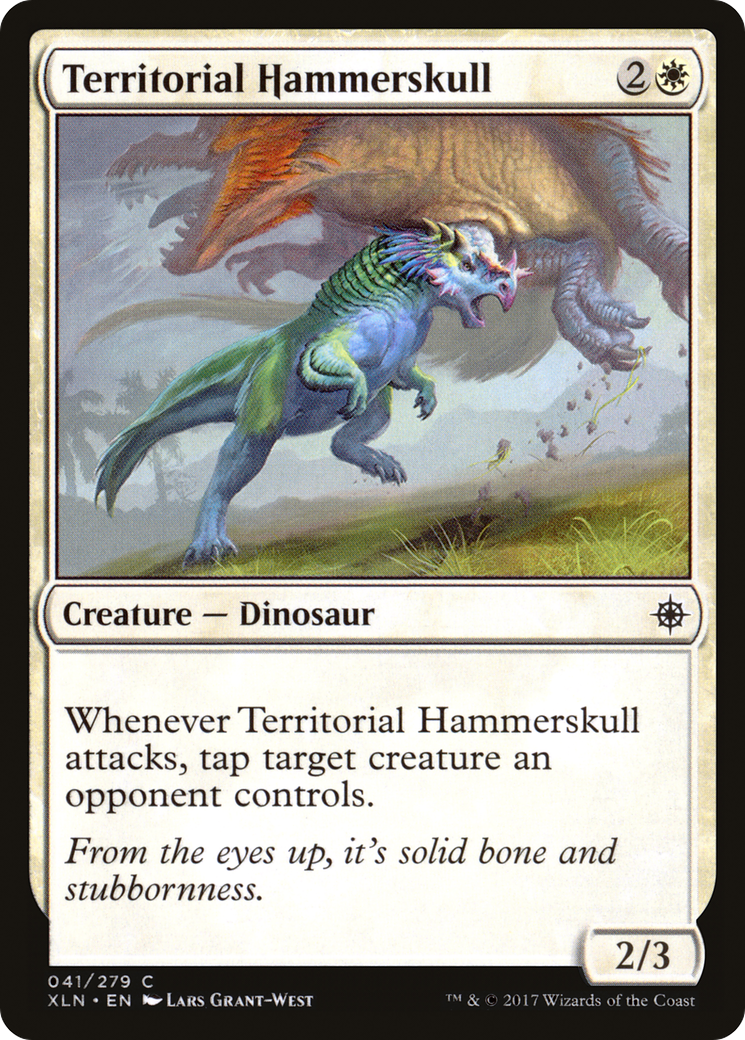
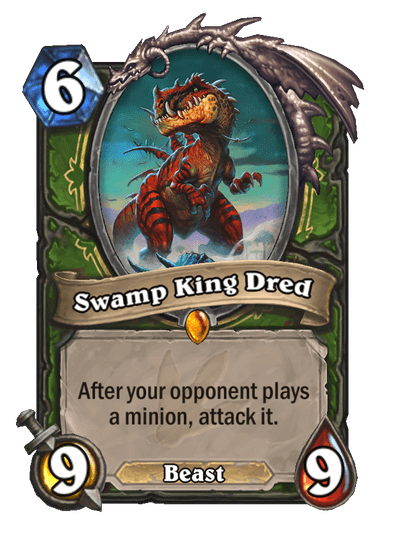
<p>Dinosaurs had to fight to live. Either you were the hunter, and you were killing another dinosaur for your next meal, or you were the prey, and you were fighting to survive.</p>

<div class="triple-double-wrapper">
  <img class="my-class" src="/assets/images/2026-03-15-dinosaurs-in-magic/xln-41-territorial-hammerskull.png" alt="Territorial Hammerskull" />
  <img class="my-class" src="/assets/images/2026-03-15-dinosaurs-in-magic/hearthstone-ungoro-swamp-king-dred.png" alt="Swamp King Dred" />
</div>

<p>Different dinosaurs had different tools at their disposal. Pachycephalosaurus had a hard skull to headbutt with, Stegosaurus had a Thagomizer on its tail to swat away foes, and Tyrannosaurus Rex could chomp through anything.</p>

<h2 id="dinosaurs-as-pandoras-box">Dinosaurs as Pandora’s Box</h2>
<p><em>“Your scientists were so preoccupied with whether or not they could, they didn’t stop to think if they should.”</em></p>

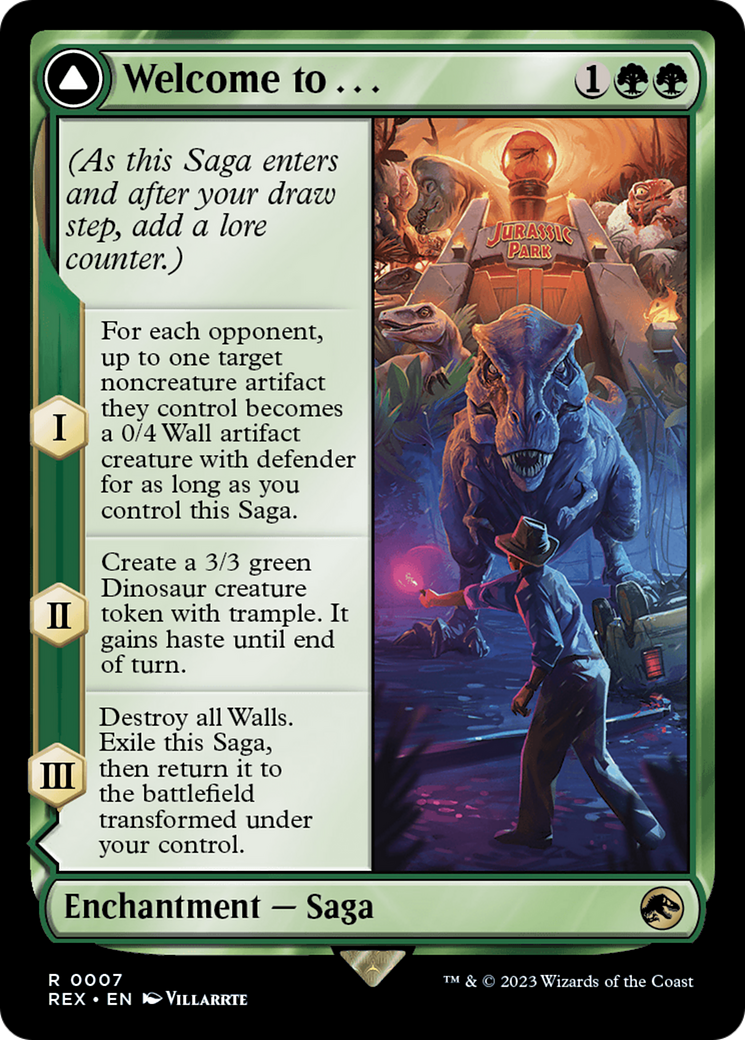
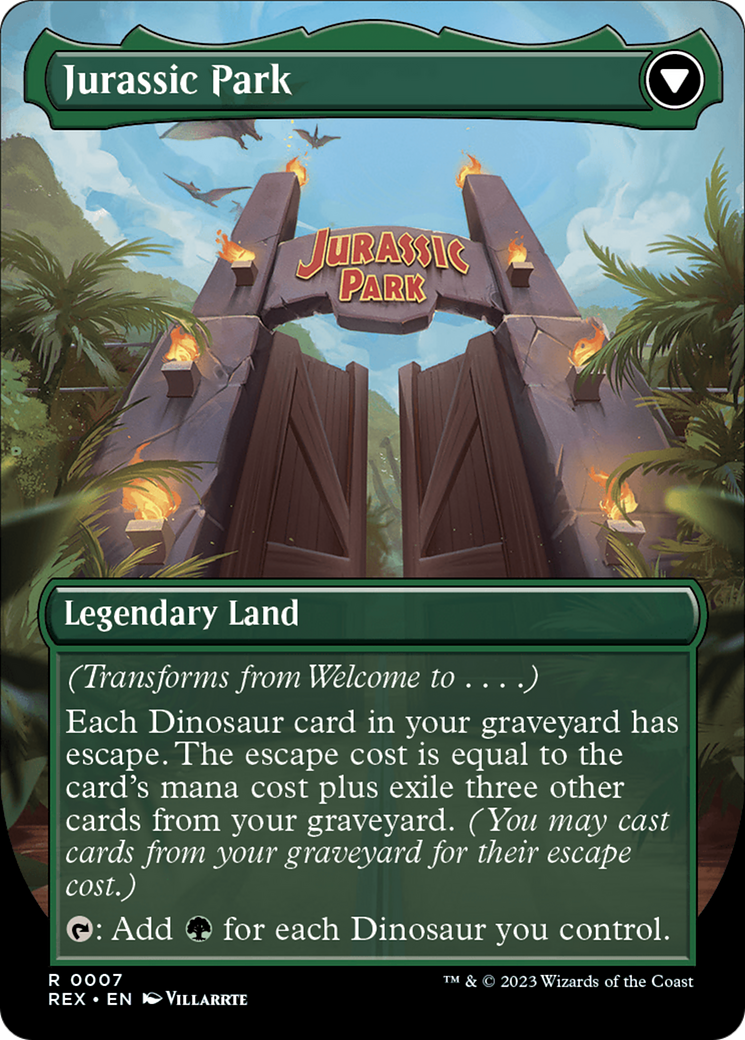
<p>It’s hard to talk about dinosaurs, and especially people’s perception of dinosaurs, without talking about elephant, or Tyrannosaurus Rex, in the room, <em>Jurassic Park</em>.</p>

<div class="triple-double-wrapper">
  <img class="my-class" src="/assets/images/2026-03-15-dinosaurs-in-magic/rex-7-welcome-to.png" alt="Welcome to..." />
  <img class="my-class" src="/assets/images/2026-03-15-dinosaurs-in-magic/rex-7-jurassic-park.png" alt="Jurassic Park" />
</div>

<p>Ever since <em>Jurassic Park</em>, dinosaurs in media have been presented as a Pandora’s Box. We may have the ability to alter DNA and restore extinct species back to life, but should we?</p>

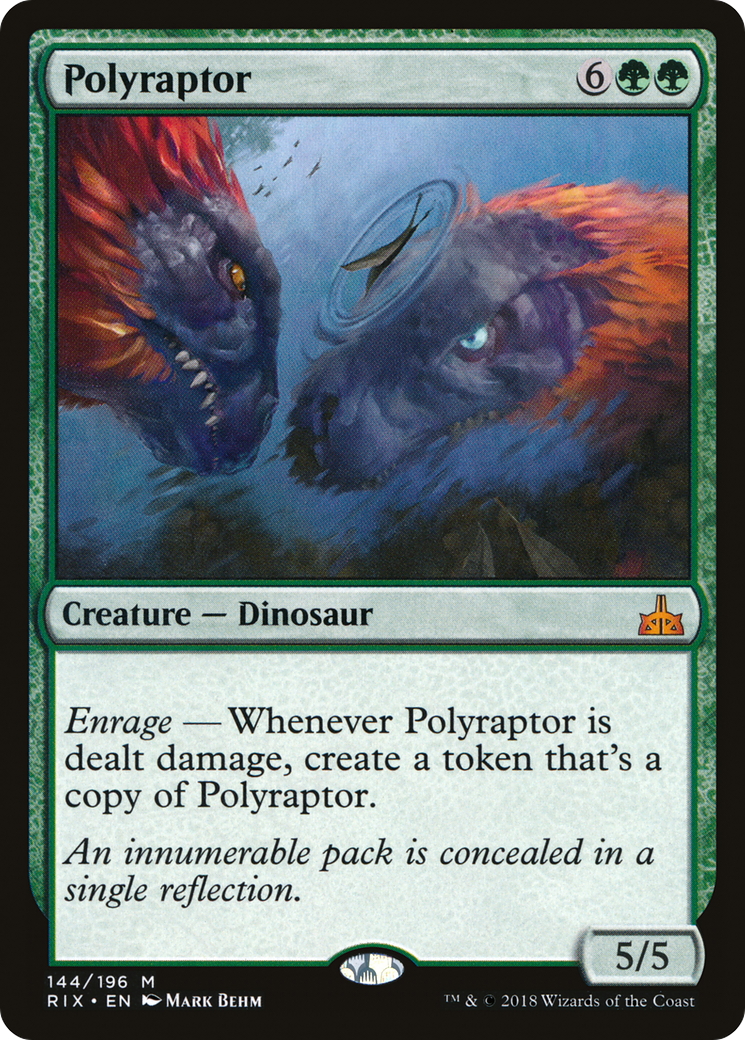
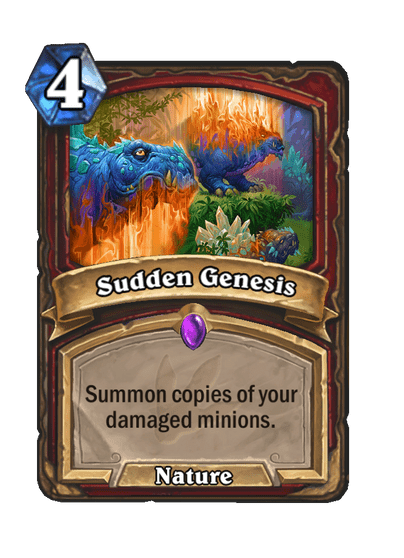
<p>This notion that our scientific advances in genetic mutations could have unintended consequences has permeated throughout dinosaurs’ media representation.</p>

<div class="triple-double-wrapper">
  <img class="my-class" src="/assets/images/2026-03-15-dinosaurs-in-magic/rix-144-polyraptor.png" alt="Polyraptor" />
  <img class="my-class" src="/assets/images/2026-03-15-dinosaurs-in-magic/hearthstone-ungoro-sudden-genesis.png" alt="Sudden Genesis" />
</div>

<p>In card games, this fear of what could happen with genetic alterations and dinosaurs comes to be represented in the form of creating copies of creatures. The copying effect has a strong flavor of unleashing a terrible power.</p>

<h2 id="meteoric-extinction">Meteoric Extinction</h2>
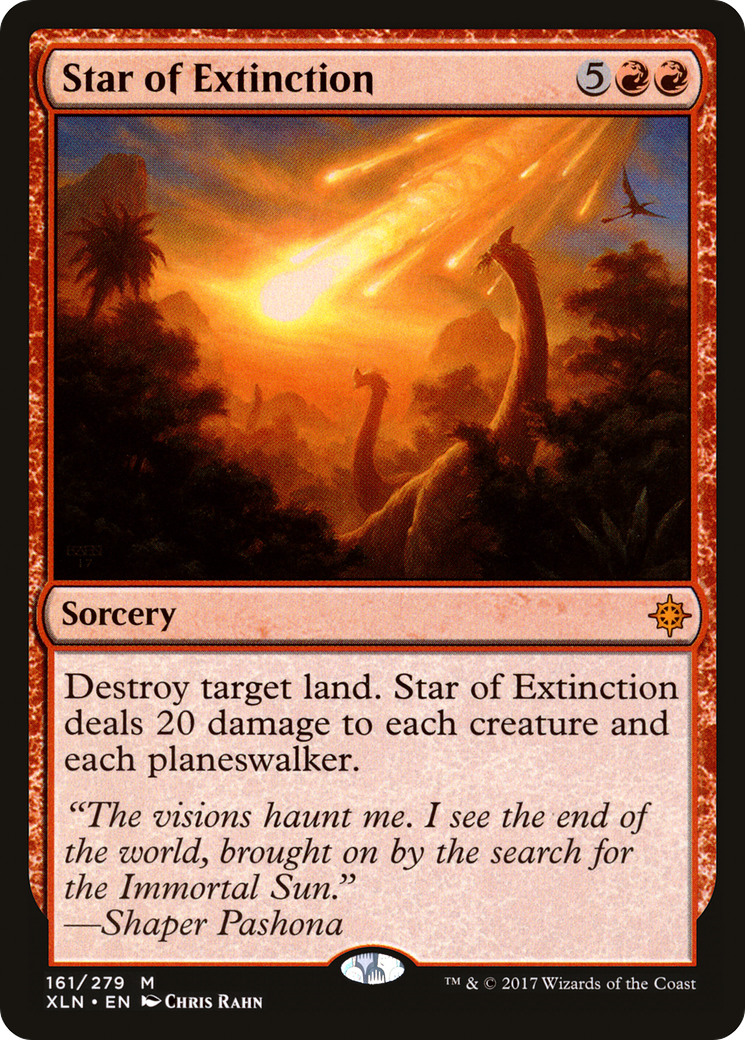
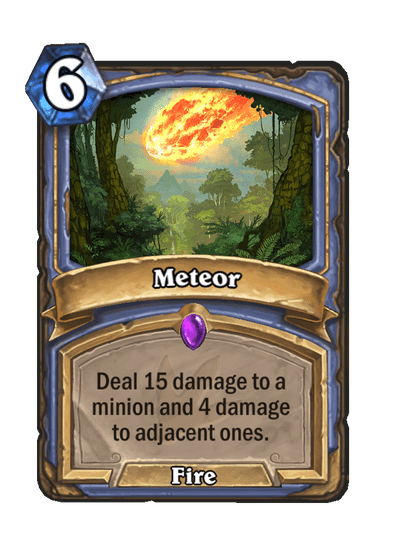
<p>No one knows for sure what led to the end of the dinosaurs, but the prevailing belief among scientists is that a meteor hit Earth, creating a devastating impact around it, and altering the atmosphere and the ecosystem of the planet such that dinosaurs could no longer thrive.</p>

<div class="triple-double-wrapper">
  <img class="my-class" src="/assets/images/2026-03-15-dinosaurs-in-magic/xln-161-star-of-extinction.png" alt="Star of Extinction" />
  <img class="my-class" src="/assets/images/2026-03-15-dinosaurs-in-magic/hearthstone-ungoro-meteor.png" alt="Meteor" />
</div>

<p>In card games, this meteoric event is represented through spells or actions that deal massive damage to multiple creatures, and potentially wiping the board.</p>

<h2 id="our-own-designs">Our Own Designs</h2>
<p>After looking through hundreds of cards and seeing what dinosaurs existed, I wanted to make some of my own!</p>

<div class="language-plaintext highlighter-rouge"><div class="highlight"><pre class="highlight"><code>CARDNAME (Triceratops)
3{W}
Creature - Dinosaur
3/2
---
CARDNAME enters the battlefield with a shield counter on it.
CARDNAME has first stike as long as CARDNAME has a shield counter on it,
</code></pre></div></div>
<p>This card is a Triceratops that fights ferociously with its crest, but once that has broken, it’s much easier to defeat.</p>

<p>Mechanically, this would be a very tough creature to fight. The shield counter means it ignores the first instance of damage it gets, and first strke means that it deals damage before receiving it. I could see this card being quite strong. We could increase the mana cost by one, or alternatively remove the first strike ability and add two toughness, making it a 3/4.</p>

<div class="language-plaintext highlighter-rouge"><div class="highlight"><pre class="highlight"><code>CARDNAME (Pack Leader)
5{W}
Creature - Dinosaur
3/4
---
When this creature enters, create two 2/2 TOKEN NAME.
</code></pre></div></div>
<p>An army-in-a-can. You play it and get three bodies and 7/8 worth of stats. The art for the tokens can be smaller versions of the pack leader dinosaur, and you can have the art show the three dinosaurs together from different perspectives.</p>

<div class="language-plaintext highlighter-rouge"><div class="highlight"><pre class="highlight"><code>CARDNAME (Dinosaur Egg)
1{G}
Artifact
---
At the beginning of your upkeep, place a hatchling token on CARDNAME.
Remove three hatchling tokens from CARDNAME, sacrifice CARDNAME: Reveal cards from the top of your deck until you reveal a creature. You may place that card onto the battlefield.
Whenever one or more creatures an opponent controls attack you and aren’t blocked, destroy CARDNAME. Your opponent gains three life.
</code></pre></div></div>
<p>Here we have a dinosaur egg that takes some time to hatch. This can be played in a deck with many high mana value creatures to cheat out big monsters, or could also be played in a control deck to take advantage of a stalled board and get card advantage.</p>

<div class="language-plaintext highlighter-rouge"><div class="highlight"><pre class="highlight"><code>CARDNAME (Egg Stealer)
{B}{R}
Creature - Dinosaur
2/2
---
Haste
If this creature deals combat damage to a player, mill the top card of that player's library. If that card is a creature card, draw a card.
</code></pre></div></div>
<p>On the flip side, we have an egg stealing creature that lets you reap the rewards of stealing from your opponent’s nest. You can find an opening and sneak in this card to hit them and steal some card advantage.</p>

<div class="language-plaintext highlighter-rouge"><div class="highlight"><pre class="highlight"><code>CARDNAME (Parasaurolophus)
3{U}
Creature - Dinosaur
---
3/3
When this creature enters, tap and stun target creature.
</code></pre></div></div>
<p>This is one of the only dinosaurs that I would consider to be in blue, the color of knowledge and control. Parasaurolophus had a large horn on its head that was hollow and could have air blown through it. Paleontologists suspect that this horn could be used as an intimidation call.</p>

<p>On the card, we represent this horn call as a way of tapping down and stunning an opponent’s creatures, making them appear intimidated and backing down. The Parasaurolophus enters the battle with a mighty warcry, and an opponent’s creature becomes paralyzed with fear.</p>

<div class="language-plaintext highlighter-rouge"><div class="highlight"><pre class="highlight"><code>CARDNAME (Velociraptor Packmate)
2{R}
Creature - Dinosaur
2/2
---
This creature has flash if you control another dinosaur creature.
First Strike
</code></pre></div></div>
<p>Here we have a velociraptor that can use stealth and teamwork to defeat enemies. It ambushes enemies out of your hand to turn the tide of battle and hopefully eat up your opponent’s creatures.</p>

<p>It is enabled by having another dinosaur creature, rewarding you for playing more dinosaurs and tapping into the flavor of having a pack of dinosaurs working together.</p>

<div class="language-plaintext highlighter-rouge"><div class="highlight"><pre class="highlight"><code>CARDNAME (Scavenging Tyrannosaurus)
5{B}
Creature - Dinosaur
4/3
---
Menace
When this creature enters, you may exile up to three creature cards from a graveyard. Put a +1/+1 counter on it for each creature card exiled.
</code></pre></div></div>
<p>Here we have our ode to the scavenging Tyrannosaurus Rex.</p>

<p>I can see why T-Rexes don’t often have their scavenging nature depicted in media. Even as the king of dinosaurs, they only have so much screen time, and they have to play their role as the star. Their presence might be diminished if they are shown to be vultures looking for a free meal, instead of as an apex predator.</p>

<p>Regardless, here is our attempt to show T-Rex as both a fearsome monster and as a scavenger. You are rewarded for scavenging when it enters, and it can come in as a large threat with evasion.</p>

<div class="language-plaintext highlighter-rouge"><div class="highlight"><pre class="highlight"><code>CARDNAME (Baby T-Rex)
{G}
Creature - Dinosaur
1/1
---
Morbid - Whenever another creature dies, if that creature has greater power or toughness than this creature, put a +1/+1 counter on this creature.
This creature has trample as long as its power is 4 or greater.
</code></pre></div></div>
<p>The progeny of our scavenging Tyrannosaurus Rex. Here, we play with the Morbid and Evolve keywords in Magic. The Evolve keyword allows you to put a +1/+1 counter on a creature with said keyword if you play another creature that is larger. We twist that ability into one that triggers on death. The baby T-Rex eats when something else dies, and continues to grow.</p>

<div class="language-plaintext highlighter-rouge"><div class="highlight"><pre class="highlight"><code>CARDNAME (Gore)
3{G}
Sorcery
---
Target creature deals damage equal to its power to another target creature. Deal excess damage to another target creature.
</code></pre></div></div>
<p>This card is a powerful piece of removal in green that rewards playing creatures with high power. You can use it to remove another creature from the board, and if you play your cards right, you could potentially get two creatures for one card.</p>

<div class="language-plaintext highlighter-rouge"><div class="highlight"><pre class="highlight"><code>CARDNAME (Tyrannosaurus Rex)
4{G}{G}{G}
Creature - Dinosaur
10/10
---
Trample, Haste
This creature must attack if able.
</code></pre></div></div>

<p>A big dinosaur card for a big dinosaur. We want to bring the game to an end, and this card will have an effect the turn it hits the board. I tried to capture that it’s hungry and instinct driven by removing the decision of having it attack or not.</p>

<p>I almost didn’t add the trample ability as I wanted to have it be able to be blocked. Every turn, this giant creature would swing in, and your opponent would be forced to sacrifice a creature to it, or otherwise lose the game. However, I checked, and the many T-Rexes in Magic all have trample. I don’t want to break convention here so trample it is. Plus, closing out the game with a big creature is probably more fun than dwindling down resources and having one player lose all hope.</p>

<h2 id="conclusion">Conclusion</h2>
<p>I hoped you liked some of the cards designed above. They take the inspiration from the base elements of dinosaurs and put them into new magic cards.</p>

<p>I do want to mention that the elements above, such as a primal nature, bigness, or scavenging, are elements that are inherent to dinosaurs in and of themselves. Great and original games will take these elements and put their own spin on them. What if the dinosaurs were domesticated by humans, and people rode dinosaurs into battle? What if dinosaurs continued and evolved their own intelligent species to match humanity?</p>

<p>Much like how Game of Thrones pulls heavy inspiration from the real history of the War of the Roses, so too can we pull heavy inspiration from real things like dinosaurs and cast them through our own lens to invent something new and give our players an experience they’ve never had before.</p>]]></content><author><name>Chase Stevens</name><email>chasestevenspersonal+bricksandcantrips@gmail.com</email></author><summary type="html"><![CDATA[Dinosaurs are awesome! Let’s take a look at the design of some dinosaur cards, and see if we can’t come up with some new ones of our own.]]></summary></entry><entry><title type="html">Slay the Spire 2 – A Sequel that Keeps the Wheel Spinning</title><link href="https://bricksandcantrips.com/2026/03/14/slay-the-spire-two-review/" rel="alternate" type="text/html" title="Slay the Spire 2 – A Sequel that Keeps the Wheel Spinning" /><published>2026-03-14T00:00:00+00:00</published><updated>2026-03-14T00:00:00+00:00</updated><id>https://bricksandcantrips.com/2026/03/14/slay-the-spire-two-review</id><content type="html" xml:base="https://bricksandcantrips.com/2026/03/14/slay-the-spire-two-review/"><![CDATA[<p>Slay the Spire 2 is out, and it’s already a hit. Let’s talk about how Mega Crit made a worthy followup to arguably the best roguelike deckbuilder of all time.</p>

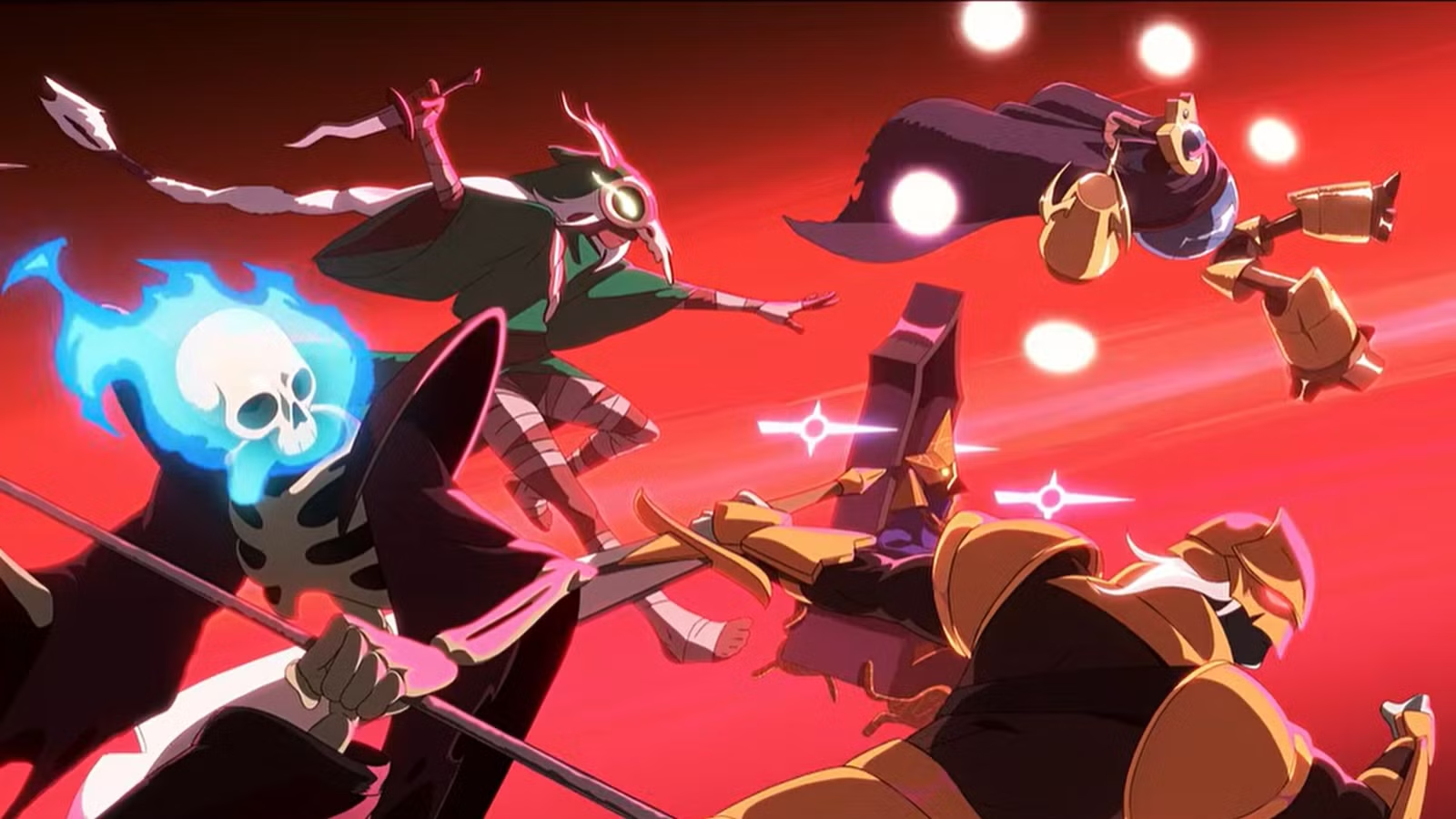
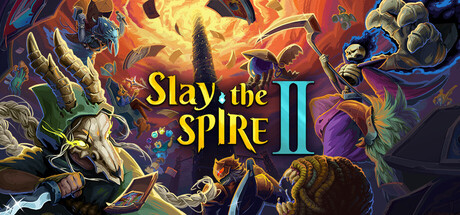
<p><img src="/assets/images/2026-03-14-slay-the-spire-two-review/slay_the_spire_art.avif" alt="Slay the Spire 2 Heroes" /></p>

<!--more-->

<p>Slay the Spire 2 keeps the same system as the first Slay the Spire. You’ll pick a character with a unique set of cards, fighting enemies, adding cards to your deck, and trying to beat the boss at the end of each level.</p>

<p>What makes it work as a sequel is that every part of that system has new content – new enemies, elites, relics, cards from existing classes, new classes, new events, etc. Players of the original can hop right in and face new challenges and solve new puzzles.</p>

<h4 id="old-dog-new-tricks">Old Dog, New Tricks</h4>
<p>There are a lot of graphical improvements. When you play a card, your character does an animation. You play a strike? The Ironclad swings their sword. This is a step up from the first game, where your character would simply slide towards the enemy.</p>

<p>There are three returning classes from the first Slay the Spire – The Ironclad, an armored warrior, The Silent, an assassin with poison and shivs, and The Defect, a robot who channels elemental orbs for effects on the battlefield.</p>

<p>Each one of these classes will be familiar from the get go. However, they’ve all gone through a few tweaks. For example, The Ironclad had a card in the first game called Heavy Blade that amplified strength buffs for more damage. That card is noticeably gone in Slay the Spire 2. However, for each old card gone, there are new cards for each class to experiment and play with. The Silent has had an upgrade to its discard playstyle – cards that are played when they are discarded now have the keyword <em>Sly</em>, both to help communicate this ability in shorter words and indicating that there are more cards that are played when discarded.</p>

<p>Returning players who pick up a familiar class will notice the improved graphics and animations immediately, and will be given new challenges and opportunities to prove themselves in combat with new cards and strategies to play with.</p>

<h4 id="new-classes">New Classes</h4>
<p>Slay the Spire 2 introduces two new classes. The Regent is a regal lord from outer space, and The Necrobinder is an undead lich who has a helpful bone hand minion named Osty to help out on the battlefield. Both of these characters carve out new design space in Slay the Spire and have different playstyles and builds.</p>

<p><img src="/assets/images/2026-03-14-slay-the-spire-two-review/regent-gameplay.avif" alt="The Regent Gameplay" />
The Regent has an alternate cost system called Stars. You start each battle with three Stars, and can gain more through playing certain cards.</p>
<p>The Regent also has a mechanic called Forge. Each card with this mechanic will have Forge X, where X is a number like 6. The first time you forge in a battle, you add a card called Sovereign Blade. It costs 2 energy, deals an amount of damage equal to a base amount plus however much you’ve forged that battle, and has Retain, so it stays in your hand.</p>

<p>I enjoy playing as The Regent, but I think that the secondary resources of Stars could use some inspiration as well. In its current state, it feels like just another number to track. Secondary resources should have some weight. You should feel happy when you obtain them, and appreciate the reward when you spend them.</p>

<div class="triple-double-wrapper">
  <img class="my-class" src="/assets/images/2026-03-14-slay-the-spire-two-review/mh3-75-tune-the-narrative.jpg" alt="Tune the Narrative" />
  <img class="my-class" src="/assets/images/2026-03-14-slay-the-spire-two-review/mh3-50-aether-spike.jpg" alt="Aether Spike" />
  <img class="my-class" src="/assets/images/2026-03-14-slay-the-spire-two-review/kld-106-aethertorch-renegade.jpg" alt="Aethertorch Renegade" />
</div>

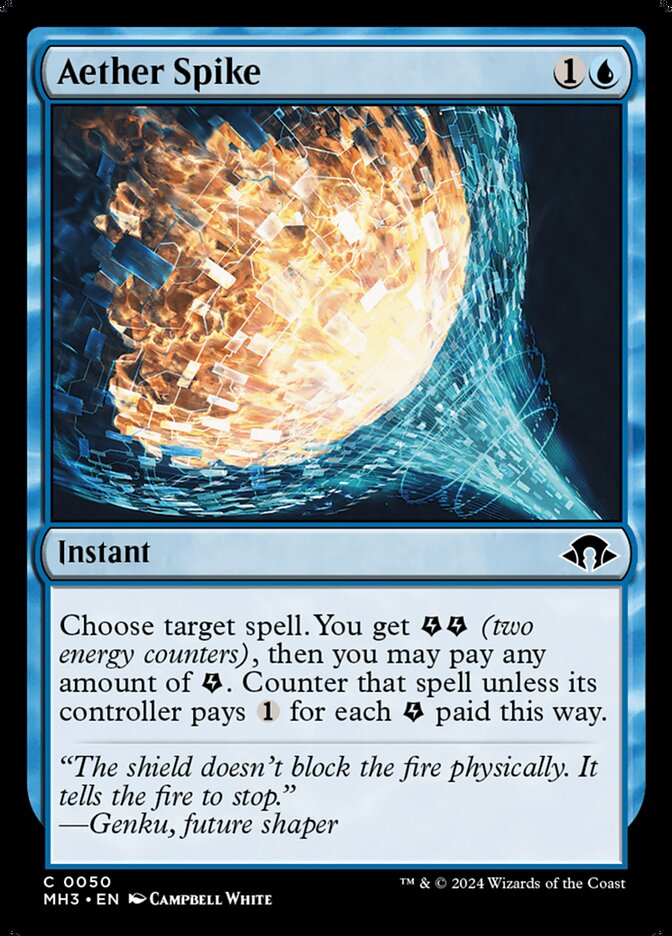
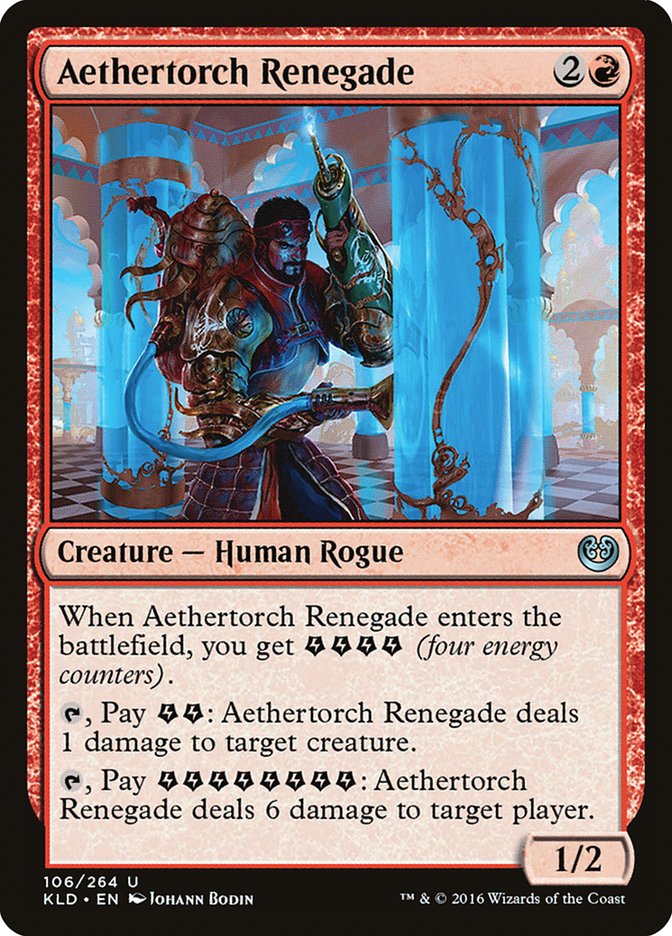
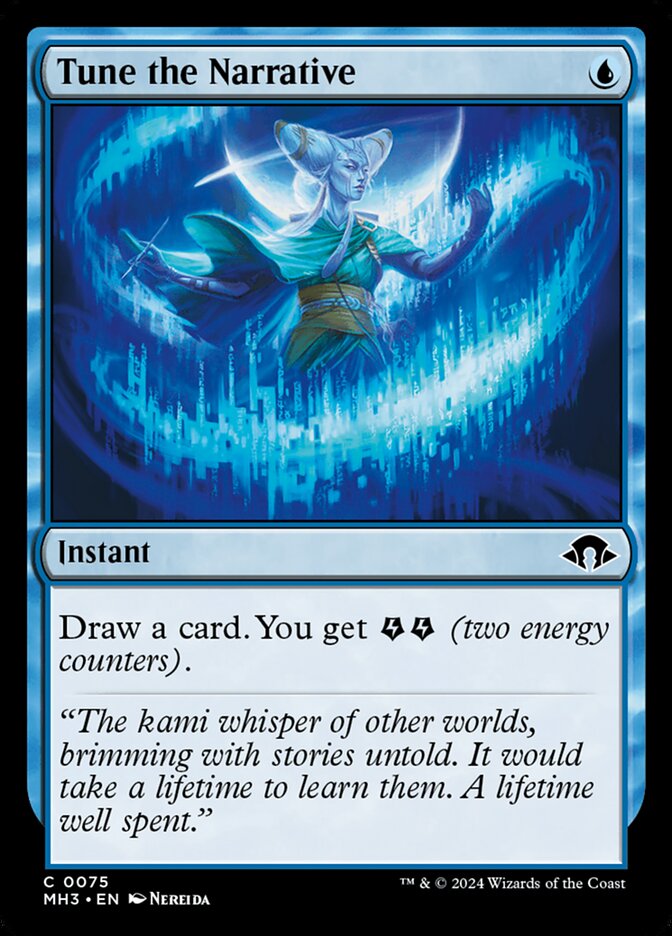
<p>One of my favorite secondary resources in card games is Energy in Magic the Gathering. Energy works in a similar way where some cards generate Energy, and some cards spend Energy. One main difference is in themeing – in Magic cards with Energy, you can often feel how the Energy is amping up the card. Another difference is that Energy is not typically used as a requirement cost, but rather as a way to amplify the effects of a card. You can play a card without spending Energy, but it would be noticeably weaker. Cards with Energy usually have ways of enabling themselves as well, but if you have spare energy, you can spend more for a better effect. Conversely, if you don’t like the cards effect, you can use it as a way to bank up Energy for later.</p>

<p>If Stars were used as a way to amplify cards, as opposed to being a cost to play a card, it could have a mechanically different role and feel from the other main cost to cards.</p>

<p><img src="/assets/images/2026-03-14-slay-the-spire-two-review/necrobinder-gameplay.avif" alt="Necrobinder Gameplay" />
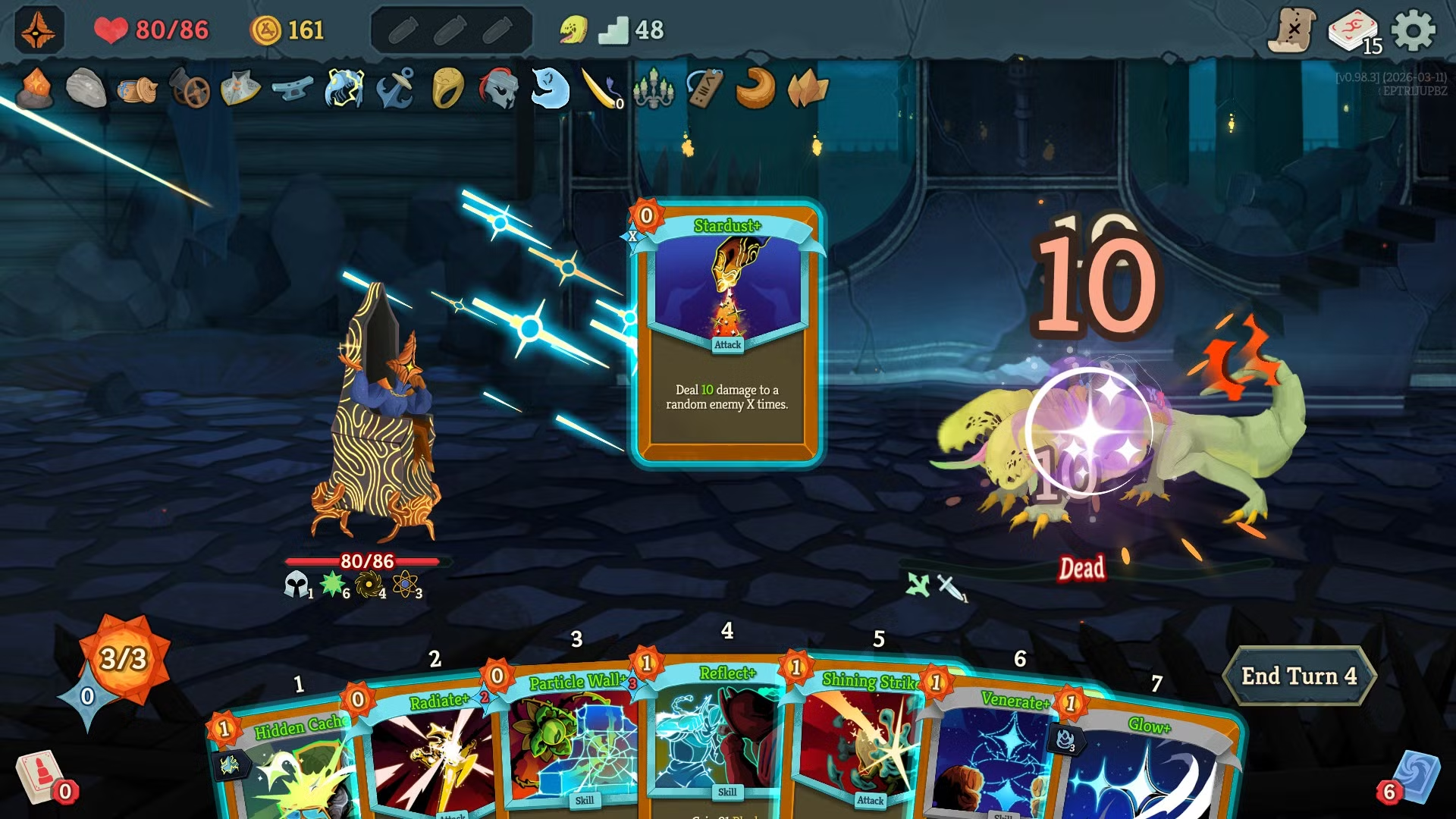
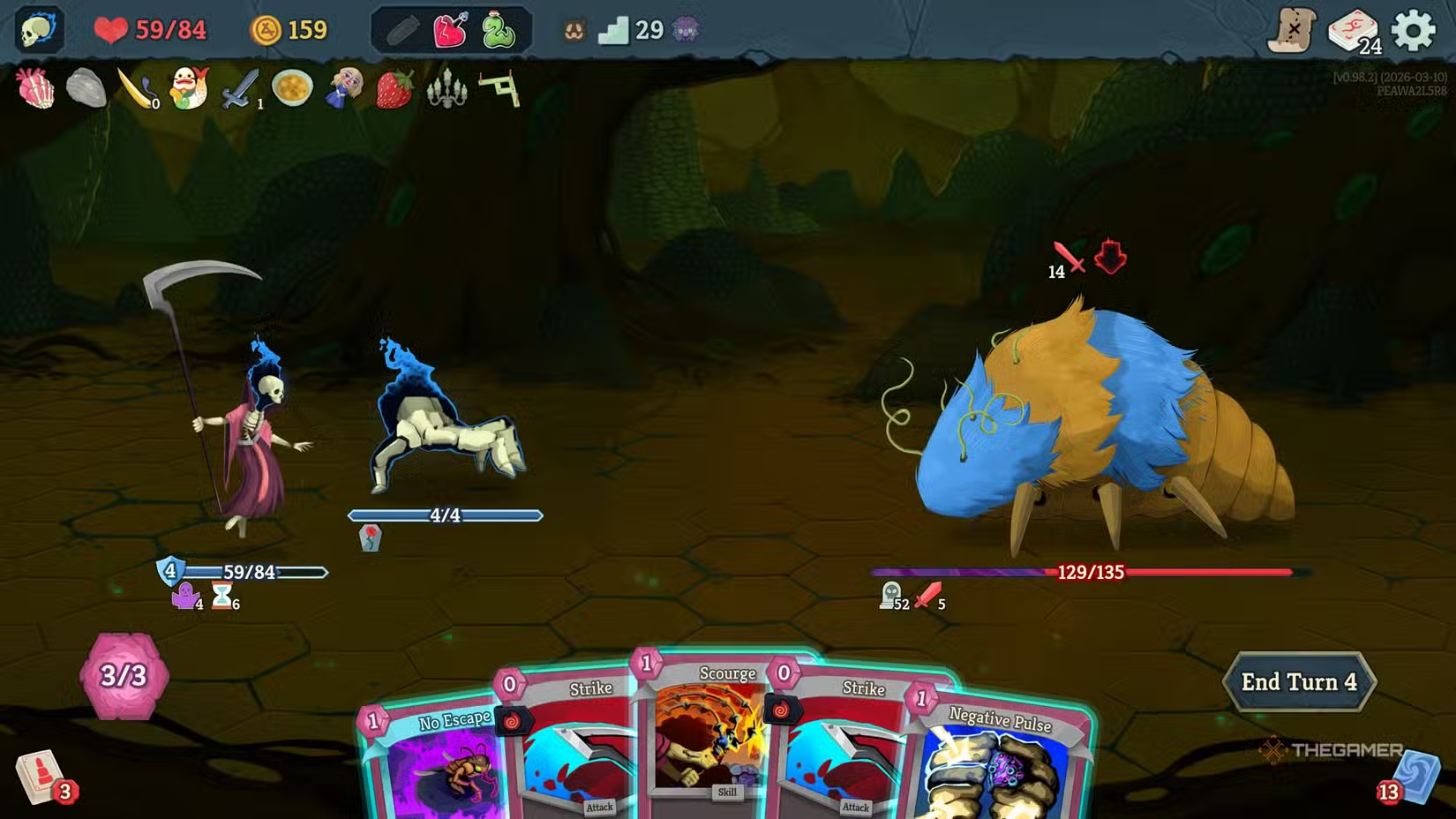
The Necrobinder has some new mechanics as well. The Necrobinder has its own minion, Osty the bone hand. Osty starts each battle at 1/1 HP. At the start of your turn, you’ll add one to Osty’s max and current health. You can also add more health to Osty by playing cards with Summon. When you play a card thats says Summon X (where X is a number like 6), you add that much to Osty’s max and current health.</p>
<p>Osty acts as a shield of sorts – when damage comes through to the Necrobinder, first your armor will take damage, then Osty will take damage, and then finally, your character will take damage.</p>

<p>The Necrobinder also has access to one of my favorite new mechanics, Souls. You can add Soul cards to your deck through other card effects. A Soul card has 0 cost, draws two cards, and is then exhausted. There are cards that synergize with Souls, like Haunt, which triggers to deal damage whenever you play a soul, or Soul Storm, which is an attack that deals bonus damage for each soul you’ve used in that combat.</p>

<p>For me, The Necrobinder is a slam dunk. You have a new character that looks great and mechanics that match that flavor. You think about defense differently with your minion, and you have access to a bevy of strategies for combat.</p>

<p><img src="/assets/images/2026-03-14-slay-the-spire-two-review/Epoch-timeline-STS2.webp" alt="Slay the Spire 2 Epochs" /></p>
<h4 id="epoch-system--joining-unlocks-and-narrative-together">Epoch System – Joining Unlocks and Narrative Together</h4>
<p>One of my core beliefs is that card games struggle to deliver an ingame narrative experience. Cards can do a great job at depicting a world and give us a snapshot of characters in that world, but it can be hard to show these characters overcoming obstacles and going through change.</p>

<p>The cards in Slay the Spire have less space to work with when establishing flavor than, say, a card from Magic the Gathering. In Magic the Gathering, a card can be a creature, an action, an artifact, land – basically anything that could exist in the world that it wants to depict. Slay the Spire, on the other hand, are presented through a much more limited lens of actions that your character will take.</p>

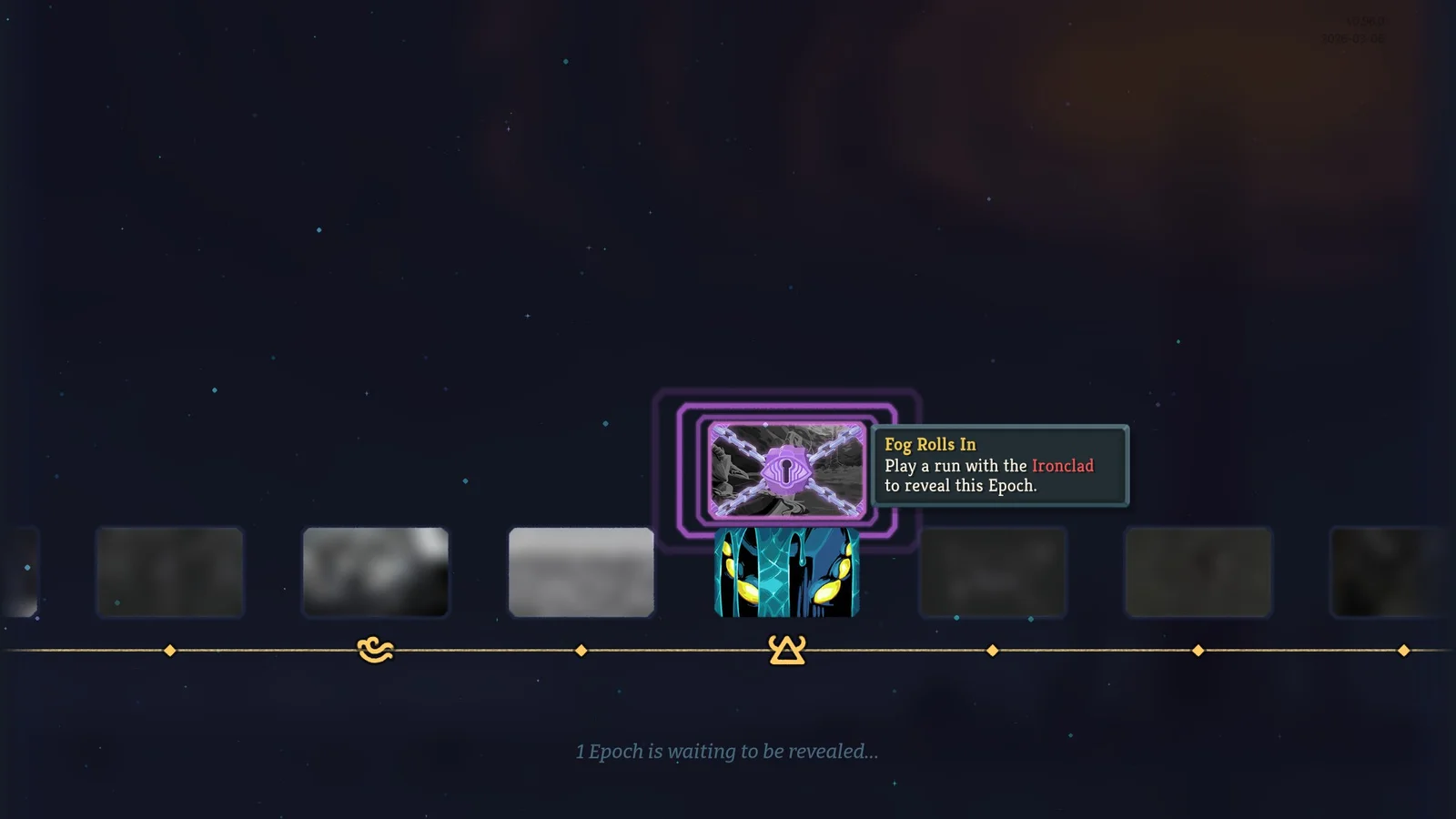
<p>Slay the Spire 2 has attempted to crack the narrative and worldbuilding through a new gameplay system called Epochs. Epochs are a marriage of story moments and item unlocks. As you progress through the game, you’ll unlock Epochs. At the end of your run, you can go to the Epoch Timeline where you’ll see all these moments laid out in chronological order.</p>

<p>You can click to unlock the Epoch, where you’ll be presented with a short story and an illustration that reveals more about a character or the Spire itself. Then you’ll be presented with more relics, cards, or characters that you can meet on your run that will appear in later runs.</p>

<p>It’s a nice twist on the unlock system that gradually gives players more content, while also helping to reveal more about the world of Slay the Spire. There’s built in narrative pacing, and at any point, the player can experience each epoch in a linear fashion by going through each epoch from first to last.</p>

<p>Right now, some of the Epoch artwork has placeholder art (the game is technically in Early Access, even though it feels like a finished game), so it’s hard to judge the overall effect. However, the Epochs with finished art are evocative and allow you to connect to your character. I can’t wait to see the finished product.</p>

<h4 id="conclusion">Conclusion</h4>
<p>Slay the Spire 2 shows that a good game system, along with many mechanics and good design, can keep players entertained for hours upon hours over multiple games. It doesn’t reinvent the wheel, but it does make every part of the wheel better. With new classes, cards, relics, enemies, and bosses, Slay the Spire 2 will keep players entertained and have them slaying to their heart’s content.</p>]]></content><author><name>Chase Stevens</name><email>chasestevenspersonal+bricksandcantrips@gmail.com</email></author><summary type="html"><![CDATA[Slay the Spire 2 is out, and it’s already a hit. Let’s talk about how Mega Crit made a worthy followup to arguably the best roguelike deckbuilder of all time.]]></summary></entry><entry><title type="html">The Great Expectations of Slay the Spire 2</title><link href="https://bricksandcantrips.com/2026/03/07/great-expectations-slay-the-spire-two/" rel="alternate" type="text/html" title="The Great Expectations of Slay the Spire 2" /><published>2026-03-07T00:00:00+00:00</published><updated>2026-03-07T00:00:00+00:00</updated><id>https://bricksandcantrips.com/2026/03/07/great-expectations-slay-the-spire-two</id><content type="html" xml:base="https://bricksandcantrips.com/2026/03/07/great-expectations-slay-the-spire-two/"><![CDATA[<p>Slay the Spire 2 came out on Thursday. I haven’t played it at all.</p>

<p>Before I do, I wanted to share my thoughts about what Slay the Spire 2 has to accomplish to live up to the reputation of its predecessor. Can the sequel live up to the hype of the original Slay the Spire?</p>

<p><img src="/assets/images/2026-03-07-great-expectations-slay-the-spire-two/slay-the-spire-2-header.jpg" alt="Slay the Spire 2 Banner" class="my-class" /></p>

<!--more-->

<h2 id="context">Context</h2>
<p>Slay the Spire was released in early access in November 2017. When it was first released, sales were slow until a streamer in China picked up the game. The game spread and sales exploded, jumping from 800 copies in the first few days to over 700,000 copies sold six months later.</p>

<p>Its rise in sales also helped the rise of the roguelike deckbuilder videogame genre. Slay the Spire used its digital nature in order to provide an experience that you can’t get in a paper card game where you’re staring your opponent down the table – an infinite power fantasy.</p>

<p>In a tabletop card game, once you’ve either proven that you will win, or have accumulated a significant advantage, your opponent will concede and the game is over. If you have shown a path to victory, it’s considered poor sportsmanship to continue playing, even if you have your awesome rare card in your hand that you’re itching to play. This makes sense as it feels bad to lose, and you have another human you’re playing against, and you (supposedly) want to have fun with them, instead of making them suffer while you play the game.</p>

<p>If you’re winning a game against a computer, though, they don’t have any feelings that you need to consider. You can play the meanest, nastiest cards you can think of and live out your wildest power fantasies. Your gameplay experience is solely about you.</p>

<p>For many players, Slay the Spire was their first experience with a roguelike deckbuilder game. That was almost a decade ago. Can Slay the Spire 2 deliver on the hopes and expectations of a groundbreaking game, even after much of the ground has been broken?</p>

<p><img src="/assets/images/2026-03-07-great-expectations-slay-the-spire-two/007-james-bond-movies-actors-and-next-bond.webp" alt="James Bond Actors in a Row" /></p>

<h2 id="sequel-stress">Sequel Stress</h2>
<p>A successful sequel has to hold true to the original game while adding enough new material to make the purchase worth the consumer’s dollar. A sequel that’s too similar is boring and a cash grab, and a sequel that’s too different is alienating and messing with success.</p>

<p>Movies are another medium where studios make sequels, and they too have to make an entertainment product that feels true to the original, but provides fans something new.</p>

<p>This problem is ameliorated in narrative heavy entertainment products, like movies, or even story-driven games like The Last of Us, you can take the characters from the first movie, and put them in a new situation that’s similar, but not quite the same, as the original. Think about all of the James Bond or Mission Impossible movies where a new villain arises to endanger the world, only for the charismatic hero to save the day. These sequels work because they have a formula that works, and a likable protagonist that audiences want to root for.</p>

<p>Slay the Spire doesn’t have this. Yes, it has characters from the first games, but those characters never speak, and the only narrative is that you have to escape the spire… by slaying. This appears to be the same story of Slay the Spire 2, and that narrative alone won’t be enough to bring people back.</p>

<p>Historically, sequels in games can also adapt to new technology, using more powerful computers to provide more gameplay. Think about the jump from Warcraft 2, rendered in 2D and sporting two nearly identical factions, to Warcraft 3, which had 3D graphics, four unique factions and a new Hero system.</p>

<p>Can Slay the Spire 2 innovate with new technology? I don’t think so. From a technical perspective, the original Slay the Spire could probably be made with Adobe Flash in 2001. Card games do not require a lot of processing power, and Slay the Spire used 2D art assets for cards, characters, background, and effects. And before you dismiss this as hyperbole, the Game Boy Advanced game <em>Yu-Gi-Oh! The Eternal Duelist Soul</em> released in 2001 in Japan with over 900 cards and a complete Yu-Gi-Oh ruleset.</p>

<p>I’m not saying that a game can’t be fun without every bell and whistle. I still play the original Pokemon Trading Card Game for the Gameboy. What I am saying is that I don’t think Slay the Spire 2 will use raytracing to provide a new gameplay experience that was missing in the first Slay the Spire.</p>

<p>There is another entertainment property that is able to sell sequel upon sequel without narrative or technical innovations – trading card games.</p>

<p><img src="/assets/images/2026-03-07-great-expectations-slay-the-spire-two/magic-the-gathering-2026-schedule.avif" alt="Magic the Gathering Release Schedule 2026" /></p>

<h2 id="whats-a-new-card-set-but-another-sequel">What’s a new card set, but another Sequel?</h2>
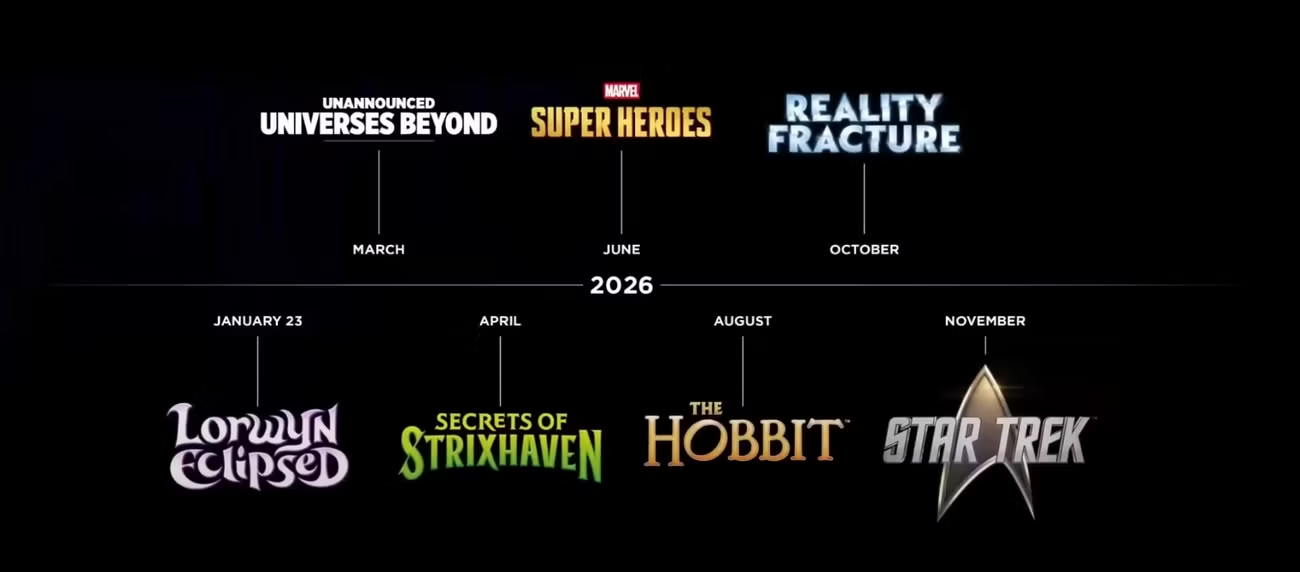
<p>For 2026, approximately every seven weeks, Magic the Gathering has or will release a new set of Magic cards to the public. Do they contain relatable characters in new settings and scenarios? Not really – four of the seven new sets this year are other intellectual properties and have no narrative cohesion. Do they have new technology? I’m sure printing has evolved over the last 30 years, but Magic the Gathering is still ink on cardboard, same as it ever was.</p>

<p>What drives sales of new cards? How can Magic keep making new sets without the game going stale? New cards, of course!</p>

<p>Trading card games like Magic the Gathering, Pokemon, and YuGiOh rely on their players to invest time and money into their collections, with the hope that their cards will be playable for years to come.</p>

<p>New sets bring new mechanics, and new cards can be matched up with old cards to form new strategies and tactics.</p>

<p>Card games have another element that helps keep gameplay fresh over time – randomness. In every card game, players have decks of cards that are randomized in order through shuffling.</p>

<p>Trading card games must keep their rules fairly consistent so as to not make older cards invalid, but video games that are self contained can introduce new mechanics and systems.</p>

<p>Warcraft 3 had better graphics and used new technology, but many of its innovations come from gameplay mechanics and design rather than tech. The move from two symmetrical factions to four asymmetrical factions could have been done in the 90s, as Blizzard did with Starcraft (albeit with three factions rather than four). The hero system in Warcraft 3 did not require four times as much RAM – from a data perspective, you probably have to store a few kilobytes more data for a hero unit than for a regular run of the mill grunt. However, the hero system proved to be one of the best mechanics of Warcraft 3, and influenced many popular games to come, like World of Warcraft and League of Legends.</p>

<h2 id="conclusion">Conclusion</h2>
<p>Perhaps the question we should be asking isn’t whether Slay the Spire 2 can achieve as much as Slay the Spire did. We can instead ask whether or not Slay the Spire 2 would be worth consumers’ time and money.</p>

<p>If Slay the Spire 2 can bring the same dynamic gameplay from Slay the Spire, but with some new cards, classes, and systems, that could be enough to make sure that it succeeds as a sequel.</p>

<p>Slay the Spire was born from two friends in Seattle, one of which managed a local game store, stocked with card games and board games. They took inspiration from those games and brought them into the digital space, providing video game players with fresh new gameplay they hadn’t seen before.</p>

<p>Perhaps we can trust the makers of the original Slay the Spire to have continued playing games and seeing what has worked in the marketplace. Just as video games continue to evolve, so too have board games and card games. With nearly a decade since the release of the original game, I’m sure there are some new mechanics that they have been wanting to share in their own game.</p>

<p>Can the sequel live up to the hype of the original Slay the Spire? Is that even the right question? Do game designers exist to revolutionize the industry with every game they release, or is it the job of a game designer to make a game that people enjoy playing?</p>

<p>Be sure to tune in next Saturday – I’ll be spending this week trying to slay the spire again and will give my thoughts on Slay the Spire 2.</p>]]></content><author><name>Chase Stevens</name><email>chasestevenspersonal+bricksandcantrips@gmail.com</email></author><summary type="html"><![CDATA[Slay the Spire 2 came out on Thursday. I haven’t played it at all. Before I do, I wanted to share my thoughts about what Slay the Spire 2 has to accomplish to live up to the reputation of its predecessor. Can the sequel live up to the hype of the original Slay the Spire?]]></summary></entry><entry><title type="html">A Shiny Copper - Ecstatic Awakener</title><link href="https://bricksandcantrips.com/2026/02/28/common-gold-ecstatic-awakener/" rel="alternate" type="text/html" title="A Shiny Copper - Ecstatic Awakener" /><published>2026-02-28T00:00:00+00:00</published><updated>2026-02-28T00:00:00+00:00</updated><id>https://bricksandcantrips.com/2026/02/28/common-gold-ecstatic-awakener</id><content type="html" xml:base="https://bricksandcantrips.com/2026/02/28/common-gold-ecstatic-awakener/"><![CDATA[<p>Welcome to <em>A Shiny Copper</em>, where we look at cards at common rarity that have a great design.</p>

<p>Let’s take a look at one of my favorite common cards in Magic the Gathering – Ecstatic Awakener // Awoken Demon.</p>

<div class="triple-double-wrapper">
  <img class="my-class" src="/assets/images/2026-02-25-common-gold-ecstatic-awakener.md/mid-100-ecstatic-awakener.png" alt="Ecstatic Awakener" />
  <img class="my-class" src="/assets/images/2026-02-25-common-gold-ecstatic-awakener.md/mid-100-awoken-demon.png" alt="Awoken Demon" />
</div>

<!--more-->

<h2 id="description">Description</h2>
<p>Before we talk about the card proper, I want to make a note that the card Ecstatic Awakener // Awoken Demon is a double faced card. One side shows Ecstatic Awakener, and the other side shows Awoken Demon. You can only play this card from your hand as Ecstatic Awakener – there’s no way to cast it as Awoken Demon from your hand.</p>

<p>Ecstatic Awakener is a black common creature that costs one black mana, has 1 power and 1 toughness, and is a Human.</p>

<p>A Human creature that is a 1/1 is a representation of what the average person would be if they were cast as a creature spell in a game of Magic the Gathering. If you search for 1/1 Humans throughout all of the cards in Magic, <a href="https://scryfall.com/search?as=grid&amp;order=name&amp;q=type%3Ahuman+%28game%3Apaper%29+pow%3D1+tou%3D1+prefer%3Abest">you’ll find more than 500 cards</a>.</p>

<p>Note: A squirrel is also represented as a 1/1 creature as well, meaning that if you were a creature in Magic, you would die to a squirrel. Make of that what you will.</p>

<p>The text box for Ecstatic Awakener has an activated ability that has a cost of paying three mana (one black mana and two mana of any kind), and sacrificing another one of your creatures. Your reward for this cost is that you get to draw a card and transform Ecstatic Awakener by flipping it over to its other side, Awoken Demon.</p>

<p>Awoken Demon is a black common creature that has 4 power, 4 toughness, and is a Demon.</p>

<p>Mechanically, the most (and possibly only) interesting thing about this card is its ability.</p>

<blockquote>
  <p>{2}{B}, Sacrifice another creature: Draw a card, then transform this creature. Activate only once each turn.</p>
</blockquote>

<h2 id="sacrificing">Sacrificing</h2>
<p>Sacrificing can a large cost to activate an ability or cast a spell. Mechanically, you are giving up a creature that you have drawn from your deck and played onto the battlefield in exchange for something else.</p>

<p>Sacrificing also has a psychological component – you’re giving up something in exchange for something else.</p>

<p>If you only have strong creatures on your side of the field, or creatures that you’re particularly fond of, the cost of sacrificing would prevent you from activating this ability.</p>

<p>On the other hand, if you have many cheap creatures, or creatures that make for good sacrifice fodder, or you find some pleasure in the act of removing creatures (no matter who controls them), then the cost of sacrificing goes down.</p>

<p>If you want to build a whole deck around easily paying sacrifice costs, you could add Novice Occultist to your deck.</p>

<p><img src="/assets/images/2026-02-25-common-gold-ecstatic-awakener.md/mid-117-novice-occultist.png" alt="Novice Occultist" class="my-class" /></p>

<p>Novice Occultist is another black common creature, like Ecstatic Awakener, who makes for a good sacrificial lamb.</p>

<p>It has an ability that when it dies, you draw a card and lose one life. This turns the sacrifice from a downside into an upside. You draw two cards total – one from Novice Occultist, and one from Ecstatic Awakener.</p>

<p>The mana costs line up as well for a 1-2-3 punch. You have a potential line to play Ecstatic Awakener on turn one, drop Novice Occultist on turn two, then on turn three, you can activate Ecstatic Awakener’s ability, sacrificing Novice Occultist, draw two cards, and have a big demon to attack with. Not a bad start!</p>

<p>Another card in the same set has synergies with sacrificing. Jadar, Ghoulcaller of Nephalia is a rare black creature who ensures that you have a constant stream of zombies at your side, no matter how many you sacrifice.</p>

<p><img src="/assets/images/2026-02-25-common-gold-ecstatic-awakener.md/mid-108-jadar-ghoulcaller-of-nephalia.png" alt="Jadar, Ghoulcaller of Nephalia" class="my-class" /></p>

<p>Its ability does a check as your end your turn. If you don’t have a zombie token, you create a new one. What happens if you sacrificed your zombie token earlier this turn to transform Ecstatic Awakener? You get a new one!</p>

<p>With Ecstatic Awakener’s ability, if you can sacrifice a creature that comes back, and then draw a card, you’ll be able to generate some card advantage over your opponent.</p>

<h2 id="card-advantage">Card Advantage</h2>
<p>There are many resources in a game like Magic, such as life total, lands, creatures in play, etc. One resource to keep track of is how many cards you have access to in a given game.</p>

<p>If you are able to draw more cards than your opponent, you have a greater chance of executing your game plan.</p>

<p>Normally, sacrificing would cost you a card. You had to draw your creature, and you paid mana to play it, too. Now you’re going to give that up for an ability?</p>

<p>Ecstatic Awakener works around the pain of being down a card by including a card draw in its ability. You can be card neutral by sacrificing a creature and drawing a new creature, or even gain some card advantage by sacrificing a card with synergy with sacrificing.</p>

<p>The card draw in this ability rewards deck building and foresight, and can help ameliorate the pain of sacrificing as well.</p>

<h2 id="ability-at-instant-speed">Ability at Instant Speed</h2>
<p>Ecstatic Awakener’s ability has another quality that you won’t find mentioned on the card. The ability is an activated ability, and you can choose to use it at any time.</p>

<p>This means that you can choose to play it on either your turn or your opponent’s turn. A novice player might choose to activate this on their turn. A more skilled player would consider this, but they would also consider that they could choose to hold their resources up and wait to activate it until the end of their opponent’s turn. Waiting to activate this until the last minute would allow the player to see what their opponent has in store, and potentially take another course of action to respond, instead of committing to transforming their cultist.</p>

<p>Activating an ability at instant speed means you can activate it in response to what your opponent does. Let’s say you go in for an attack with your creatures, and your opponent plays Defenestrate targeting your Gisa. When that spell resolves, Gisa will be dead!</p>

<div class="double-line-wrapper">
  <img src="/assets/images/2026-02-25-common-gold-ecstatic-awakener.md/mid-95-defenestrate.png" alt="Defenestrate" />
  <img src="/assets/images/2026-02-25-common-gold-ecstatic-awakener.md/mid-103-gisa-glorious-resurrector.png" alt="Gisa, Glorious Resurrector" />
</div>

<p>In response, you can choose to sacrifice Gisa to your Ecstatic Awakener’s ability. Will that save Gisa?</p>

<p>No, she is very much still dead.</p>

<p>However, you’re able to take a situation where your opponent is playing a card to remove your card, or essentially trading cards one for one, and instead sacrifice that card to draw another card. Instead of a one for one card trade, you turn it into a one for none card trade, since you have the same number of cards as before. And you’ve still turned your 1/1 human into a 4/4 demon.</p>

<h2 id="transformation">Transformation</h2>
<p>As mentioned before, Ecstatic Awakener // Awoken Demon is printed on one card, with one side showing the human and the other showing the demon. This does create some logistical issues since the card does not have a cardback to prevent showing what the card is in your deck or in your hand.</p>

<p>There are token cards in the set that allow you to write the names of your double faced card and that have a card back. In a pinch, you can take any card and write in sharpie that it is a placeholder for your double faced card. You can also play with card sleeves, which give your card a new card back via the sleeve.</p>

<p>There might be a hiccup or two when it comes to playing with a double faced card, but the payoff is worth it. After playing your cultist, playing an unsuspecting victim, then sacrificing said victim, you get to pick up your cultist and transform it into the demon they set out to become. Hell yeah dude.</p>

<p>This transformation mechanic allows us to play a mini-game within our game of Magic the Gathering. We have a setup when we play the card on the front side, and we get a payoff when we activate the ability and transform the card to its back side.</p>

<p>When we play card games like Magic, we’re playing to win, of course. After all, that’s the objective of the game. But winning alone is not the only fun part of playing Magic. Sometimes, you want to <em>do the cool thing</em>.</p>

<p>Magic is a zero sum game – someone has to win for someone else to lose – but having fun is not. You can have fun playing a deck that you like that may not be optimal and lose, or you can win playing an aggro deck that bores you to death.</p>

<p>Successfully activating Ecstatic Awakener’s ability is <em>doing a cool thing</em>. You get to live out a taboo power fantasy of sacrificing another to turn yourself into a demon. Even if you lose, you’re winning in the eyes of the demon lord Ormendahl.</p>

<h2 id="conclusion">Conclusion</h2>
<p>Ecstatic Awakener // Awoken Demon stands out as an incredibly well designed card that has it all; flavor, payoff, identity, story. And it’s a common card! That’s the kicker of it all. A card that is this rich and fun is put in at the common rarity.</p>

<p>When we look to analyze other games, or even to make our own, we should stop and ask ourselves if the common pieces of the game, what some people might refer to as “filler,” are as fun and flavorful as Ecstatic Awakener. It can feel like we want to have bland filler pieces to contrast with the stand out legendary stars of our game, but just because a card is a common doesn’t mean it it can’t be fun in its own right.</p>]]></content><author><name>Chase Stevens</name><email>chasestevenspersonal+bricksandcantrips@gmail.com</email></author><summary type="html"><![CDATA[Welcome to A Shiny Copper, where we look at cards at common rarity that have a great design. Let’s take a look at one of my favorite common cards in Magic the Gathering – Ecstatic Awakener // Awoken Demon.]]></summary></entry><entry><title type="html">Don’t Repeat, but Rhyme - Cycles</title><link href="https://bricksandcantrips.com/2026/02/23/cycles/" rel="alternate" type="text/html" title="Don’t Repeat, but Rhyme - Cycles" /><published>2026-02-23T00:00:00+00:00</published><updated>2026-02-23T00:00:00+00:00</updated><id>https://bricksandcantrips.com/2026/02/23/cycles</id><content type="html" xml:base="https://bricksandcantrips.com/2026/02/23/cycles/"><![CDATA[<p>Cycles are a collection of cards that share a similar space and design, but differ in faction or identity. They can be used to highlight deck identity and tell players what factions get access to what abilities.</p>

<p>Players can also use pattern recognition to identify the cycle, which can be a little spark of joy.</p>

<div class="triple-double-wrapper">
  <img class="my-class" src="/assets/images/2026-02-23-cycles/m11-192-primeval-titan.png" alt="Primeval Titan" />
  <img class="my-class" src="/assets/images/2026-02-23-cycles/m11-35-sun-titan.png" alt="Sun Titan" />
  <img class="my-class" src="/assets/images/2026-02-23-cycles/m11-55-frost-titan.png" alt="Frost Titan" />
</div>

<div class="triple-double-wrapper">
  <img class="my-class" src="/assets/images/2026-02-23-cycles/m11-146-inferno-titan.png" alt="Inferno Titan" />
  <img class="my-class" src="/assets/images/2026-02-23-cycles/m11-97-grave-titan.png" alt="Grave Titan" />
</div>

<!--more-->

<p>The five cards above are a cycle of cards in Magic the Gathering depicting Titans. Each card shares similar qualities.</p>
<ul>
  <li>Their names are all <code class="language-plaintext highlighter-rouge">X Titan</code>.</li>
  <li>They all cost 4 generic mana and 2 mana of their color.</li>
  <li>They all depict a large humanoid wielding a weapon.</li>
  <li>They all are Creatures with a subtype of Giant.</li>
  <li>They are all mythic rare.</li>
  <li>They all have two abilities.</li>
  <li>Their first ability enhances their presence on the battlefield.</li>
  <li>Their second ability is triggered whenever the Titan enters the battlefield or attacks</li>
  <li>They all have 6 power and 6 toughness.</li>
</ul>

<p>They differ in a few notable ways, but the most important difference is that they each are a different color. Color in Magic acts as the identity of a card. It’s the way of granting access to certain abilities, but not others.</p>

<p>This is the crux of what a cycle is – it’s the same card expressed through each identity of a card game.</p>

<h2 id="cycles-in-other-games">Cycles in Other Games</h2>
<p>Magic has many cycles of cards in it. Other card games have cycles, too. Here is a cycle in Hearthstone of cheap removal spells across each class.</p>

<div class="triple-double-wrapper">
  <img class="my-class" src="/assets/images/2026-02-23-cycles/frost-strike.png" alt="Frost Strike" />
  <img class="my-class" src="/assets/images/2026-02-23-cycles/chaos-strike.png" alt="Chaos Strike" />
  <img class="my-class" src="/assets/images/2026-02-23-cycles/wrath.png" alt="Wrath" />
</div>
<div class="triple-double-wrapper">
  <img class="my-class" src="/assets/images/2026-02-23-cycles/quick-shot.png" alt="Quick Shot" />
  <img class="my-class" src="/assets/images/2026-02-23-cycles/frostbolt.png" alt="Frost Bolt" />
  <img class="my-class" src="/assets/images/2026-02-23-cycles/hammer-of-wrath.png" alt="Hammer of Wrath" />
</div>
<div class="triple-double-wrapper">
  <img class="my-class" src="/assets/images/2026-02-23-cycles/holy-smite.png" alt="Holy Smite" />
  <img class="my-class" src="/assets/images/2026-02-23-cycles/eviscerate.png" alt="Eviscerate" />
  <img class="my-class" src="/assets/images/2026-02-23-cycles/lightning-bolt.png" alt="Lightning Bolt" />
</div>
<div class="triple-double-wrapper">
  <img class="my-class" src="/assets/images/2026-02-23-cycles/drain-soul.png" alt="Drain Soul" />
  <img class="my-class" src="/assets/images/2026-02-23-cycles/bash.png" alt="Bash" />
</div>

<p>From this cycle, we can learn aspects of different classes, or identities, of Hearthstone. For example, the Druid class has the Wrath card, which allows the caster to pick between two modes. This <code class="language-plaintext highlighter-rouge">Choose One</code> keyphrase appears on many Druid cards, and allows the caster to be flexible and pick the best mode for the situation.</p>

<p>Eviscerate, the Rogue card, shows us that this class has a skill component to it. On its own, Eviscerate costs two mana and deals two damage, which by itself would be the worst card in this set. However, the <code class="language-plaintext highlighter-rouge">Combo</code> keyword tells us that if we meet a condition (in this case, <code class="language-plaintext highlighter-rouge">Combo</code> would activate if we’ve played another card already this turn), Eviscerate deals four damage instead, which would make Eviscerate one of the most deadly pieces of removal here.</p>

<p>Mages can freeze enemies in their tracks with Frostbolt, allowing them to slow down the game. Warriors can deal damage and gain armor, adding to their healthpool and fitting their defensive theme. Priests can eliminate enemy threats with Holy Smite, but they can’t hit their opponents directly with it. Sorry, but Priests are not going to be the in-your-face burn deck.</p>

<p>By having cards that are mechanically similar spread across different factions/classes/identities, we are able to highlight the differences between each type of deck.</p>

<p>The mechanical similarities allow the mechanical contrasts to shine. From this cycle, we know that Mages have access to the ability Freeze, Rogues can utilize Combo to maximize their card’s effectiveness, and that Warriors will be able to gain armor to outlast their enemies.</p>

<p>We can take a step back from the mechanics and compare and contrast the flavor of each card in the cycle as well.</p>

<p>All of the cards here depict a character in the middle of performing an action that is harming another party. The Hunter does a Quick Shot at something out of frame, the Paladin throws its hammer, and the Warlock drains the life force of a humanoid skeleton.</p>

<p>The title of each card is brief, economical, and to the point. This cycle is not depicting grand acts of wizardry or legendary acrobatics – these cards represent the bread and butter actions that each one of these classes within Warcraft would do on a daily basis.</p>

<p>If I had to think about what to call this cycle of cards, I would call it something like <code class="language-plaintext highlighter-rouge">Strike</code>. The card would cost 2 mana, it would deal 3 damage, and it would get an additional bonus ability of some kind. This <code class="language-plaintext highlighter-rouge">Strike</code> card is then expressed through each identity in Hearthstone, and thus we get eleven unique cards. The Warrior gets to gain armor, the Mage gets to freeze enemies, and the Druid gets to be flexible.</p>

<h2 id="transition-to-other-decks">Transition to Other Decks</h2>
<p>One added benefit of cycles is that they help players transition from one deck into learning another deck. Let’s say I’m a Mage player in Hearthstone. I’ve cast Frostbolt hundreds of times, and I’m ready to try something new. The Rogue class seems interesting, but I’ve never played it before, and I’m not quite sure what <code class="language-plaintext highlighter-rouge">Combo</code> does.</p>

<p>Luckily, my Rogue starter deck has two copies of Eviscerate in it. I draw an Eviserate, and it instantly feels familiar to me. A two mana spell that does damage? That’s familiar to me – I’ve played Frostbolt before! Now I can see what happens and how I can activate the extra damage of Eviscerate.</p>

<p>Through cycles, you can transfer player experience from one cycle to another so that players can try new decks and have more experiences in the card game.</p>

<p>There are hundreds, possibly thousands, of cycles of cards throughout different card games. Some cycles are printed all in the same set. Other cycles may take years from when the first card is printed to when the last one is printed (The Morphling cycle in Magic the Gathering took 21 years to finish!).</p>]]></content><author><name>Chase Stevens</name><email>chasestevenspersonal+bricksandcantrips@gmail.com</email></author><summary type="html"><![CDATA[Cycles are a collection of cards that share a similar space and design, but differ in faction or identity. They can be used to highlight deck identity and tell players what factions get access to what abilities. Players can also use pattern recognition to identify the cycle, which can be a little spark of joy.]]></summary></entry><entry><title type="html">Reading The Card Does Not Explain The Card - Titans</title><link href="https://bricksandcantrips.com/2026/02/21/where-did-it-go-wrong-titans/" rel="alternate" type="text/html" title="Reading The Card Does Not Explain The Card - Titans" /><published>2026-02-21T00:00:00+00:00</published><updated>2026-02-21T00:00:00+00:00</updated><id>https://bricksandcantrips.com/2026/02/21/where-did-it-go-wrong-titans</id><content type="html" xml:base="https://bricksandcantrips.com/2026/02/21/where-did-it-go-wrong-titans/"><![CDATA[<p>Let me ask you a question – what does this card do?</p>

<p><img src="/assets/images/norgannon-titan.png" alt="Norgannon" class="my-class" /></p>

<p>How does it behave? What abilities is it referring to in its text?</p>

<!--more-->

<p>Norgannon is a legendary minion from Hearthstone with the keyword Titan.</p>

<p>A minion with Titan has the following properties:</p>

<ul>
  <li>It has three unique abilities that can each be used once.</li>
  <li>It can use one ability per turn.</li>
  <li>It can use an ability the turn it is played.</li>
  <li>It cannot attack until all abilities have been used.</li>
</ul>

<p>How much of that did you understand from reading the card?</p>

<p>For me, it took a while to understand how a card with Titan works. Additionally, you have to learn what each Titan does on its own – and the set shipped with eleven Titans.</p>

<p>There’s a saying in Magic the Gathering that <em>Reading the Card Explains the Card</em>. What it means is that if there is any ambiguity or uncertainty about what a card is actually supposed to do, you can read the card again since the card explains itself. The Titan cards don’t explain what they do, and thus are poorly designed.</p>

<p>What irks me even more is that these Titan cards are legendary cards! They are the eponymous titans of the set! They are supposed to be big and legendary and powerful and awesome. And maybe they are, but you need either a lot of game knowledge to know that, or you need to get your reading glasses.</p>

<p>This, to me, is the greatest design sin that the Titan cards commit. They take the fantastical splash of a legendary creature, a card that should turn the tide of battle, and instead turn it into a head scratching Wikipedia article.</p>

<p>I am not against complexity, but I do believe that complexity is a cost. You can introduce complexity to your game, but you ought to use every square inch of that added complexity to bring interesting gameplay and decisions to the table. Otherwise, you’re only getting in the way of fun.</p>

<p>To be fair, when you are in a game of Hearthstone and a Titan is played, you can hover over a card with Titan to see explanation of its abilities.</p>

<p><img src="/assets/images/important-you-can-read-titan-abilities-on-hover-in-the-area-v0-g0u5quik3vfb1.webp" alt="Titan card with tooltip" /></p>

<p>However, this tooltip is not always available, such as on the card database on the web. Even when you go to craft the card in your collection, the tie between ability and the related cards is not clear.</p>

<p>The Titan design makes it hard to look up! The design prevents us from researching and deckbuilding!</p>

<p>Why did this design come about? We can only speculate, but I imagine that the hidden complexity of Titans comes about because the designers wanted Titans to be big and awesome and complex, and Hearthstone allows very few words for a card’s ability description.</p>

<p>Below are the most verbose cards I could find in the core set of Hearthstone.</p>

<div class="double-line-wrapper">
  <img src="/assets/images/hearthstone-explosive-runes.png" alt="Explosive Runes" />
  <img src="/assets/images/hearthstone-alakir.png" alt="Al'Akir, the Windlord" />
</div>

<p>Explosive Runes is the most verbose I could find after a quick scan, with its ability comprised of 17 words. Al’Akir the Windlord is notable due to it having four different keyword abilities, which then correspond to their own abilities with rules.</p>

<p>Compare this to a few cards from Magic the Gathering’s latest core set.</p>

<div class="double-line-wrapper">
  <img src="/assets/images/fdn-54-abyssal-harvester.jpg" alt="Abyssal Harvester" />
  <img src="/assets/images/fdn-1-sire-of-seven-deaths.png" alt="Sire of Seven Deaths" />
</div>

<p>Abyssal Harvester lets you summon a copy of a creature that was destroyed this turn, with some added restrictions for balance. The card description takes 37 words to describe its ability over five lines.</p>

<p>Sire of Seven Deaths is basically an unstoppable beast in combat. It achieves this through its seven keywords, which basically boil down to “I will destroy you in combat, and there’s not a whole lot you can do to stop me.”</p>

<p>In contrast, Hearthstone is much more economical with its ability descriptions. The cards when presented only have keywords and brief abilities. Hearthstone does have an added benefit of always having tooltips to explain abilities, since it’s a digital game.</p>

<h2 id="elegance-in-contrast">Elegance in Contrast</h2>
<p>The ironic part is that the TITANS set also introduced one of the more well designed digital-first card mechanics in Forge.</p>

<div class="double-line-wrapper">
  <img src="/assets/images/cyclopian-crusher.png" alt="Cyclopian Crusher" />
  <img src="/assets/images/cyclopian-crusher-forged.png" alt="Cyclopian Crusher, Forged" />
</div>

<p>Forge is a mechanic that allows you to pay an additional cost (of two mana) to unlock a more powerful version of the card. Unlike versions of this mechanic in physical games (Kicker in Magic the Gathering comes to mind), the Forge cost can be paid without revealing the card to the other player, and Forge can be paid without playing the card. The forged card will remain in that state in the player’s hand.</p>

<p>Forge is a great mechanic because it’s simple, but adds a new dimension to the card. You can play the card as is, spending less resources but getting a smaller payoff. You can forge it before you can play it, but then you might skip an early turn. And then later on when you have more resources, you can forge it, and then play it.</p>

<p>The art and UX team hit a home run with Forge. When you drag the card over your deck to forge it, a hammer falls and the card transforms its art into its forged version. Forging a card feels good.</p>

<h2 id="could-titans-work-in-another-design">Could Titans Work In Another Design?</h2>
<p>On that note, let’s revisit the Titans design and try to be constructive. How could Titans in Hearthstone be reworked to be clearer?</p>

<p>For one, I think they should not be minions at all. If they don’t attack, unless all their abilities are gone, what if we simply make them not minion? Instead, they would be a new card type, akin to calling upon a powerful ally to work alongside you to help you turn the tide of battle. Once their abilities run out, they could leave the battlefield. The player who played them would ideally still be able to feel they got value of their card, since they got three powerful abilities.</p>

<p>Making them not minions would help alleviate some of the complexity of whether or not Titans can attack, but if they are unable to be interacted with, then that could cause gameplay balance issues. They could still have health, and if they are attacked and killed, they leave the battlefield. This allows the opponent to still interact and fight back.</p>

<p>If this sounds familiar to you, it’s because this is the model of the cardtype Planeswalker from Magic the Gathering.</p>

<p><img src="/assets/images/fdn-134-ajani-caller-of-the-pride.png" alt="Ajani, Caller of the Pride" class="my-class" /></p>

<p>The idea of having a card you can play that acts as your ally, rather than as your minion, is tried and true. I think it would fit well here, and have its own flavor of gaining the favor of a Titan instead of having another wizard help you out.</p>

<p>Hearthstone is quite economical with its ability description box. I would suggest that Titan move from a keyword on a creature type to its own card type. This could be communicated via card frame, so players know it is not a creature on first glance.</p>

<p>What I would like is for each ability to be communicated on the card, but I don’t think this would be possible. It would be nice for the names of the abilities, at the very least, to be on the Titan card itself. The challenge now is that the Titan cards oftentimes have an additional ability which does take up space on the card.</p>

<p>I propose that the frame of the card have three slots, each one holding the name of one ability of the Titan.</p>

<p>Behold… my titan card template!</p>

<p><img src="/assets/images/titan-template(1).png" alt="Titan template" class="my-class" /></p>

<p>The main changes to illustrate are the split description, with the regular ability going to the left, and the names of the three Titan abilities on the right. Also of note is the lack of attack stat on the card.</p>

<p>The template could also help solve another problem – referencing which abilities have already been used. The image below is grabbed from a Titan in the middle of a game.</p>

<p><img src="/assets/images/titan-in-game.png" alt="In game Titan" class="my-class" /></p>

<p>The three lights below each correspond to an ability of the Titan. The question is which light corresponds to which ability?</p>

<p>If you had each ability aligned vertically, then move the lights from the bottom to the side, the lights could have their position correspond to an ability, making it easier to scan the field and recognize what abilities a Titan has left.</p>

<p>All too often, when we want to draw inspiration from games we enjoy, we look to what worked well. And all too often, when we criticize, we mock and laugh at how bad the idea is.</p>

<p>Inspiration from what you like is good and necessary – it tells you what works. Mocking can often be unnecessary, and can serve the wrong purposes.</p>

<p>I believe we learn most looking at what did not work, not to mock, but to see what went wrong. Was the idea doomed from the start? Or was there a kernel of genius that was spoiled in the execution?</p>

<p>The idea of being able to play a card that represents a Titan in the Warcraft universe, a cosmological being that shaped the world, is awesome. Having them have a game warping presence with multiple abilities is a great payoff.</p>

<p>What I believe went wrong was that complex design met strict economical design constraints. A whole lot of card was placed into a small space, and the end result is a user experience nightmare.</p>

<p>Would the template suggested above solve all the problems? We will never know for sure of course, but I’d like to think it could have been something worth exploring.</p>]]></content><author><name>Chase Stevens</name><email>chasestevenspersonal+bricksandcantrips@gmail.com</email></author><summary type="html"><![CDATA[Let me ask you a question – what does this card do? How does it behave? What abilities is it referring to in its text?]]></summary></entry><entry><title type="html">A Look at Legends - Morphling</title><link href="https://bricksandcantrips.com/2026/02/08/a-look-at-legends-morphling/" rel="alternate" type="text/html" title="A Look at Legends - Morphling" /><published>2026-02-08T00:00:00+00:00</published><updated>2026-02-08T00:00:00+00:00</updated><id>https://bricksandcantrips.com/2026/02/08/a-look-at-legends-morphling</id><content type="html" xml:base="https://bricksandcantrips.com/2026/02/08/a-look-at-legends-morphling/"><![CDATA[<p>Let’s take a look at a legendary card from Magic the Gathering – Morphling.</p>

<p><img src="/assets/images/usg-85-morphling.jpg" alt="Morphling" class="my-class" /></p>

<!--more-->

<p>Morphling is a five mana creature with sub-par stats. But don’t let that fool you, as this card is so strong that it earned the moniker <em>Superman</em> for its strength in its prime.</p>

<p>Morphling’s origin story goes that during the design of the Urza’s block set, a collection of cards from the early days of Magic, the Rules team couldn’t figure out how to make a card that cloned another card worked with the current rules. The problem was that the art for the clone card was already commissioned, so the design team had to come up with something quick. The end result was Morphling.</p>

<h2 id="analysis">Analysis</h2>
<p>When we analyze the card, the first thing that jumps out is that all of the abilities of Morphling have a cost to turn them on.</p>

<p>What if this was printed with permanent abilties like Flying, Vigilance, Shroud, and had its Morphing ability be free? Something like <code class="language-plaintext highlighter-rouge">0: This creatures gets +1/-1 or -1/+1 until end of turn</code>? It would certainly be stronger. It would probably also cost more mana to cast, which could make it less playable.</p>

<p>My hunch is that by making these abilities free, not only would Morphling be more expensive, but it would also be less fun. By having each ability have a cost and an activation, Morphling exists as a sort of Schrödinger’s creature. It doesn’t have flying, until it has flying. It can be targeted, until it can’t be targeted. It’s a 3/3, until it’s a 5/1, or a 0/6.</p>

<p>Let’s say a player taps five of their six islands to cast and resolve Morphling (you want to make sure you can make it not targetable). Opponent passes their turn, and the Morphling controller untaps. Now, with six blue mana available, Morphling can becomes one of many different permutations:</p>
<ul>
  <li>Non-Flying or Flying</li>
  <li>Non-Shroud or Shroud</li>
  <li>Tapped or Untapped</li>
  <li>One of six different statlines (5/1, 4/2, 3/3, 2/4, 1/5, or 0/6)</li>
</ul>

<p>Resulting in 48 different states for Morphling simply by activating its abilities. Hence the Morph of Morphling – this card can shapeshift into whatever is needed for the situtation.</p>

<h2 id="history">History</h2>
<p>As much heap and praise as I want to place upon Morphling, I do admit that it is not the first creature to have a shifting stat line. It appears that a six mana green create named Shambling Stride, printed in 1995, allowed exchanging 1 toughness for 1 power for a red and a green mana. It has nowhere near the flexibility and fun of Morphling, but it did allow for a bigger punch if left unchecked.</p>

<p>Phantasmal Fiend, printed in 1996, has more flexibility. Playable for four mana, one being black, it enters the battlefield with a statline of 1/5. You can pay one black mana to do +1/-1, making it a 2/4, then a 3/3, or you could pay one and a blue to swap its power and toughness until end of turn. Now we have a creature that can shapeshift, albeit in an unwieldy fashion. If you want a 2/4, you pay one black. If you want a 5/1, you pay one and a blue. But what if you wanted a 4/2? Do you pay one black to make a 2/4, then pay one and a blue to invert? Or do you pay three black to simply shift three times? I believe that the creature in this form creates unnecessary complexity, and is not fun.</p>

<p>Morphling not only exists with a design cycle (having a similar version in all of the different colors of Magic the Gathering), but in fact is the longest cycle to complete, with the first card in the cycle being printed in 1998, and the last of the five cards, Endling, being printed in 2019, resulting in the longest cycle being completed in 21 years.</p>

<p>While an official source to prove my claim is out of reach, I can’t help but comment on similarities between Morphling in Magic the Gathering and the Dota 2 hero Morphling. This character also has the ability to swap damage for health, and vice versa. In a funny twist of fate, Dota 2’s Morphling’s ultimate ability is able to make a clone of another character with all of their abilities, mirroring the original Clone card that the Magic design team attempted to implement originally.</p>]]></content><author><name>Chase Stevens</name><email>chasestevenspersonal+bricksandcantrips@gmail.com</email></author><summary type="html"><![CDATA[Let’s take a look at a legendary card from Magic the Gathering – Morphling.]]></summary></entry></feed>