Don't Repeat, but Rhyme - Cycles
23 Feb 2026Cycles are a collection of cards that share a similar space and design, but differ in faction or identity. They can be used to highlight deck identity and tell players what factions get access to what abilities.
Players can also use pattern recognition to identify the cycle, which can be a little spark of joy.
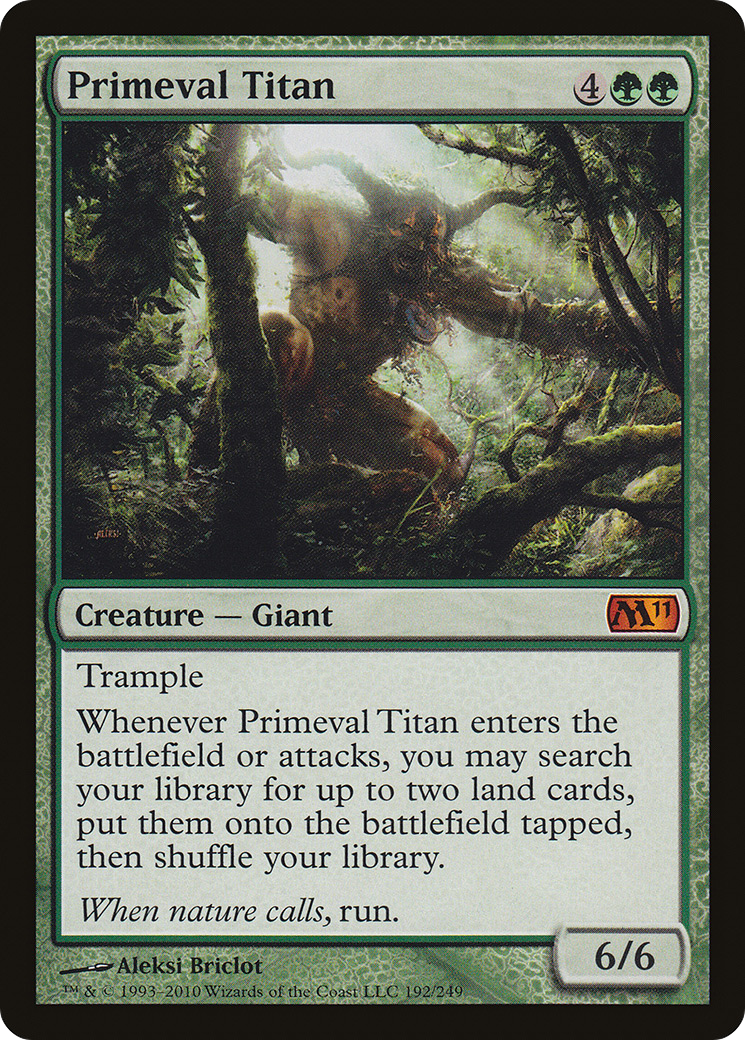
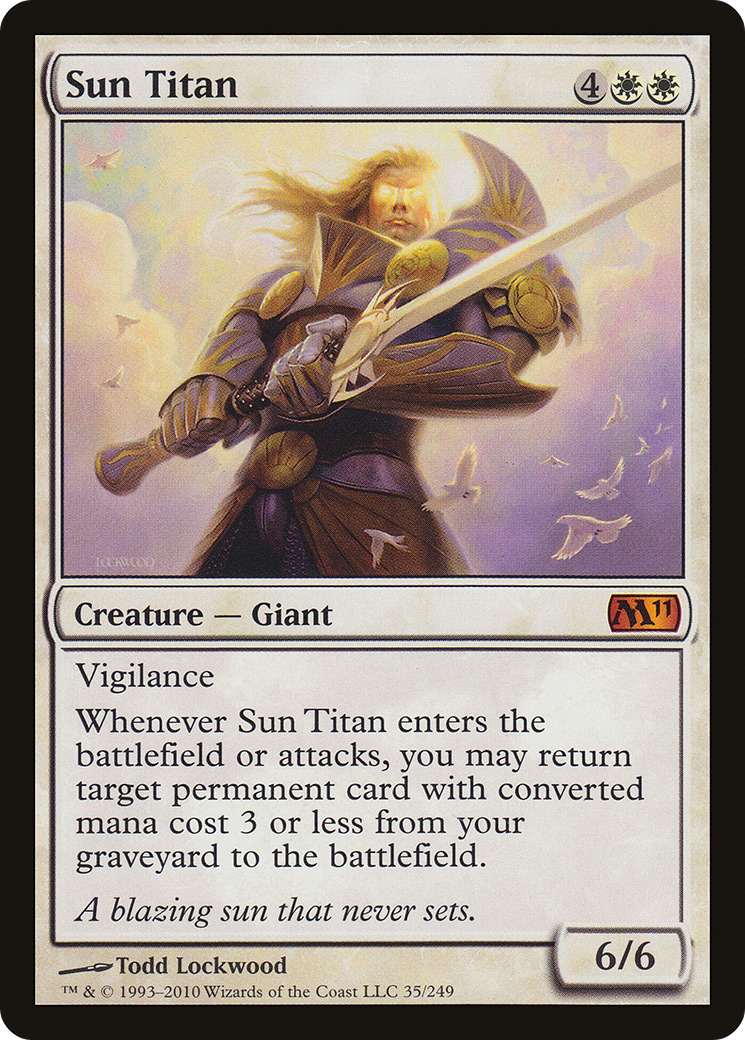
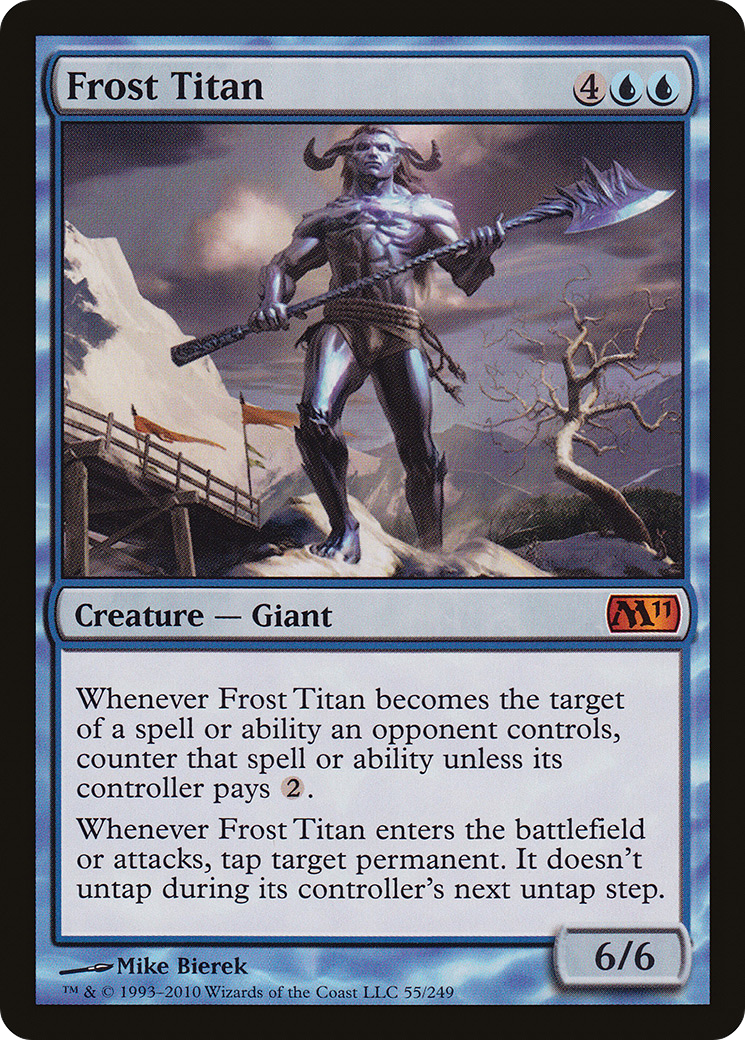
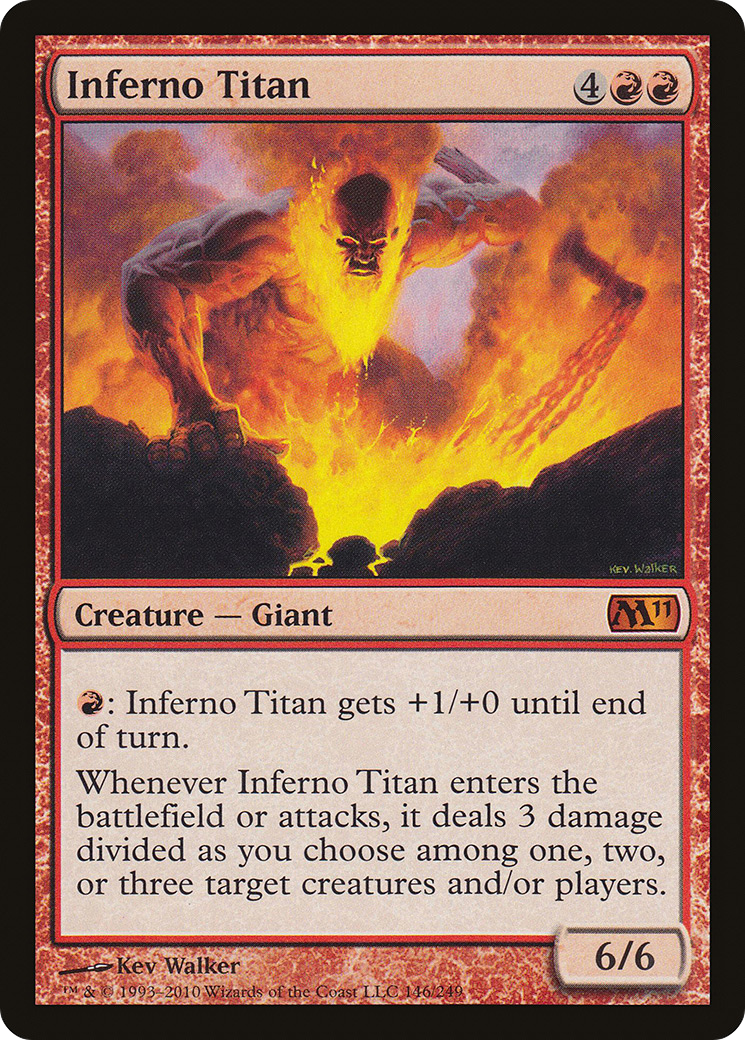
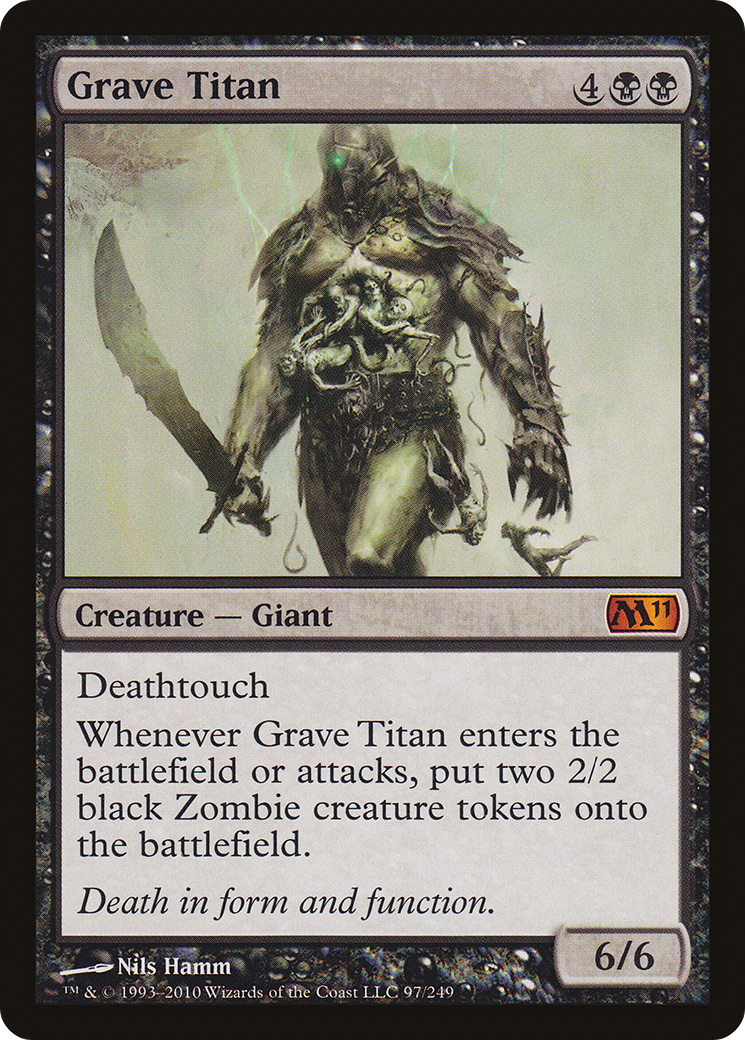
The five cards above are a cycle of cards in Magic the Gathering depicting Titans. Each card shares similar qualities.
- Their names are all
X Titan. - They all cost 4 generic mana and 2 mana of their color.
- They all depict a large humanoid wielding a weapon.
- They all are Creatures with a subtype of Giant.
- They are all mythic rare.
- They all have two abilities.
- Their first ability enhances their presence on the battlefield.
- Their second ability is triggered whenever the Titan enters the battlefield or attacks
- They all have 6 power and 6 toughness.
They differ in a few notable ways, but the most important difference is that they each are a different color. Color in Magic acts as the identity of a card. It’s the way of granting access to certain abilities, but not others.
This is the crux of what a cycle is – it’s the same card expressed through each identity of a card game.
Cycles in Other Games
Magic has many cycles of cards in it. Other card games have cycles, too. Here is a cycle in Hearthstone of cheap removal spells across each class.
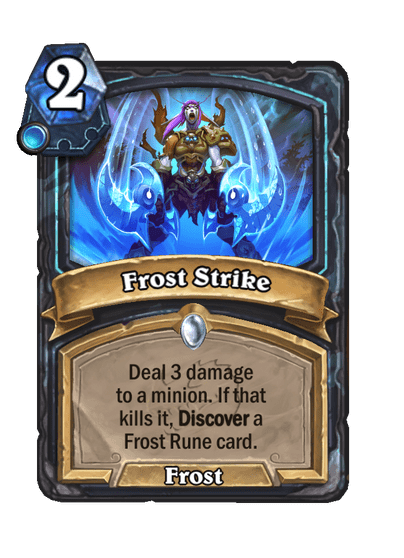
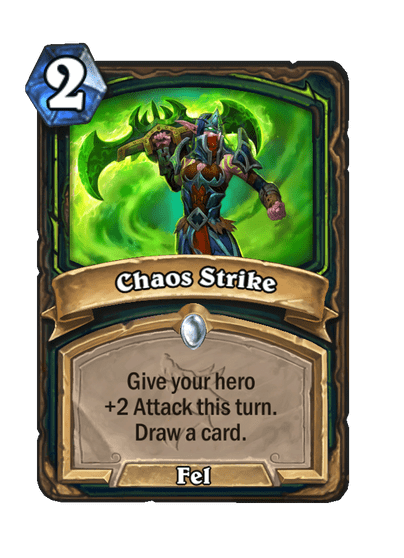
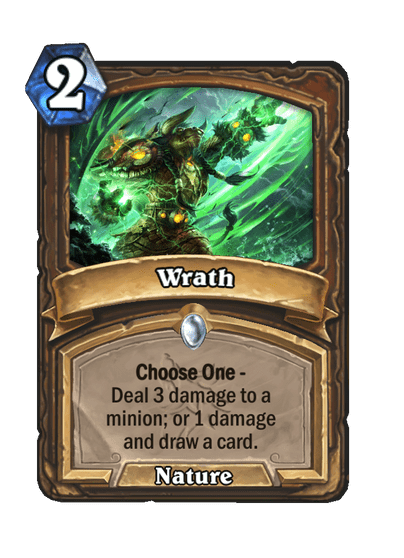
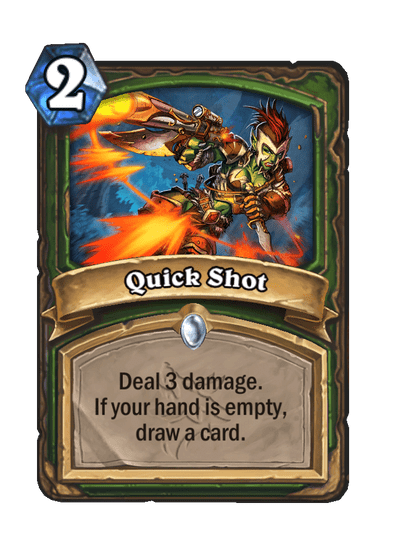
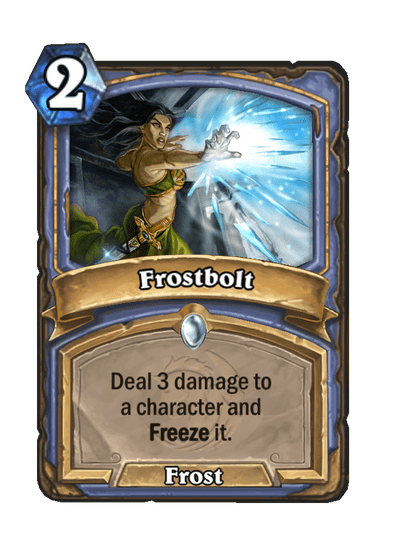
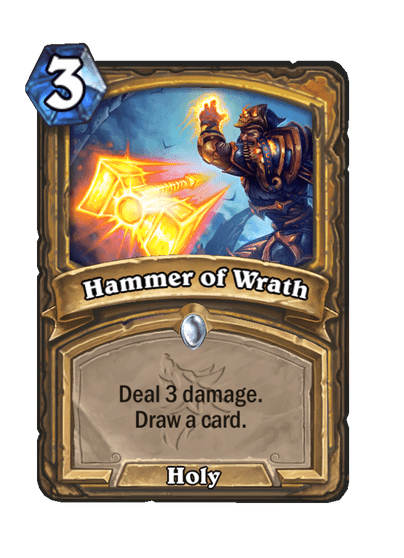
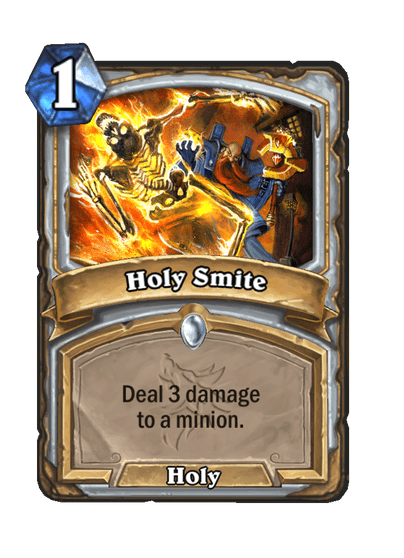
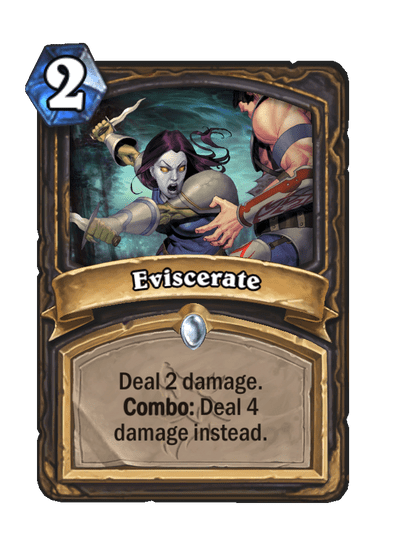
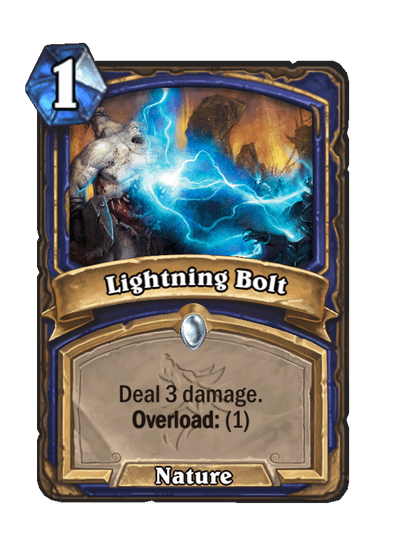
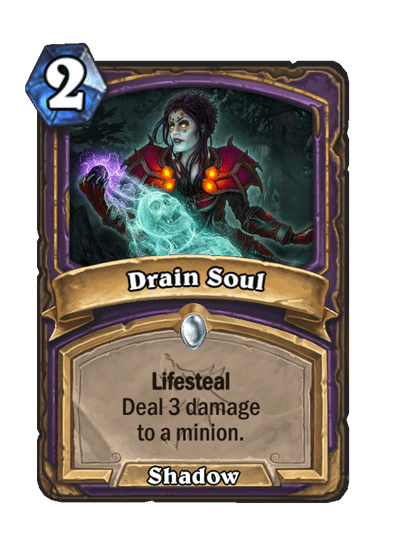
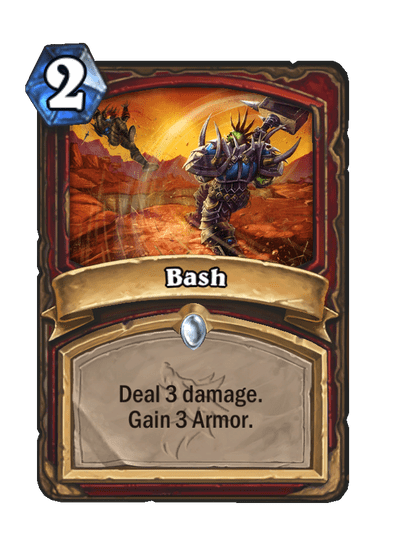
From this cycle, we can learn aspects of different classes, or identities, of Hearthstone. For example, the Druid class has the Wrath card, which allows the caster to pick between two modes. This Choose One keyphrase appears on many Druid cards, and allows the caster to be flexible and pick the best mode for the situation.
Eviscerate, the Rogue card, shows us that this class has a skill component to it. On its own, Eviscerate costs two mana and deals two damage, which by itself would be the worst card in this set. However, the Combo keyword tells us that if we meet a condition (in this case, Combo would activate if we’ve played another card already this turn), Eviscerate deals four damage instead, which would make Eviscerate one of the most deadly pieces of removal here.
Mages can freeze enemies in their tracks with Frostbolt, allowing them to slow down the game. Warriors can deal damage and gain armor, adding to their healthpool and fitting their defensive theme. Priests can eliminate enemy threats with Holy Smite, but they can’t hit their opponents directly with it. Sorry, but Priests are not going to be the in-your-face burn deck.
By having cards that are mechanically similar spread across different factions/classes/identities, we are able to highlight the differences between each type of deck.
The mechanical similarities allow the mechanical contrasts to shine. From this cycle, we know that Mages have access to the ability Freeze, Rogues can utilize Combo to maximize their card’s effectiveness, and that Warriors will be able to gain armor to outlast their enemies.
We can take a step back from the mechanics and compare and contrast the flavor of each card in the cycle as well.
All of the cards here depict a character in the middle of performing an action that is harming another party. The Hunter does a Quick Shot at something out of frame, the Paladin throws its hammer, and the Warlock drains the life force of a humanoid skeleton.
The title of each card is brief, economical, and to the point. This cycle is not depicting grand acts of wizardry or legendary acrobatics – these cards represent the bread and butter actions that each one of these classes within Warcraft would do on a daily basis.
If I had to think about what to call this cycle of cards, I would call it something like Strike. The card would cost 2 mana, it would deal 3 damage, and it would get an additional bonus ability of some kind. This Strike card is then expressed through each identity in Hearthstone, and thus we get eleven unique cards. The Warrior gets to gain armor, the Mage gets to freeze enemies, and the Druid gets to be flexible.
Transition to Other Decks
One added benefit of cycles is that they help players transition from one deck into learning another deck. Let’s say I’m a Mage player in Hearthstone. I’ve cast Frostbolt hundreds of times, and I’m ready to try something new. The Rogue class seems interesting, but I’ve never played it before, and I’m not quite sure what Combo does.
Luckily, my Rogue starter deck has two copies of Eviscerate in it. I draw an Eviserate, and it instantly feels familiar to me. A two mana spell that does damage? That’s familiar to me – I’ve played Frostbolt before! Now I can see what happens and how I can activate the extra damage of Eviscerate.
Through cycles, you can transfer player experience from one cycle to another so that players can try new decks and have more experiences in the card game.
There are hundreds, possibly thousands, of cycles of cards throughout different card games. Some cycles are printed all in the same set. Other cycles may take years from when the first card is printed to when the last one is printed (The Morphling cycle in Magic the Gathering took 21 years to finish!).