Reading The Card Does Not Explain The Card - Titans
21 Feb 2026Let me ask you a question – what does this card do?
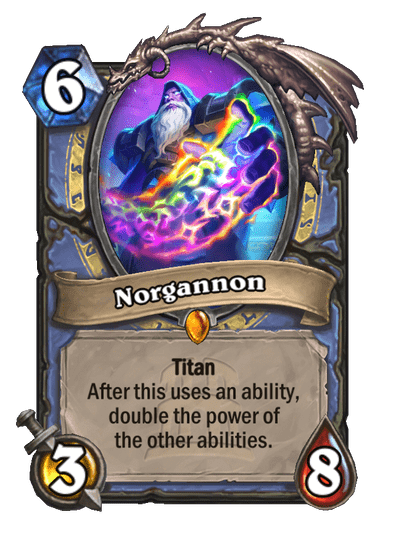
How does it behave? What abilities is it referring to in its text?
Norgannon is a legendary minion from Hearthstone with the keyword Titan.
A minion with Titan has the following properties:
- It has three unique abilities that can each be used once.
- It can use one ability per turn.
- It can use an ability the turn it is played.
- It cannot attack until all abilities have been used.
How much of that did you understand from reading the card?
For me, it took a while to understand how a card with Titan works. Additionally, you have to learn what each Titan does on its own – and the set shipped with eleven Titans.
There’s a saying in Magic the Gathering that Reading the Card Explains the Card. What it means is that if there is any ambiguity or uncertainty about what a card is actually supposed to do, you can read the card again since the card explains itself. The Titan cards don’t explain what they do, and thus are poorly designed.
What irks me even more is that these Titan cards are legendary cards! They are the eponymous titans of the set! They are supposed to be big and legendary and powerful and awesome. And maybe they are, but you need either a lot of game knowledge to know that, or you need to get your reading glasses.
This, to me, is the greatest design sin that the Titan cards commit. They take the fantastical splash of a legendary creature, a card that should turn the tide of battle, and instead turn it into a head scratching Wikipedia article.
I am not against complexity, but I do believe that complexity is a cost. You can introduce complexity to your game, but you ought to use every square inch of that added complexity to bring interesting gameplay and decisions to the table. Otherwise, you’re only getting in the way of fun.
To be fair, when you are in a game of Hearthstone and a Titan is played, you can hover over a card with Titan to see explanation of its abilities.
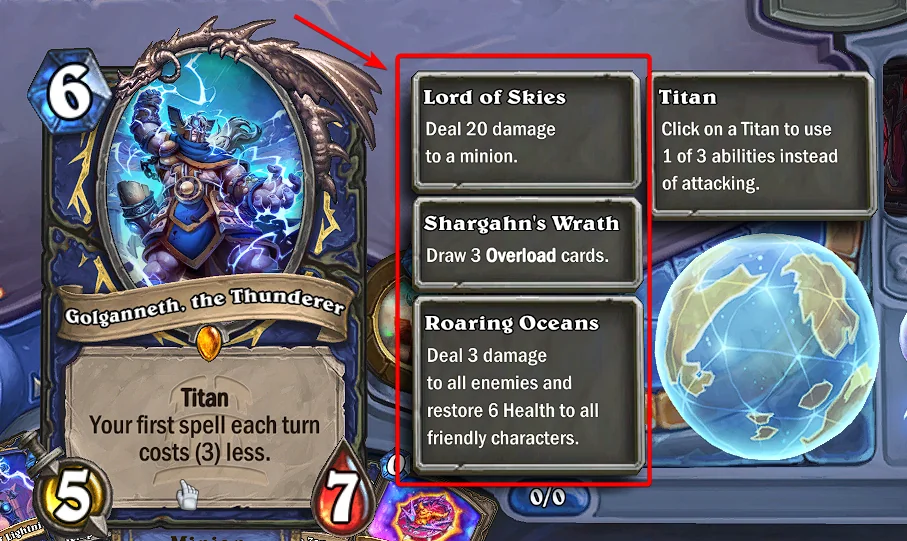
However, this tooltip is not always available, such as on the card database on the web. Even when you go to craft the card in your collection, the tie between ability and the related cards is not clear.
The Titan design makes it hard to look up! The design prevents us from researching and deckbuilding!
Why did this design come about? We can only speculate, but I imagine that the hidden complexity of Titans comes about because the designers wanted Titans to be big and awesome and complex, and Hearthstone allows very few words for a card’s ability description.
Below are the most verbose cards I could find in the core set of Hearthstone.
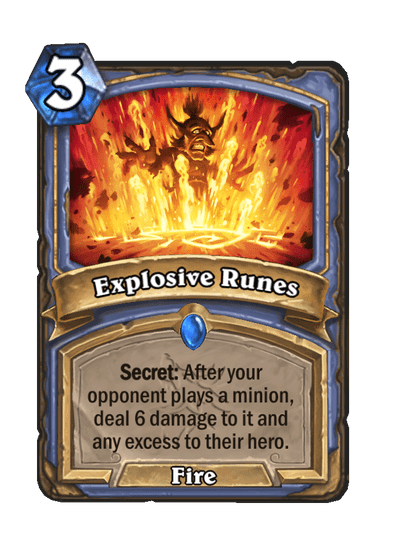
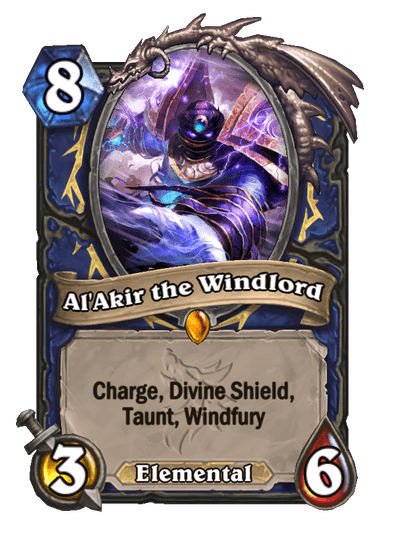
Explosive Runes is the most verbose I could find after a quick scan, with its ability comprised of 17 words. Al’Akir the Windlord is notable due to it having four different keyword abilities, which then correspond to their own abilities with rules.
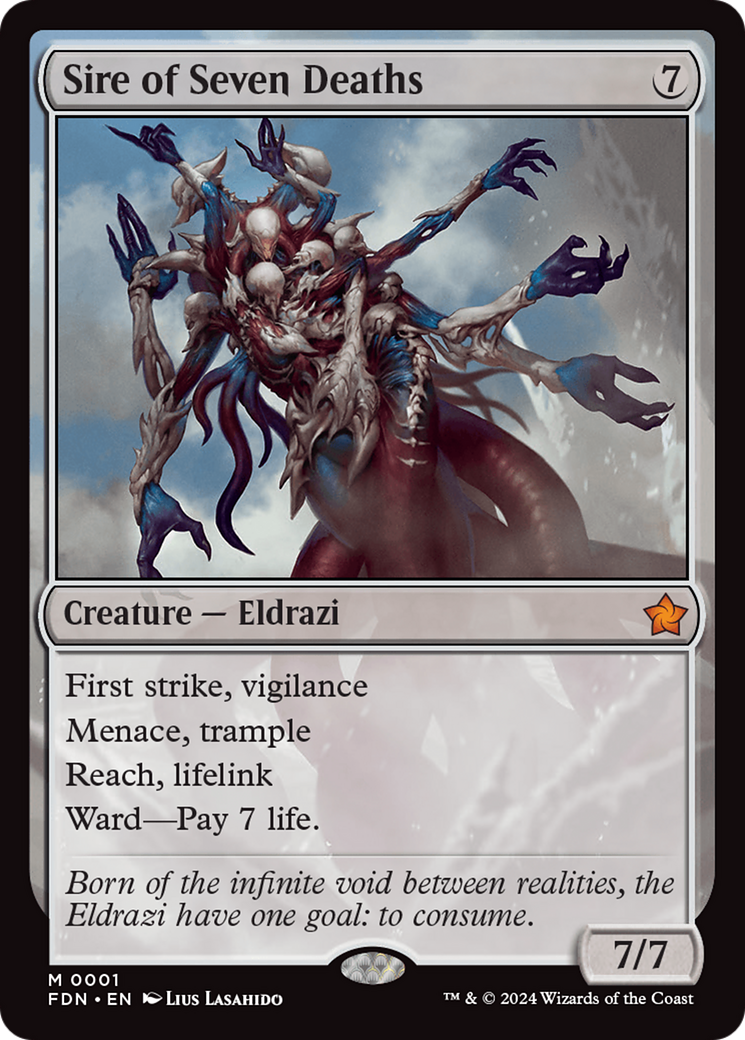
Compare this to a few cards from Magic the Gathering’s latest core set.
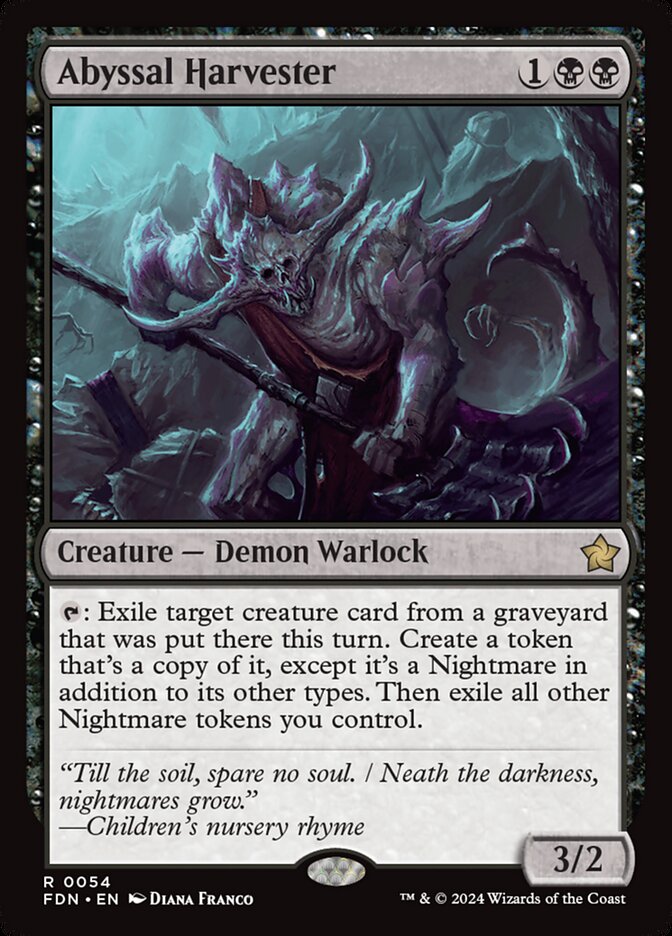
Abyssal Harvester lets you summon a copy of a creature that was destroyed this turn, with some added restrictions for balance. The card description takes 37 words to describe its ability over five lines.
Sire of Seven Deaths is basically an unstoppable beast in combat. It achieves this through its seven keywords, which basically boil down to “I will destroy you in combat, and there’s not a whole lot you can do to stop me.”
In contrast, Hearthstone is much more economical with its ability descriptions. The cards when presented only have keywords and brief abilities. Hearthstone does have an added benefit of always having tooltips to explain abilities, since it’s a digital game.
Elegance in Contrast
The ironic part is that the TITANS set also introduced one of the more well designed digital-first card mechanics in Forge.
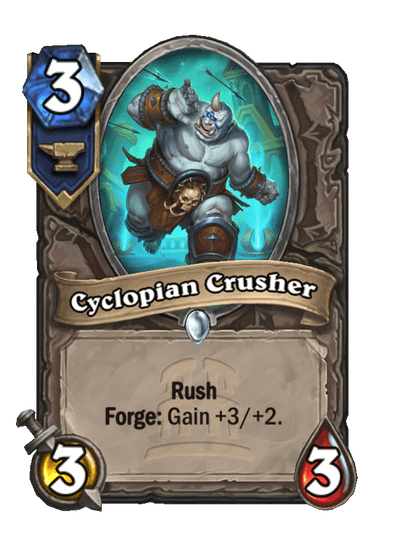
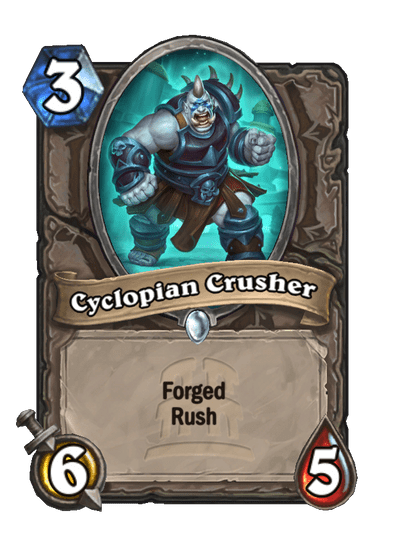
Forge is a mechanic that allows you to pay an additional cost (of two mana) to unlock a more powerful version of the card. Unlike versions of this mechanic in physical games (Kicker in Magic the Gathering comes to mind), the Forge cost can be paid without revealing the card to the other player, and Forge can be paid without playing the card. The forged card will remain in that state in the player’s hand.
Forge is a great mechanic because it’s simple, but adds a new dimension to the card. You can play the card as is, spending less resources but getting a smaller payoff. You can forge it before you can play it, but then you might skip an early turn. And then later on when you have more resources, you can forge it, and then play it.
The art and UX team hit a home run with Forge. When you drag the card over your deck to forge it, a hammer falls and the card transforms its art into its forged version. Forging a card feels good.
Could Titans Work In Another Design?
On that note, let’s revisit the Titans design and try to be constructive. How could Titans in Hearthstone be reworked to be clearer?
For one, I think they should not be minions at all. If they don’t attack, unless all their abilities are gone, what if we simply make them not minion? Instead, they would be a new card type, akin to calling upon a powerful ally to work alongside you to help you turn the tide of battle. Once their abilities run out, they could leave the battlefield. The player who played them would ideally still be able to feel they got value of their card, since they got three powerful abilities.
Making them not minions would help alleviate some of the complexity of whether or not Titans can attack, but if they are unable to be interacted with, then that could cause gameplay balance issues. They could still have health, and if they are attacked and killed, they leave the battlefield. This allows the opponent to still interact and fight back.
If this sounds familiar to you, it’s because this is the model of the cardtype Planeswalker from Magic the Gathering.
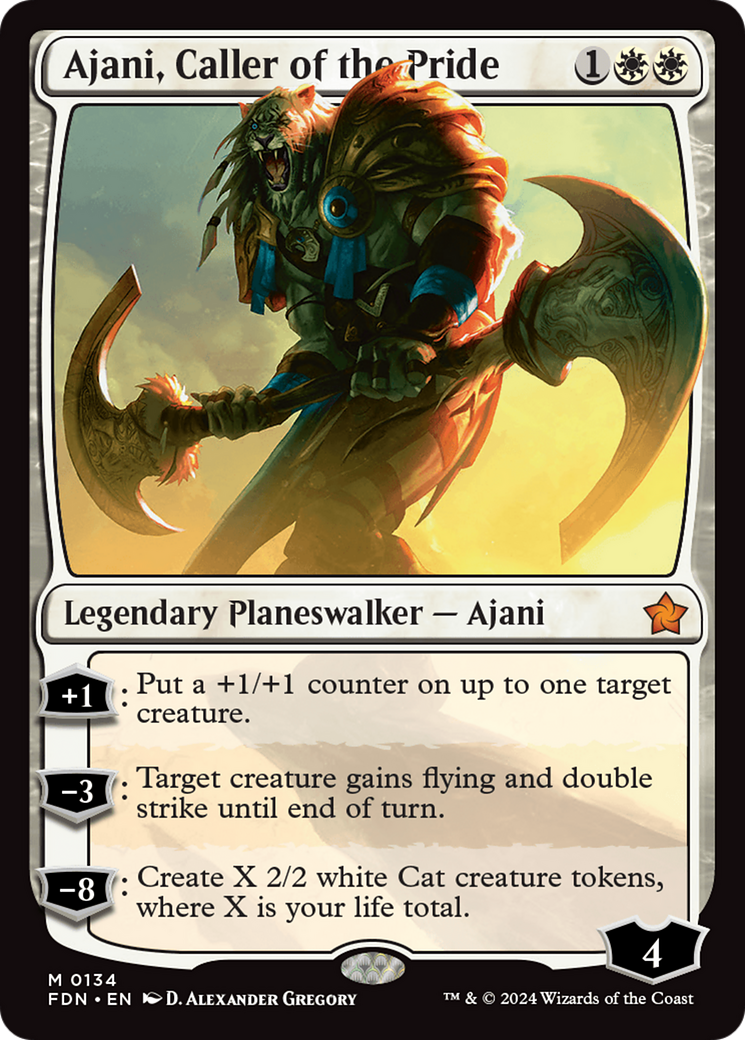
The idea of having a card you can play that acts as your ally, rather than as your minion, is tried and true. I think it would fit well here, and have its own flavor of gaining the favor of a Titan instead of having another wizard help you out.
Hearthstone is quite economical with its ability description box. I would suggest that Titan move from a keyword on a creature type to its own card type. This could be communicated via card frame, so players know it is not a creature on first glance.
What I would like is for each ability to be communicated on the card, but I don’t think this would be possible. It would be nice for the names of the abilities, at the very least, to be on the Titan card itself. The challenge now is that the Titan cards oftentimes have an additional ability which does take up space on the card.
I propose that the frame of the card have three slots, each one holding the name of one ability of the Titan.
Behold… my titan card template!
.png)
The main changes to illustrate are the split description, with the regular ability going to the left, and the names of the three Titan abilities on the right. Also of note is the lack of attack stat on the card.
The template could also help solve another problem – referencing which abilities have already been used. The image below is grabbed from a Titan in the middle of a game.
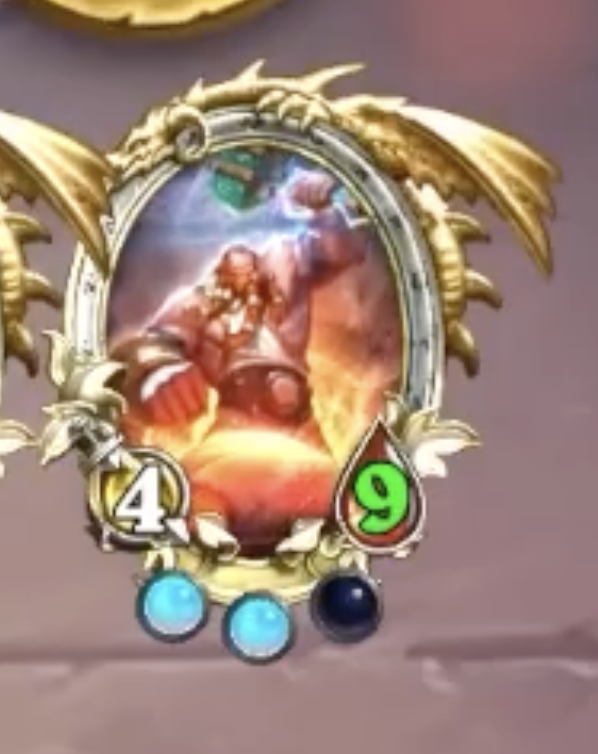
The three lights below each correspond to an ability of the Titan. The question is which light corresponds to which ability?
If you had each ability aligned vertically, then move the lights from the bottom to the side, the lights could have their position correspond to an ability, making it easier to scan the field and recognize what abilities a Titan has left.
All too often, when we want to draw inspiration from games we enjoy, we look to what worked well. And all too often, when we criticize, we mock and laugh at how bad the idea is.
Inspiration from what you like is good and necessary – it tells you what works. Mocking can often be unnecessary, and can serve the wrong purposes.
I believe we learn most looking at what did not work, not to mock, but to see what went wrong. Was the idea doomed from the start? Or was there a kernel of genius that was spoiled in the execution?
The idea of being able to play a card that represents a Titan in the Warcraft universe, a cosmological being that shaped the world, is awesome. Having them have a game warping presence with multiple abilities is a great payoff.
What I believe went wrong was that complex design met strict economical design constraints. A whole lot of card was placed into a small space, and the end result is a user experience nightmare.
Would the template suggested above solve all the problems? We will never know for sure of course, but I’d like to think it could have been something worth exploring.